Some insect abilities defy expectations, with ants lifting thousands of times their own body weight and diving beetles extracting oxygen from water indefinitely. Their compound eyes detect ultraviolet light, silk rivals the tensile strength of Kevlar, and venom can immobilize prey larger than themselves. These adaptations sustain ecosystems, enable survival under extreme conditions, and have sparked scientific interest in biomimicry to improve human technology.
Insects demonstrate resilience, efficiency, and specialized skills that ensure reproduction and environmental stability. From pollination and predation to soil aeration and nutrient cycling, their roles are indispensable. Understanding these insect abilities, strongest insects, and insect adaptations gives insight into nature's engineering and survival strategies.
10 Superhuman Insect Abilities and Adaptations
Insect abilities showcase some of the most remarkable adaptations in nature, with feats that seem almost superhuman. From immense strength and precision attacks to chemical defenses and limb regeneration, these adaptations allow insects to survive and thrive in extreme environments. Exploring these insect abilities highlights the ingenuity of evolution and the extraordinary capabilities of the strongest insects on Earth.
- Dung Beetle Strength: Horned dung beetles (Onthophagus taurus) pull 1,141 times their body weight, comparable to a human dragging two 18-wheelers. They navigate using Milky Way polarization while horns protect their prize.
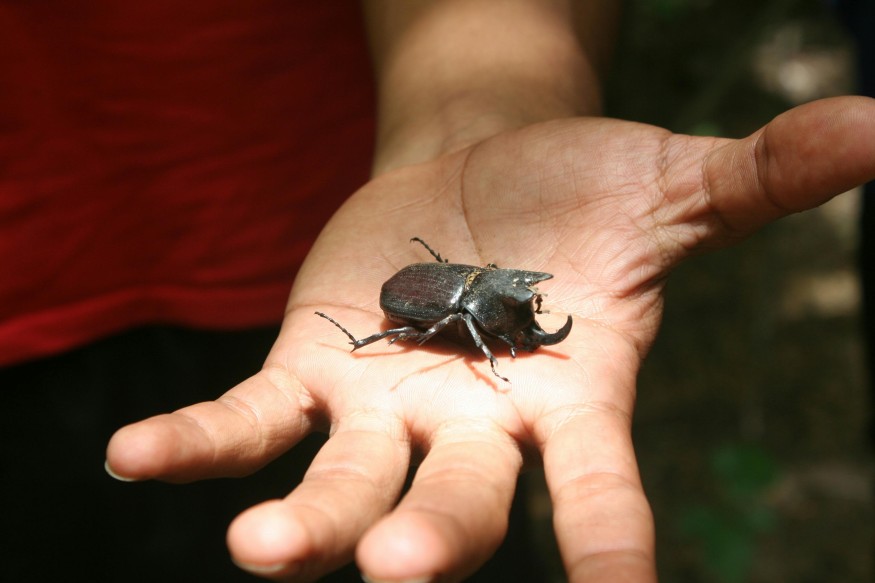
- Rhinoceros Beetle Power: Lifts 850 times its weight using exoskeleton leverage, with larvae tunneling through wood denser than concrete. Horns are used to flip rivals ten times their size.
- Ant Collective Might: Leafcutter ants carry 50 times their body weight. Supercolonies span thousands of miles with billions of workers coordinating without central control.
- Bombardier Beetle Defense: Sprays 212°F benzoquinone explosive from its abdomen to repel predators. Click-reaction chambers safely trigger rapid chemical reactions.
- Tarantula Hawk Stinger: Delivers venom that paralyzes tarantulas five times its size. Its seven-millimeter stinger is ranked one of the most painful, producing near-total incapacitation.
- Goliath Beetle Mass: The heaviest insect at 100 grams; larvae consume twenty times their weight daily and burrow fist-sized tunnels through hardwood.
- Giant Weta Regeneration: Can regrow lost limbs and survive falls of up to 71 grams due to low metabolism, earning the nickname "living fossil" in New Zealand.
- Water Strider Surface Tension: Walks on water thanks to hydrophobic legs, detecting ripples up to 1.5 meters away to ambush prey mid-stride.
- Archerfish Precision: Shoots water jets accurately up to two meters to knock down insects twice its body length, calculating trajectories in milliseconds.
- Assassin Bug Camouflage: Coats itself in debris or ant corpses, hiding from prey while delivering venom that liquefies their insides for consumption.
These strongest insects illustrate how insect adaptations scale survival and defense far beyond what their size would suggest.
Why Dung Beetles Rank Among Strongest Insects
Dung beetles are an iconic example of the strongest insects due to their hydraulic horn system, which multiplies their pull strength. They move massive dung balls nightly, competing with rivals and navigating using the Milky Way with remarkable precision.
Burrowing activities create vibrations that ward off competitors, while symbiotic mites consume fly larvae in the balls. Their dense muscle fibers provide power unmatched by vertebrates of similar size, and their exoskeletons withstand enormous pressures and impacts, making them a model of strength and endurance.
How Insect Adaptations Enable Extreme Survival
Insect adaptations illustrate survival at the edge of biological possibility. Bombardier beetles mix hydroquinone and hydrogen peroxide safely in chemical chambers to produce explosive defenses. Water striders exploit surface tension and rapid neural response to capture prey efficiently.
Tarantula hawks paralyze prey multiple times their size and can drag them underground, while the weta regenerates limbs through blastema cell proliferation post-molt. Spider silk, produced at high speed and tensile strength, supports prey capture and habitat construction. These adaptations ensure insects survive predators, environmental extremes, and competition.
Biomimicry Lessons From Superhuman Insect Abilities
Studying insect abilities inspires innovative solutions in engineering and technology. Dung beetle navigation systems are mimicked in autonomous rovers for spatial orientation. Bombardier beetle chemistry informs microfluidic reaction systems.
Ant colony organization models improve logistics and routing efficiency by 20%, while archerfish precision inspires high-accuracy spray technology. Understanding insect adaptations not only explains evolutionary success but also provides insights for human problem-solving and resilient design.
Why Studying Superhuman Insects Matters for Science
Exploring the strongest insects and their insect abilities offers more than curiosity; it provides insight into resilience, efficiency, and adaptation. Insect adaptations reveal evolutionary strategies for survival, reproduction, and ecosystem stability. These superhuman abilities also offer models for biomimetic technologies in robotics, medicine, and environmental engineering.
By observing insect strengths, humans can translate natural design principles into innovative solutions for engineering, materials science, and robotics. Protecting biodiversity ensures these evolutionary marvels continue to inspire and sustain ecosystems globally.
Frequently Asked Questions
1. What makes an insect "strongest"?
The strongest insects are determined by their ability to lift, carry, or manipulate objects far exceeding their body weight. Dung beetles, rhinoceros beetles, and ants are top examples. Strength often involves specialized exoskeletons, muscle fibers, and leverage. These adaptations allow them to survive and compete in extreme environments.
2. How do insect adaptations help survival?
Insect adaptations provide defense, mobility, and reproductive advantages. Venom, camouflage, and chemical sprays deter predators. Limb regeneration and silk production improve foraging and habitat construction. These traits ensure survival in diverse ecosystems, even under predation and environmental stress.
3. Can studying insect abilities help humans?
Yes, scientists use insect abilities for biomimicry in engineering, robotics, and materials science. Navigation in dung beetles informs autonomous vehicles. Bombardier beetle chemistry inspires microfluidics. Collective ant behavior improves logistics and algorithm optimization.
4. Why are insects important for ecosystems?
Insects pollinate plants, decompose organic material, and form the base of food webs. Their activities support biodiversity systems and nutrient cycling. Without them, ecosystems would lose resilience and productivity. Understanding insect adaptations helps maintain ecological balance.
© 2026 ScienceTimes.com All rights reserved. Do not reproduce without permission. The window to the world of Science Times.


