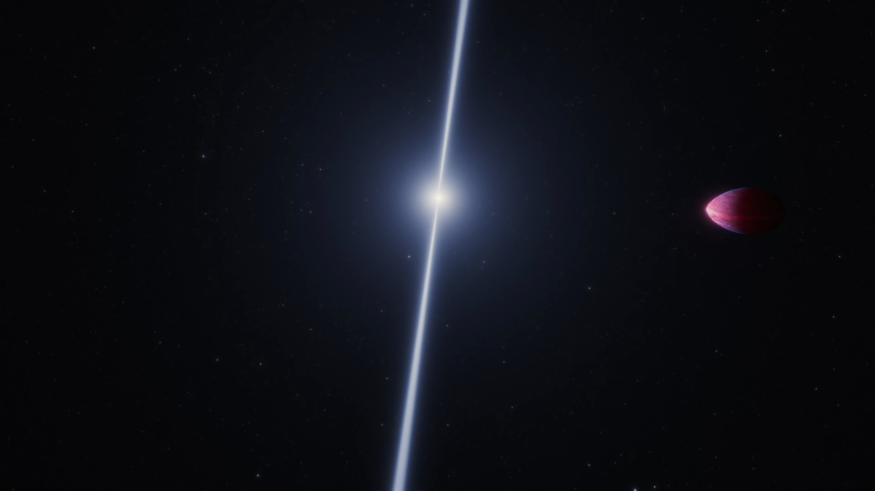
PSR J2322-2650b, a diamond rain planet, challenges our understanding of planetary formation and behavior. Its carbon-rich atmosphere, orbiting a pulsar 2,000 light years away, produces diamonds under pressures lower than typical ice giants, showing how extreme conditions yield unusual chemistry. Observations from JWST reveal a lemon-shaped world distorted by rapid 22-hour orbits, with atmospheric composition so dominated by carbon that water and oxygen are nearly absent.
This strange planet exemplifies the diversity of strange planets in space, demonstrating how exoplanet discovery is expanding beyond traditional gas giants. Hot Neptune planet dynamics, including tidal locking and convection of dense diamond layers, create space weather phenomena that shape internal heat flows. Understanding this exotic world informs theories on planetary interiors, magnetic fields, and extreme climate patterns across the galaxy.
Diamond Rain Planet: PSR J2322-2650b Discovery
Diamond rain planet PSR J2322-2650b was first detected in JWST NIRSpec data analyzing pulsar companion atmospheres. The lemon-shaped elongation, caused by intense tidal forces from its parent pulsar, revealed an extraordinary carbon excess, with spectroscopy identifying C2 and C3 molecules.
Key characteristics include:
- Rapid 22-hour orbit causing extreme tidal deformation
- Helium-carbon atmosphere with minimal H2O, CH4, or CO2
- Diamond formation at shallower pressures than Uranus or Neptune
- Lab simulations confirm static compression can produce diamond under such conditions
This exoplanet discovery not only highlights diamond precipitation but also challenges conventional models of gas giant formation, showing how unique stellar environments can produce unexpected chemistry and physical properties.
Exoplanet Discovery: Carbon-Rich Atmosphere Physics
Exoplanet discovery spectroscopy revealed PSR J2322-2650b's pristine spectrum, largely cleared of debris by its pulsar parent. High carbon concentration in the atmosphere drives diamond rain formation, with vapor pressure gradients favoring nucleation and growth of crystalline carbon.
Mechanisms shaping this diamond rain planet include:
- Shallow formation altering magnetic dynamo processes
- Oxygen scarcity dictating unusual chemical pathways
- Convection cycles transporting diamonds inward toward the core
- Models suggesting over 1,900 exoplanets in the Milky Way may host similar phenomena
These findings emphasize how carbon-rich atmospheres and diamond precipitation are more widespread than previously thought, with implications for planetary magnetic fields and interior structure.
Strange Planets Space: Lemon Shape and Diamond Dynamics
Strange planets in space like PSR J2322-2650b deform under extreme tidal forces, producing elongated lemon-shaped bodies. Diamond precipitation modulates interior heat, contributing to rapid core evolution compared with conventional gas giants.
Key implications include:
- Magnetic fields generated differently due to lack of deep convection
- Accelerated internal core growth from sinking diamonds
- Phase transitions in hot Neptune planet atmospheres forming crystalline lattices
- Observational constraints challenge traditional planetary formation theories
The combination of shape deformation, extreme atmospheric chemistry, and diamond precipitation offers a rare look into how offbeat exoplanets can behave under conditions vastly different from the solar system.
Space Weather Phenomena on Diamond Rain Planets
Space weather phenomena intensify on diamond rain planets due to pulsar radiation impacting carbon envelopes. Hot Neptune planet interiors cycle diamonds via convection, influencing heat distribution, outgassing, and magnetic field generation.
Effects observed include:
- Pulsar winds accelerating diamond polymerization
- Convection of dense diamond layers altering thermal profiles
- Enhanced radiation flux shaping atmospheric dynamics
- Implications for interpreting ice giant behavior in our solar system
Future JWST campaigns aim to track dynamic behavior and refine models for diamond-rich exoplanets, further bridging observations with theoretical planetary physics.
Diamond Rain Planet PSR J2322-2650b Redefines Cosmic Extremes
Diamond rain planet PSR J2322-2650b, exoplanet discovery breakthroughs, strange planets, space extremes, hot Neptune planet interiors, and space weather phenomena collectively expand our understanding of cosmic diversity. Its unique carbon-rich atmosphere and tidal deformation produce natural diamond precipitation unlike anything in the solar system.
Studying this world offers insights into interior convection, magnetic field generation, and planetary evolution, revealing that offbeat exoplanets are far more varied than previously imagined. These extreme conditions also refine models of hot Neptune planets and highlight how stellar radiation and orbit mechanics dictate space weather phenomena. PSR J2322-2650b thus exemplifies the extraordinary potential of alien worlds, offering a glimpse of the unimaginable diversity in our galaxy.
Frequently Asked Questions
1. What is a diamond rain planet?
A diamond rain planet is an exoplanet where high pressures and carbon-rich atmospheres create diamond precipitation. These planets often orbit stars or pulsars with extreme radiation, causing unique chemical processes. The diamonds form from molecules like C2 and C3 coalescing in the atmosphere. Some diamonds fall to the planet's core, influencing interior structure.
2. How was PSR J2322-2650b discovered?
PSR J2322-2650b was detected using JWST NIRSpec spectroscopy, analyzing its pulsar companion's atmosphere. Observations revealed a lemon-shaped body with carbon dominance. Scientists measured C2 and C3 molecules confirming diamond formation. Its 22-hour orbit indicated extreme tidal deformation.
3. Why do strange planets in space like this exist?
Strange planets form under unusual stellar conditions, like pulsar radiation or close orbits. Their atmospheres can be chemically dominated by carbon or other exotic elements. Rapid rotation or tidal locking affects shape and interior dynamics. Extreme pressure and temperature allow unique phenomena, like diamond rainfall.
4. Can other exoplanets have diamond rain?
Yes, models suggest over 1,900 exoplanets may host similar carbon-rich atmospheres. Hot Neptune planets are prime candidates due to interior pressures conducive to diamond formation. Shallow formation zones can produce rain at lower pressures. Observations continue to expand the catalog of potential diamond rain planets.
© 2026 ScienceTimes.com All rights reserved. Do not reproduce without permission. The window to the world of Science Times.


