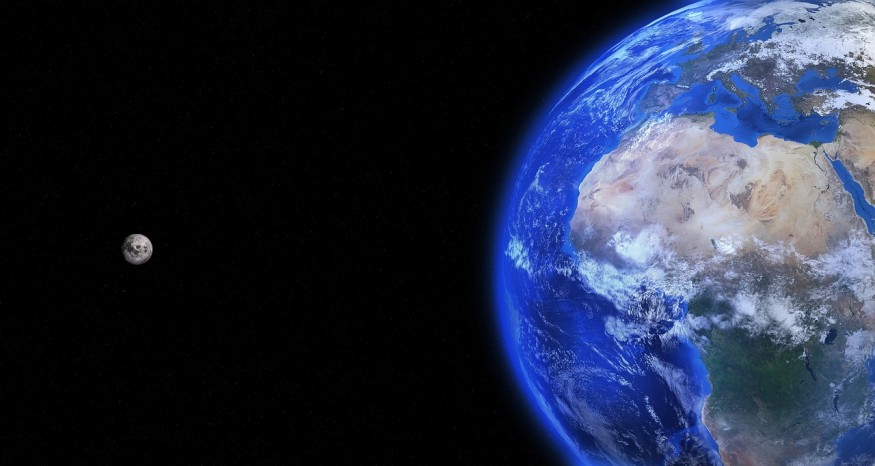
Astronomers define extraterrestrial life as any form of life that originates beyond Earth, ranging from simple microbes to complex organisms and, potentially, technological civilizations.
Space biology focuses on how life begins, adapts, and survives in extreme environments, then applies that knowledge to planets and moons across the cosmos. Alien research now sits at the intersection of astronomy, planetary science, and biology, turning what was once speculation into a data-driven scientific effort.
Earth remains the only confirmed life-bearing world, but discoveries of thousands of planets and rich cosmic chemistry make it unlikely that this planet is unique. The core question has shifted from "Is life possible elsewhere?" to "Where, and in what form, might that life be found?"
What Counts as "Life" in Other Worlds?
Scientists usually start with a practical working definition: life is a self-sustaining chemical system capable of Darwinian evolution, meaning it can reproduce and change over many generations.
In practice, this covers everything from single-celled microbes to complex animals and plants, as long as they use energy, maintain internal order, and adapt over time.
Most alien research expects the first discovery of extraterrestrial life to be microscopic, because microbes arise early and can thrive in harsh environments that would kill larger organisms. At the same time, space biology keeps the door open to unfamiliar chemistries or environments, since life elsewhere may not mirror Earth in all details.
Potential Life-Friendly Worlds in the Solar System
Inside the solar system, scientists focus on places where liquid water, energy, and the right chemical ingredients could coexist.
Mars preserves strong evidence of past rivers, lakes, and possibly long-lived groundwater, and its rocks contain organic molecules and episodic methane plumes that hint at interesting chemistry, though no confirmed microbes have been found.
Farther out, icy moons may offer even better habitats for extraterrestrial life. Europa and Enceladus both appear to have global subsurface oceans beneath their ice shells, and spacecraft have detected water plumes and organic compounds suggesting active, energy-rich environments.
Titan, with its thick atmosphere and complex organic chemistry, presents another intriguing but very different laboratory for prebiotic or exotic forms of life.
Because of their deep oceans and internal heating, many astrobiologists now view ocean worlds like Europa and Enceladus as leading candidates for microbial life in the solar system. Future missions designed to fly through plumes or sample ice directly are being planned to test this possibility more rigorously.
Exoplanets and the Galactic Search for Life
Beyond the Sun, alien research has identified thousands of exoplanets, worlds orbiting distant stars, using space telescopes that track tiny dips in starlight as planets pass in front. These surveys show that planets are common, and that many stars host worlds in the so-called habitable zone where liquid water could exist on a rocky surface.
Statistical studies suggest that the Milky Way may contain billions of planets inside habitable zones, even if only a fraction are truly Earth-like. Space biology and planetary science combine here to ask whether those distant surfaces and atmospheres could support chemistry similar to that which sustained life on Earth.
The most exciting recent development is the claim of "strongest evidence yet" for possible life on the exoplanet K2‑18b, where astronomers used the James Webb Space Telescope to detect gases that on Earth are produced only by living organisms.
Researchers stress, however, that these hints are not yet proof of extraterrestrial life and require careful follow-up.
Biosignatures: Chemical Clues That Life Might Be There
Because telescopes cannot image alien microbes directly on distant planets, scientists look instead for biosignatures, measurable signals that are difficult to produce without biology.
These include certain atmospheric gas mixtures, such as oxygen combined with methane, that would quickly react away unless continuously replenished by living processes.
In the case of K2‑18b, a British–U.S. team reported signs of dimethyl sulfide (DMS) and related molecules in the atmosphere, which on Earth originate from marine phytoplankton.
The concentration appears far higher than that found naturally on Earth, raising the possibility of a very active biosphere, but alternative non-biological explanations are still being explored.
Space biology also considers other possible biosignatures, including complex organic molecules and subtle imbalances in gases like carbon dioxide, nitrogen, and sulfur compounds. Each potential signal must be tested against detailed models of planetary atmospheres and geochemistry to rule out purely physical or chemical sources.
Read more: Habitable Planets: How the Goldilocks Zone and Planetary Science Reveal About Life‑Friendly Worlds
How Alien Research Looks for Life
Modern alien research uses a combination of robotic missions, space telescopes, laboratory analysis, and signal searches to look for extraterrestrial life across multiple fronts. Planetary probes and rovers examine rocks, ice, and atmospheres in situ, looking for organic molecules, patterns in isotopes, or direct signs of microbial activity.
For exoplanets, telescopes such as the James Webb Space Telescope analyze starlight that has passed through a planet's atmosphere to infer its composition and temperature.
Planned observatories like the Nancy Grace Roman Space Telescope aim to measure reflected light from smaller, more Earth-like worlds, sharpening the search for atmospheric biosignatures.
Another branch of alien research, the Search for Extraterrestrial Intelligence (SETI), uses large radio antennas and, increasingly, artificial intelligence tools to scan the sky for patterns that might represent engineered signals rather than natural noise.
So far, no widely accepted artificial signal has been confirmed, but the parameter space explored remains a tiny fraction of all possible frequencies, sky areas, and time windows.
Why There Is Still No Clear Proof
Despite growing evidence for potentially habitable environments and promising biosignatures, unambiguous proof of extraterrestrial life remains elusive.
One major challenge is that many chemical signals of interest can, in principle, be produced by non-biological processes such as volcanism, photochemistry, or unusual atmospheric dynamics.
Another difficulty is purely practical: distant planets are faint and small compared with their host stars, so measurements are noisy and often require repeated observations over years.
Within the solar system, missions that could directly sample subsurface oceans or return pristine material from Mars are technologically complex and expensive, limiting how quickly they can be flown.
The broader philosophical puzzle, sometimes called the Fermi paradox, asks why no clear evidence of advanced civilizations has appeared if the galaxy hosts many potentially habitable planets.
Explanations range from the rarity of intelligent life to the possibility that technological cultures are short-lived or communicate in ways that current instruments cannot easily detect.
Future Missions and the Road Ahead
Upcoming telescopes and missions are designed specifically to sharpen alien research and deepen space biology's reach. NASA and international partners are preparing observatories that can characterize Earth-sized exoplanets in habitable zones, measuring their atmospheres with enough precision to detect subtle biosignatures.
In parallel, new missions to icy moons aim to analyze plumes, ice, and possibly subsurface ocean material for organic chemistry and potential microbial life.
Experts in extraterrestrial life generally agree that the next few decades could deliver far stronger evidence, whether as a robust atmospheric biosignature on an exoplanet or as trace biology in a solar system sample.
However, they also caution that extraordinary claims require multiple, independent lines of data and rigorous attempts to rule out simpler explanations.
If even simple extraterrestrial life is confirmed, it would show that biology is not a rare accident but a natural outcome when the right conditions exist.
Such a discovery would reshape ideas in cosmology, philosophy, and even everyday culture, underscoring that Earth is one instance of a broader cosmic phenomenon rather than a singular exception.
Life Beyond Earth: How Close Are We to an Answer?
Taken together, current observations show a universe rich in planets, complex chemistry, and environments that resemble parts of Earth where life thrives, yet they stop short of definitive proof that extraterrestrial life actually exists.
Alien research and space biology are steadily improving their tools, from more sensitive telescopes to targeted planetary missions, to turn tantalizing hints, like atmospheric biosignature candidates on K2‑18b, into decisive tests.
As technology advances and more worlds come into clear view, the question "Is there life on other planets?" is shifting from speculation toward an answer that science may be able to provide within a single human lifetime.
Frequently Asked Questions
1. Can extraterrestrial life exist without liquid water?
Yes, some theories propose life based on other solvents like liquid methane or ammonia, but water remains the most promising medium because it supports rich, flexible chemistry.
2. Could life survive underground on other planets or moons?
Yes, microbes could potentially live in subsurface habitats protected from radiation, using chemical energy from rocks or hydrothermal activity instead of sunlight.
3. Is it possible that we have already found life but misinterpreted the data?
It is possible that ambiguous signals or unusual chemistry have been detected but labeled as non-biological because the evidence is not yet strong or clear enough.
4. Could advanced extraterrestrial life be using non-radio methods to communicate?
Yes, a technologically advanced civilization might use lasers, neutrinos, tight-beam transmissions, or communication methods that current instruments are not designed to detect.
© 2026 ScienceTimes.com All rights reserved. Do not reproduce without permission. The window to the world of Science Times.


