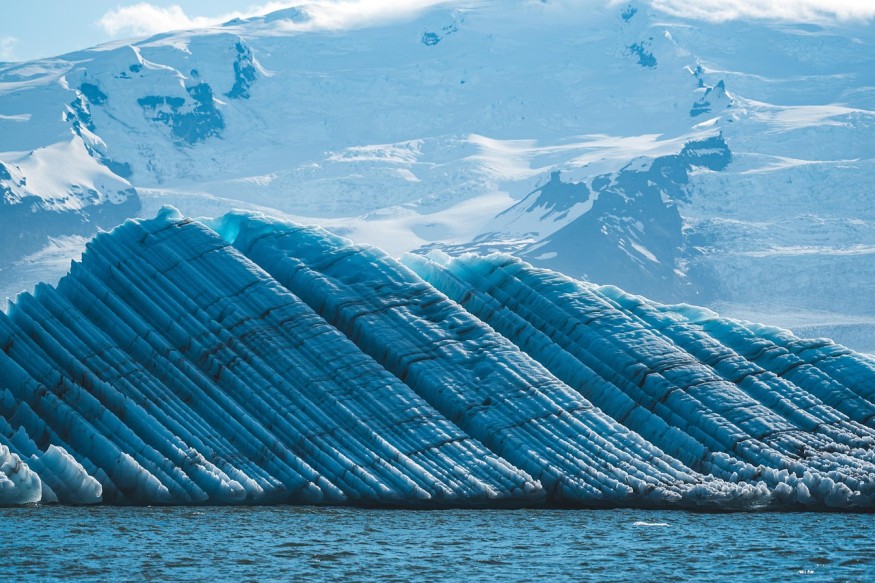
Glacier calving and iceberg melt are reshaping how the global ocean moves heat, salt, and nutrients. In polar regions where glaciers and icebergs dominate the seascape, the continuous input of cold freshwater is changing ocean density and helping to alter circulation patterns that influence climate and marine ecosystems far from the ice.
Glacier Calving: From Glaciers to Icebergs and Freshwater
Glaciers are large, flowing bodies of ice formed as snowfall compacts into dense ice over centuries. When these glaciers reach the sea, their floating edges become unstable and pieces break away, a process called glacier calving.
Each calving event sends new icebergs into the ocean, instantly transferring solid freshwater from land‑based ice sheets into the marine environment.
Glacier calving is one of the main ways large ice sheets like Greenland and Antarctica lose mass, alongside surface melting. As the climate warms and glaciers thin, many tidewater glaciers are calving more frequently, increasing both the number and size of icebergs.
Warmer ocean water can undercut glacier fronts from below, while surface meltwater can weaken the ice and promote further calving. Together, these processes accelerate the transfer of freshwater from long‑lived land ice into the oceans.
Icebergs, Freshwater, and Melt in the Ocean
Once icebergs detach from their parent glaciers, they drift with winds and currents and slowly melt. Iceberg melt rates depend on ocean temperature, salinity, wave action, and iceberg size and shape. Warmer, more turbulent waters melt icebergs more quickly, while colder conditions can preserve them for months or years.
Most iceberg melt occurs in the upper ocean. As icebergs release freshwater, they cool and freshen surrounding seawater over large areas. This "spreads out" glacier‑derived freshwater, creating a diffuse but persistent influence on temperature and salinity.
Compared with a sudden pulse of liquid meltwater at a glacier front, iceberg melt circulation is slower and more distributed, more like a series of ice cubes gradually cooling a drink than a single splash of cold water.
Melting icebergs themselves do not significantly raise sea level, because they already float. However, the glacier calving that creates those icebergs moves previously grounded ice into the ocean, and that loss of land ice is one of the contributors to long‑term sea‑level rise.
Freshwater and Ocean Circulation: The Role of Density
The key link between glaciers, icebergs, freshwater, and ocean circulation is water density.
Seawater density depends largely on temperature and salinity: colder, saltier water is denser and tends to sink, while warmer or fresher water is lighter and stays near the surface. Large inputs of freshwater from glacier calving and iceberg melt dilute surface salinity and reduce density.
In the North Atlantic and Southern Ocean, dense surface waters normally cool and sink, forming deep currents that help drive the global overturning circulation, the "conveyor belt" that transports heat from the tropics to higher latitudes.
When freshwater from glaciers and icebergs accumulates at the surface, it can interfere with this sinking. Fresher, lighter surface layers act as a lid, suppressing mixing and deep‑water formation and potentially weakening major circulation systems such as the Atlantic Meridional Overturning Circulation.
Direct meltwater discharge at glacier fronts and iceberg melt circulation affect this system in different but complementary ways.
Meltwater plumes from glaciers can create strong, localized stratification, while icebergs inject freshwater more slowly and over larger regions. Both processes freshen the surface and can alter currents and vertical mixing.
Glacier Calving, Internal Waves, and Local Mixing
Glacier calving also influences circulation mechanically by generating powerful waves and turbulence. When large ice blocks fall into the ocean, they create surface waves and internal waves that travel through the water column. These internal waves stir layers of different temperature and salinity and enhance local mixing.
This calving‑driven mixing can alter how heat and freshwater are distributed near glacier fronts. By mixing warmer subsurface water upward and cooler freshwater downward, internal waves influence how rapidly glaciers and ice shelves melt from below.
In some fjords, this process increases the delivery of ocean heat to the ice front, feeding back into further glacier calving and reinforcing freshwater input to the ocean.
Regional Impacts: Greenland, Antarctica, and the Arctic
Around Greenland, many outlet glaciers end in deep fjords. As they retreat and discharge more ice, freshwater from melt and icebergs has been linked to freshening in parts of the North Atlantic, an area critical for deep‑water formation.
Changes there can affect the strength of large‑scale circulation, with downstream consequences for European climate, storm tracks, and marine ecosystems.
In the Southern Ocean, Antarctica's vast ice sheets calve enormous icebergs that drift and melt over great distances.
Freshwater from iceberg melt and basal ice‑shelf melt contributes to increased stratification, which can limit upward mixing of heat and nutrients and influence how much dense water sinks to feed the deep limb of global circulation.
In the Arctic, sea‑ice loss combines with glacier calving from Greenland and smaller ice caps to freshen the surface ocean and modify regional circulation patterns.
Climate, Ecosystems, and the Future of Iceberg Melt Circulation
As glaciers and icebergs deliver more freshwater to the oceans, shifts in ocean circulation emerge as a major climate concern. If key overturning currents weaken, poleward heat transport can decline, and some regions may experience cooling or reduced warming relative to the global average, even as the planet warms overall.
Changes in stratification and circulation ripple through marine ecosystems. Biological productivity often depends on nutrient‑rich deep waters reaching the surface. Stronger stratification can limit this supply, altering phytoplankton blooms and the food webs that support fish, seabirds, and marine mammals.
At the same time, glacier fronts and iceberg edges can create local hotspots of mixing and productivity, highlighting how glacier calving and iceberg melt have both suppressing and enhancing effects depending on location.
Improving models of glacier calving, icebergs, freshwater, and ocean circulation is essential for better projections.
More realistic treatments of iceberg melt rates, calving processes, and calving‑driven mixing, combined with satellite observations and field data, are helping refine estimates of how glacier calving and iceberg melt circulation will evolve.
In a warming world, understanding these links between glaciers, icebergs, freshwater, and ocean circulation is critical for anticipating changes in sea level, regional climate, and marine ecosystems.
Frequently Asked Questions
1. How is glacier calving different from sea ice breaking up?
Glacier calving involves ice breaking off from land‑based glaciers or ice shelves, while sea ice breakup involves floating, frozen ocean water. Only glacier calving ultimately adds new water to long‑term sea‑level rise.
2. Do icebergs affect marine life directly, or only through circulation changes?
Icebergs can affect marine life directly by creating small zones of enhanced mixing and nutrient availability around them, which can boost local plankton and attract fish and other wildlife.
3. Why do scientists track individual icebergs with satellites?
Tracking icebergs helps scientists estimate how much freshwater they release, where it enters the ocean, and how this freshwater might influence local temperatures, salinity, and circulation patterns.
4. Can changes in glacier calving and iceberg melt be detected in everyday weather?
Their effects show up mainly through long‑term shifts in ocean circulation and regional climate rather than day‑to‑day weather, though over time these shifts can influence storm tracks and seasonal patterns.
© 2026 ScienceTimes.com All rights reserved. Do not reproduce without permission. The window to the world of Science Times.


