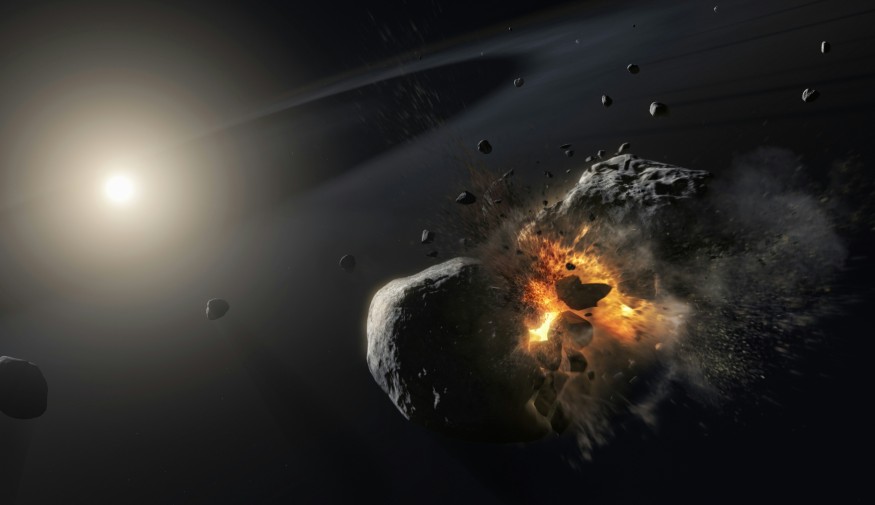
Space debris has become one of the fastest-growing threats to near-Earth operations, with over 36,000 tracked objects larger than 10 cm orbiting at speeds exceeding 28,000 km/h. These fragments, including defunct satellites, rocket stages, and mission-related debris, pose serious collision risks to operational satellites and the International Space Station. Orbital pollution doubles roughly every decade without intervention, raising concerns for the $1.8 trillion global space economy.
The space junk problem began with early satellite launches and has escalated with decades of fragmentation events, such as anti-satellite tests and accidental collisions. LEO congestion between 800–1,000 km altitude threatens to trigger chain collisions that could render certain orbits unusable within 50 years, highlighting the urgent need for mitigation and active removal solutions.
Origins of Space Junk Problem
The space junk problem originated from the earliest space activities and has grown exponentially over decades. Historical fragmentation events, defunct satellites, and exploding rocket stages all contribute to orbital pollution. These objects range from spent upper stages and nonfunctional satellites to tiny fragments created by collisions or erosion, making detection and tracking increasingly difficult.
- ASAT tests in the 1960s created thousands of debris fragments, while the 2009 Iridium–Cosmos collision alone generated 2,300 trackable objects larger than 10 cm.
- Orbital pollution today stems from 70% defunct satellites, 20% rocket bodies, and 10% mission-related debris, with upper stages occasionally exploding from residual propellant or thermal stresses unpredictably.
- The US Space Force maintains catalogs of 54,000 objects larger than 10 cm; however, untrackable 1–10 cm fragments constitute roughly 80% of high-penetration risk collisions.
- Early satellite fragmentation, such as Sputnik-derived debris, produced millions of smaller particles exceeding 1 mm, creating long-term hazards for both manned and unmanned missions.
- Additional sources include accidental collisions between satellites, failed launches, and erosion from micrometeoroid impacts, which collectively increase the density of orbital debris in key low Earth orbit (LEO) corridors.
Kessler Syndrome and Orbital Pollution Risks
Orbital pollution is not just an accumulation problem—it can trigger cascading collisions, a scenario known as Kessler Syndrome. This chain reaction occurs when a collision generates debris that increases the likelihood of further collisions, creating exponential growth in orbital clutter. Space debris in congested regions, particularly in LEO, can multiply rapidly, potentially rendering certain orbits unusable for decades.
- LEO at 900 km experiences debris density peaks 4× higher than pre-2005 levels due to cumulative fragmentation events, satellite constellations, and routine operations.
- Models predict 50–100 years before certain orbits become impractical for satellite deployment without active remediation.
- Large satellite constellations like Starlink's 6,000 satellites amplify collision risks, tripling probabilities of impact decade-over-decade and increasing the chances of Kessler cascades.
- Fragmentation events in 2024 alone added thousands of new debris objects, highlighting the urgent need to implement debris prevention and removal strategies.
- Even small, millimeter-sized particles can compromise spacecraft safety due to extremely high orbital velocities (~28,000 km/h), making early detection and mitigation critical.
Mitigation and Active Debris Removal
Addressing the space junk problem requires a combination of mitigation strategies and active debris removal to maintain orbital sustainability and ensure safe operations. Without coordinated international action, the density of debris will continue to rise, threatening future space missions.
- Guidelines recommend deorbiting satellites within 25 years post-mission; the European Space Agency (ESA) aims for net-zero orbital pollution by 2030 through battery passivation, explosion prevention, and post-mission disposal protocols.
- Drag sails and other passive devices accelerate natural reentry, while robotic servicing systems, like Northrop Grumman's MEV, can extend satellite operational life by five years, reducing the need for replacements and associated debris.
- Laser nudges, electromagnetic tethers, and robotic capture technologies can adjust satellite perigees or safely remove large debris objects, with commercial companies such as Astroscale targeting the removal of 10 major objects annually to prevent further fragmentation.
- Implementing combined mitigation and active removal approaches is essential for averting Kessler Syndrome, preserving low Earth orbit usability, and protecting the long-term sustainability of global space operations.
- International collaboration, standardized debris regulations, and satellite design improvements are equally critical to ensure future space activities remain safe and economically viable.
Conclusion
Space debris represents a growing hazard that jeopardizes both human and robotic activities in orbit. Orbital pollution threatens the safety of the ISS, critical communications, and global navigation satellites, with uncontrolled collisions potentially triggering exponential debris cascades. Without intervention, low Earth orbit could become increasingly congested, threatening sustainable access to space and the economic value of satellites.
Active removal, combined with strict mitigation measures, offers a practical path forward. Scaling operations to remove 10 or more large debris objects per year, alongside implementing post-mission deorbiting and explosion prevention, can maintain orbital integrity. Addressing the space junk problem now ensures the safety, usability, and resilience of orbital infrastructure for generations to come.
Frequently Asked Questions
1. What is space debris, and why is it dangerous?
Space debris includes defunct satellites, spent rocket stages, and fragments from collisions or explosions. Traveling at high velocities, these objects can penetrate operational satellites and the ISS. Even small fragments pose severe risks due to their kinetic energy. Accumulation increases the probability of chain collisions, threatening orbital safety.
2. What is Kessler Syndrome?
Kessler Syndrome is a theoretical scenario where collisions create a cascade of debris, exponentially increasing orbital pollution. This can render certain low Earth orbits unusable. High-density debris fields amplify the risk to satellites and human missions. Preventing chain reactions requires active debris management and mitigation strategies.
3. How is space debris tracked?
Organizations like the US Space Force monitor over 36,000 objects larger than 10 cm. Smaller debris (1–10 cm) is harder to track but contributes to most high-risk collisions. Radars and telescopes provide continuous monitoring. Data helps operators perform collision avoidance maneuvers and plan safe launches.
4. What solutions exist for space junk removal?
Mitigation strategies include deorbiting satellites within 25 years, passivation of batteries, and drag sails. Active removal technologies use robotic arms, nets, or laser nudges. Commercial initiatives like Astroscale aim to remove large debris annually. Combining these solutions reduces collision risks and prevents Kessler Syndrome.
© 2026 ScienceTimes.com All rights reserved. Do not reproduce without permission. The window to the world of Science Times.


