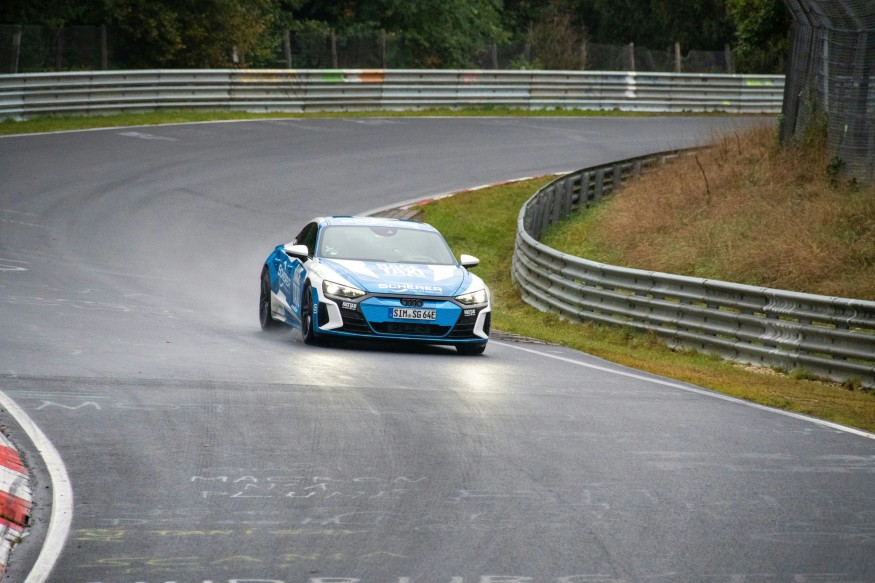
Electric vehicles are no longer confined to city streets and commuter use. EV motorsports now operate as high-stakes laboratories where engineers push batteries, motors, and software to absolute limits under race conditions. These competitions are changing long-held assumptions about speed, endurance, and performance in professional racing.
As the electric racing future unfolds, EV performance metrics increasingly rival or exceed traditional combustion-based race cars. Instant torque, near-total energy efficiency, and rapid innovation cycles are forcing motorsport organizations and fans alike to rethink what competitive racing looks like in the coming decade.
Can EV Technology Compete in Motorsports?
EV motorsports already demonstrate that electric platforms can compete at elite levels of racing. Formula E cars accelerate from 0–60 mph in approximately 2.8 seconds, delivering up to 600 kW of peak power that rivals modern Formula 1 hybrid systems. This performance advantage comes from instant torque delivery, eliminating lag and gear-shift delays inherent in internal combustion drivetrains.
The electric racing future extends beyond paved circuits. Extreme E showcases electric SUVs climbing steep 250 kW off-road sections without thermal lag or mechanical stress from traditional engines. EV performance efficiency further strengthens competitiveness, converting roughly 99% of stored electrical energy into wheel motion, compared to combustion engines that waste most energy as heat through exhaust and cooling systems.
What Is Formula E and How Does It Work?
Formula E stands at the forefront of the electric racing future by enforcing strict efficiency and sustainability standards. Gen3 cars regenerate up to 40% of race energy through braking and aerodynamic downforce, surpassing traditional kinetic energy recovery systems. This regenerative focus rewards precision driving and strategic energy management rather than raw fuel consumption.
EV motorsports regulations also mandate sustainable tire compounds and tactical features like attack mode, which adds a 50 kW power boost at the cost of altered racing lines. EV performance remains consistent across 45-minute races thanks to dual-motor AWD systems, enabling lap times comparable to high-performance combustion sports cars while operating within tight thermal limits.
EV Performance Advantages and Challenges in the Electric Racing Future
Electric racing is no longer a simple comparison between electric and combustion engines. EV performance now sets new benchmarks in acceleration, efficiency, and thermal control, while also introducing fresh limitations tied to batteries and infrastructure. As the electric racing future evolves, strengths and constraints shape race strategy just as much as raw speed. Understanding both sides explains why EV motorsports are advancing rapidly but still face unique trade-offs.
- Instant acceleration advantage: EV performance dominates launch and mid-corner exits due to instant torque and the absence of multi-gear transmissions, reducing mechanical losses and improving reliability.
- Higher power density systems: Advanced axial-flux motors and silicon carbide inverters deliver superior power-to-weight ratios compared to many combustion race engines.
- Thermal stability edge: Liquid-cooled battery packs maintain consistent output lap after lap, while combustion engines suffer efficiency loss from rising oil and piston temperatures.
- Energy density limitation: Large battery packs add significant weight, reducing race duration flexibility compared to lightweight liquid fuel systems.
- Strategic energy management: EV motorsports require lift-and-coast tactics and controlled pacing to balance speed with battery conservation.
- Infrastructure and fan engagement challenges: High-output charging demands precise battery preconditioning, while the lack of engine sound drives experimentation with synthetic audio solutions.
From EV Motorsports Innovation to Road Car Impact
Technological breakthroughs in EV motorsports rarely stay on the track. Racing environments accelerate development cycles, stress-testing hardware and software far beyond road conditions. As innovations mature, they rapidly filter into consumer vehicles, reshaping everyday driving experiences. This tight feedback loop is a defining advantage of the electric racing future.
- High-efficiency motor technology: Near-lossless electric motors developed in EV motorsports reduce driveline complexity and improve durability for road vehicles.
- Next-generation battery research: Solid-state and advanced lithium battery designs tested in racing promise longer lifespans, higher safety margins, and improved thermal stability.
- AI-driven vehicle control: Predictive traction control and regenerative braking algorithms enhance grip and efficiency, later improving stability systems in consumer EVs.
- Wireless and rapid charging concepts: Experimental track-based charging systems influence future fast-charging standards for public infrastructure.
- Race-proven hardware adoption: Inverters, steering-by-wire, and brake-by-wire systems transition directly from competition to high-performance road cars.
- Software-first performance upgrades: Over-the-air updates enable continuous EV performance improvements, mirroring motorsport-style development cycles for consumers.
Conclusion
EV motorsports prove that electric racing future concepts are not theoretical but operational today. Superior EV performance in efficiency, torque delivery, and thermal stability positions electric platforms as genuine competitors rather than experimental alternatives. Racing environments accelerate innovation in ways traditional automotive development cannot replicate.
As technologies mature, lessons from electric racing will increasingly shape mass-market vehicles. The convergence of sustainability and speed ensures that EV motorsports remain central to the future of competitive racing and everyday transportation alike.
Frequently Asked Questions
1. Can EVs really outperform gasoline race cars?
Yes, EVs excel in acceleration due to instant torque and simplified drivetrains. They also convert energy far more efficiently than combustion engines. Over short and medium race distances, EV performance often surpasses gasoline counterparts. Endurance remains the main area where ICE still holds advantages.
2. Why is Formula E important to EV development?
Formula E serves as a controlled testing ground for batteries, motors, and energy management systems. Technologies proven in races are quickly adapted for consumer vehicles. This short feedback loop accelerates EV performance improvements. It also promotes sustainability-focused innovation.
3. What limits the electric racing future today?
Battery energy density and charging infrastructure remain the biggest constraints. Heavy battery packs affect vehicle weight and race length. Charging logistics add strategic complexity. However, ongoing research continues to reduce these limitations.
4. How does EV motorsports benefit everyday drivers?
Racing innovations improve battery durability, software control, and thermal management. These upgrades enhance range, reliability, and safety in consumer EVs. Motorsport testing also speeds up adoption of new technologies. As a result, road cars improve faster than through conventional development alone.
Originally published on Tech Times
ⓒ 2026 TECHTIMES.com All rights reserved. Do not reproduce without permission.


