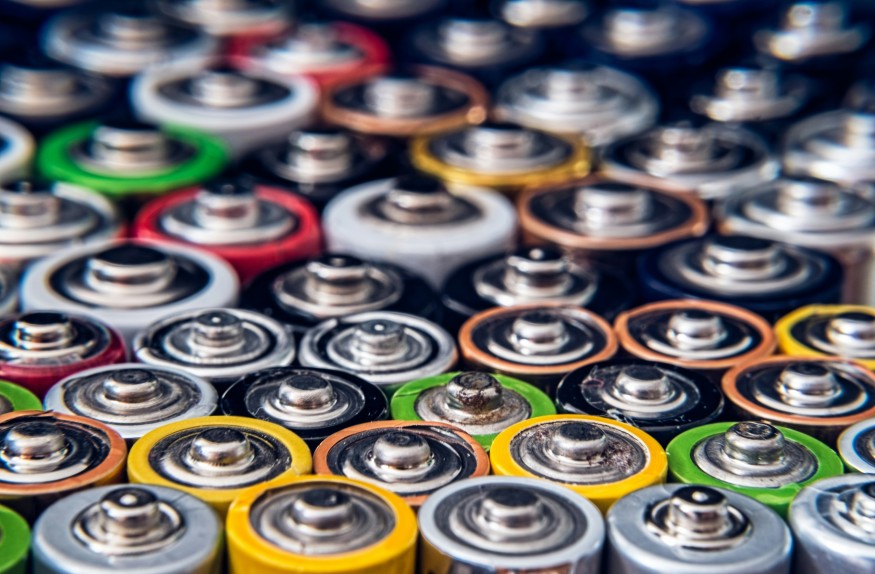
Energy storage beyond lithium ion is rapidly transforming how we store and deliver power in the modern world. Advances in solid-state, sodium-ion, and flow batteries promise higher energy densities, faster charging, and longer lifespans, enabling electric vehicles to travel farther, microgrids to operate efficiently, and renewable energy to integrate seamlessly into the grid. Next-gen batteries are no longer limited by traditional lithium-ion constraints such as dendrite formation, thermal runaway, and raw material scarcity, opening the door to more resilient and scalable solutions.
Future energy storage technologies are redefining the boundaries of battery performance. From high-capacity solid-state cells to scalable flow and hybrid supercapacitor systems, these innovations are driving the evolution of energy storage beyond lithium ion. As the global demand for electricity grows and renewable penetration increases, understanding these next-gen batteries is crucial for policymakers, engineers, and consumers seeking sustainable and reliable power solutions.
Solid-State Battery Breakthroughs
Solid-state batteries represent a major leap in energy storage beyond lithium ion. By replacing flammable liquid electrolytes with solid garnet LLZO conductors, these batteries offer unprecedented safety, high energy density, and fast charging capabilities.
- Next-gen batteries can achieve 5C fast charging, taking cells from 10% to 80% capacity in as little as 10 minutes.
- Energy storage beyond lithium ion enables 1,000 cycles at 80% capacity retention, with Toyota prototypes demonstrating 750 km EV ranges.
- Sulfide glass electrolytes conduct at 10^-2 S/cm, rivaling liquid electrolytes for performance.
- Future energy storage scales via thin-film deposition, powering flexible wearables continuously for up to seven days.
Sodium-Ion and Alternative Chemistries
Sodium-ion and other alternative chemistries expand options for grid-scale energy storage. These systems leverage abundant and low-cost materials to provide reliable, long-lasting energy without the scarcity concerns of lithium.
- Future energy storage sodium-ion cells deploy layered O3 cathodes achieving 160 Wh/kg, matching LFP economically for stationary battery energy storage systems (BESS).
- Energy storage beyond lithium ion uses hard carbon anodes absorbing Na+ without significant expansion; CATL prototypes cycle 6,000 times at 80% depth-of-discharge.
- Next-gen batteries include potassium-ion cells targeting 250 Wh/kg with Prussian blue cathodes and multivalent Mg2+ systems promising up to 1,000 Wh/L volumetric density theoretically.
- These alternative chemistries reduce material costs by 30% compared to lithium carbonate, enhancing long-term sustainability.
Flow Batteries and Supercapacitors
Flow batteries and supercapacitors tackle the challenge of decoupling energy and power, offering modularity and extended cycle life for large-scale and high-power applications.
- Flow Batteries: Energy storage beyond lithium ion in flow batteries independently scales power through membrane area and energy via tank volume. Vanadium redox systems achieve up to 85% roundtrip efficiency, with minimal capacity degradation over 20,000 cycles. Advanced chemistries, such as iron-chromium or organic molecules, further expand scalability and reduce costs, making them suitable for multi-megawatt utility installations.
- Hybrid Supercapacitors: Next-gen batteries include hybrid supercapacitors delivering 10,000 cycles at 1 MW/L power density, bridging the gap between high-energy batteries and rapid power delivery. These devices are ideal for applications requiring frequent charge/discharge cycles, such as frequency regulation and peak shaving in microgrids.
- Zinc-Air Systems: Future energy storage zinc-air systems generate 400 Wh/kg using atmospheric oxygen as a cathode. Rechargeable variants sustain 500 cycles, powering drones or autonomous systems for up to 2 hours. Research into flexible and hybrid zinc-air architectures promises enhanced energy density and integration into portable or stationary storage solutions.
- Applications: Together, these systems provide long-duration, high-efficiency storage solutions for microgrids, renewable energy farms, and utility-scale energy management. Their modularity allows tailored deployment depending on power and energy requirements, enabling smarter and more resilient energy grids.
Conclusion
Energy storage beyond lithium ion, through future energy storage innovations and next-gen batteries, is redefining how society generates, stores, and distributes electricity. By combining high energy densities, long lifespans, and safer chemistries, these technologies remove barriers that once constrained electric vehicles and renewable energy integration.
Next-gen batteries and modular systems enable resilient, decentralized energy grids capable of balancing supply and demand without relying on fossil fuels. As solid-state, sodium-ion, and flow battery technologies mature, they will empower global energy transition efforts, making clean, reliable electricity accessible for all while ensuring sustainable power infrastructure for decades to come.
Frequently Asked Questions
1. What are solid-state batteries and how do they differ from lithium-ion?
Solid-state batteries replace liquid electrolytes with solid materials, increasing safety and energy density. They reduce the risk of thermal runaway and dendrite formation common in lithium-ion batteries. Fast charging and longer cycle life are possible due to stable solid electrolytes. They are ideal for EVs, wearables, and grid applications.
2. How does sodium-ion technology contribute to future energy storage?
Sodium-ion batteries use abundant sodium instead of lithium, lowering material costs and supply risk. They offer comparable performance to LFP batteries for stationary energy storage. Hard carbon anodes prevent expansion, improving lifespan. Sodium-ion cells are scalable for grid-level applications safely.
3. What advantages do flow batteries offer over conventional batteries?
Flow batteries decouple power and energy, allowing independent scaling of both factors. They provide long-duration energy storage suitable for utility-scale and microgrid applications. Vanadium flow systems maintain high efficiency over thousands of cycles. They minimize degradation risks and can be recharged quickly without performance loss.
4. Can supercapacitors replace batteries in energy storage systems?
Supercapacitors excel in rapid charging and discharging, bridging power delivery gaps for high-demand applications. They have extremely long cycle life, often exceeding 10,000 cycles. While their energy density is lower than batteries, hybrid systems can combine both. This makes them ideal for microgrids, peak shaving, and high-power backup systems.
© 2026 ScienceTimes.com All rights reserved. Do not reproduce without permission. The window to the world of Science Times.


