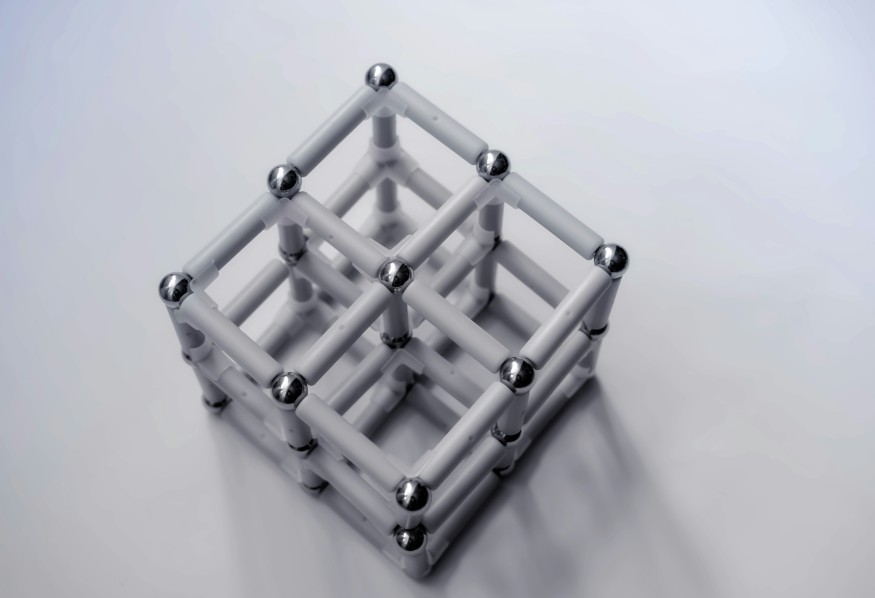
Advances in quantum tech are reshaping how data is stored and processed, with 2D magnets enabling new possibilities through skyrmion data structures. These nanoscale magnetic textures, studied extensively in condensed matter research, offer a path toward ultra-dense storage far beyond traditional hard drives and solid-state drives. By encoding information in topological spin configurations, skyrmions introduce new levels of efficiency and stability.
The concept of topological data storage using skyrmions has attracted attention due to its potential for high quantum data density and low energy consumption. Researchers continue to explore skyrmion stability and how these structures can function at room temperature. This article examines how these magnetic systems work, their stability mechanisms, and the technological advancements driving their development in modern quantum-based storage solutions.
What Are Skyrmions in Condensed Matter Research
In condensed matter research, skyrmions are tiny, stable spin configurations that exist within 2D magnets. These structures arise from competing magnetic interactions, particularly the Dzyaloshinskii-Moriya interaction, which creates vortex-like patterns in electron spins. As part of skyrmion data systems, they represent information using magnetic orientation rather than electrical charge.
These spin textures can take different forms, such as Néel or Bloch skyrmions, depending on how the spins are arranged. Their size typically ranges from a few nanometers to several dozen nanometers, making them ideal for quantum tech applications that demand high quantum data density. Their topological nature gives them stability, allowing them to resist external disturbances and maintain data integrity.
- Néel and Bloch skyrmions: These configurations differ in spin orientation. Both contribute to flexible data encoding in magnetic systems.
- Nanoscale dimensions: Skyrmions are extremely small, allowing more data to fit in a given area. This supports high-density storage goals.
- Topological protection: Their structure prevents easy disruption. This enhances skyrmion stability under varying conditions.
- Energy-efficient switching: Data can be written using minimal energy. This aligns with goals in advanced quantum tech systems.
- Room-temperature potential: Some skyrmions remain stable without extreme cooling. This makes them practical for real-world applications.
How Do 2D Magnets Enable Stable Skyrmion Data Storage
2D magnets play a crucial role in enabling stable skyrmion data storage by providing the right environment for controlled magnetic behavior. These materials are made of atomically thin layers that enhance magnetic interactions and allow precise manipulation of spin configurations. In condensed matter research, combining 2D magnetic layers with heavy metals has proven effective in stabilizing skyrmions, ensuring they can exist and function reliably as data carriers.
The structure of these materials also supports strong spin-orbit coupling, which is essential for maintaining skyrmion stability and enabling efficient control during data operations. This allows skyrmions to remain stable over long periods, even at room temperature, making them suitable for long-term topological data storage. Their compact and layered structure also contributes to higher quantum data density, allowing more information to be stored in a smaller space while maintaining energy-efficient operation and consistent data retention.
What Quantum Tech Breakthroughs Accelerate Skyrmion Commercialization
Recent advancements in quantum tech are accelerating the transition of skyrmion data from laboratory research into real-world applications. Improvements in imaging, simulation, and material design have allowed scientists to better understand and control skyrmion behavior within 2D magnets. These developments are playing a key role in enabling practical topological data storage systems with higher efficiency and stability.
- Advanced imaging techniques: Allow precise observation of skyrmions at the nanoscale. This helps improve system design and enhances control in quantum tech applications.
- Machine learning optimization: Helps identify the best material combinations in 2D magnets. This improves performance and efficiency in skyrmion-based systems.
- Spin current control: Enables precise manipulation of skyrmions using spin-orbit effects. This supports faster and more efficient data operations.
- Neuromorphic computing potential: Allows skyrmions to mimic brain-like processing patterns. This expands the use of quantum tech beyond storage into intelligent computing.
- Improved material engineering: Reduces defects and enhances structural consistency in materials. This strengthens skyrmion stability and supports reliable topological data storage.
Unlock the Future of Topological Data Storage with 2D Magnets
The combination of 2D magnets, skyrmion data, and quantum tech is redefining the future of topological data storage. Through advances in condensed matter research, scientists are uncovering ways to achieve higher quantum data density while reducing energy consumption. These innovations point toward a new generation of memory systems that go beyond traditional electronic storage.
As research continues, improvements in skyrmion stability and material engineering will determine how quickly these technologies become widely adopted. The potential for ultra-dense, energy-efficient storage makes skyrmions one of the most promising developments in modern data science, offering a glimpse into the next evolution of digital memory.
Frequently Asked Questions
1. What are skyrmions in quantum tech?
Skyrmions are small, stable magnetic structures used to store data. They exist within 2D magnetic materials and represent information through spin configurations. These structures are studied in condensed matter research. They are a key part of advanced data storage systems.
2. Why are 2D magnets important for skyrmion data?
2D magnets provide the environment needed for stable skyrmions. Their layered structure enhances magnetic interactions and control. This helps improve skyrmion stability. They are essential for developing reliable storage technologies.
3. How does skyrmion data improve storage density?
Skyrmions are extremely small, allowing more data to be stored in a smaller space. This increases quantum data density significantly. It enables storage systems to outperform traditional technologies. This makes them ideal for future data needs.
4. What challenges exist in skyrmion-based storage?
Maintaining stability under varying conditions is one of the main challenges. Precise control over magnetic properties is also required. Manufacturing scalable devices remains complex. Continued research is needed to overcome these barriers.
© 2026 ScienceTimes.com All rights reserved. Do not reproduce without permission. The window to the world of Science Times.


