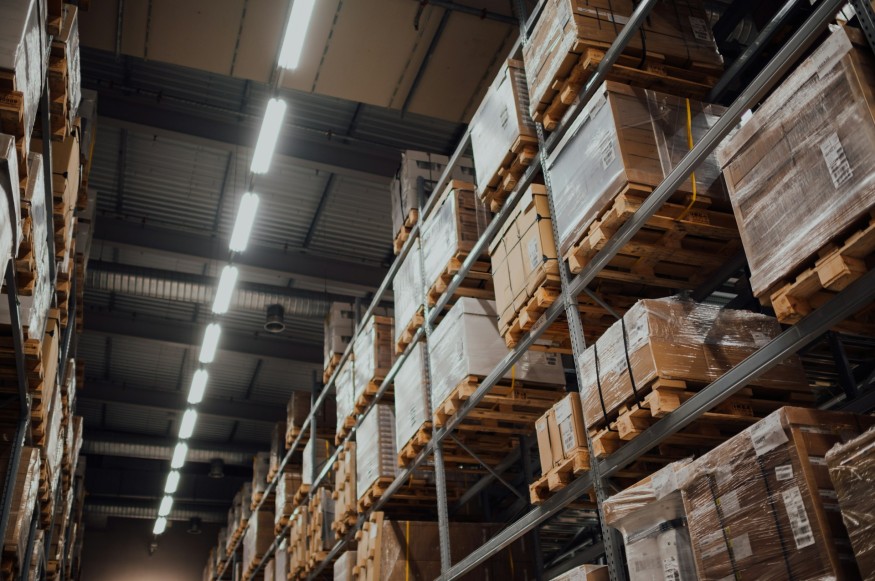
Static facilities can't keep up with dynamic demand. As ecommerce accelerates and supply chains fragment, adaptability in warehouse operations has become the new baseline. Modern distribution centers must flex with volatile order volumes, shifting product mixes, and evolving customer expectations—without adding square footage or downtime.
That's where smart material handling becomes foundational. Unlike fixed systems, adaptive material handling infrastructure is designed to scale in waves, not leaps, while aligning with broader strategies in layout, labor, and speed. The adaptable warehouse isn't a trend; it's a long-term resilience strategy.
Modular Layouts: Designing Space to Flex
Adaptability begins with how space is defined and used. The most efficient operations aren't those built with permanence in mind, but with change in mind.
- Maximize Vertical, Not Just Horizontal: Facilities with high-bay racking and AS/RS (automated storage and retrieval systems) make it possible to expand upward. This conserves costly floor space and supports growth without facility relocation. Vertical expansion is particularly beneficial in land-constrained urban zones or brownfield redevelopment projects.
- Zoning for Future Change: A warehouse built with modular zoning—receiving, sorting, picking, packing—allows for rapid reconfiguration. When demand spikes or product lines shift, wide aisles and clear separations allow new systems to be inserted without overhauls. Future-ready layouts maintain buffer zones that support later integration of robotics or shuttle systems.
- Flexible Racking Systems: Pallet racking and shelving should accommodate diverse inventory profiles. Adjustable racks that hold cartons, totes, and even garments on hangers enable operations to serve mixed channels with minimal rework. For fashion logistics or omnichannel retailers, this agility helps avoid SKU-specific silos and space waste.
- Design for Retrofitting: Warehouses rarely stay static. A facility designed today must be capable of retrofitting tomorrow. This includes leaving access paths for future cabling, mezzanines that can support robotics, and space allocation for future control rooms or maintenance bays.
Systems That Grow with You
Adaptable systems aren't just physically flexible—they're operationally scalable. The best tech investments allow for incremental capacity growth and seamless integration of new tools. Growth rarely happens linearly. Systems must be able to spike and contract in sync with market shifts.
Scalable Automation: Rather than deploying full-blown automation up front, operations teams increasingly opt for scalable platforms. Shuttle systems, for instance, allow for phased expansion by adding vehicles or lifts without touching the core infrastructure. Automated conveyor segments, robotic arms, and lift stations can be deployed one zone at a time.
Standardized Interfaces: Open-architecture WMS and WCS platforms enable new modules, robotics, or picking technologies to be added without weeks of re-coding. Integration with goods-to-person innovations becomes faster and more cost-effective when software systems speak the same language.
Digital Twin ROI: Simulation technology isn't a luxury—it's a critical safeguard. Digital twins allow logistics teams to model peak volumes, workflow bottlenecks, and equipment changes before committing to capital spend. A McKinsey study notes that digital twins can reduce warehouse redesign time by 30% and improve planning accuracy by 40%.
Agile Integration Mindset: Technology adoption should not be a stop-and-rebuild exercise. Adaptable warehouses invest in middleware and cloud-native solutions that support parallel tech stacks. Adding a new picking method should require only configuration—not months of integration.
Human-Centric Speed
Adaptability isn't just about moving faster; it's about moving smarter—especially when human operators are part of the equation. High-throughput facilities still rely heavily on people, and the best ones are designed to make their jobs easier and safer.
- Ergonomics and Flow Optimization: Good warehouse design considers walking distance, repetitive motions, and access to tools and SKUs. Layouts should minimize strain, support natural body movements, and reduce the cognitive load of fast-paced picking.
- Collaborative Robotics: Rather than replacing staff, automation is increasingly designed to work with them. Facilities that prioritize ergonomics and warehouse robots achieve higher output without burnout. Workers stay in ergonomically optimized zones while robots handle heavy transport or storage retrieval.
- Manual-to-Automated Flex Zones: Some areas of the warehouse must switch from manual to automated processes based on volume. Adaptable picking zones use a dual-mode infrastructure that allows for human picking during slow periods and robotic processing during spikes.
- Training and Cross-Skilling: Human adaptability matters, too. Teams trained on multiple systems are more valuable in high-mix, high-volume facilities. This enables smooth shift rotations, better labor coverage, and quicker adaptation to procedural changes.
Bulletproofing Through Modularity
A well-adapted warehouse doesn't just perform better—it protects against disruption. Here's how modular systems help bulletproof operations:
- Faster Peak Readiness: Adaptable systems can be scaled up for seasonal surges without requiring complete overhauls. This includes modular sorting lines, mobile robots that can be deployed to high-priority areas, or temporary pick modules.
- Fewer Downtime Risks: Flexible systems reduce single points of failure; zones or equipment can be isolated and repaired without pausing entire workflows. This is critical in cold chain logistics or food distribution, where even short delays can result in inventory loss.
- Lower CapEx Exposure: Scaling in modular increments means investment can match demand, lowering upfront capital risk. Companies can validate performance before expanding across sites or verticals.
- Faster Deployment: Modular systems often arrive pre-configured. That means go-live timelines are compressed, and ROI begins earlier.
Industry Applications of Adaptable Warehousing
The value of adaptable warehouse operations expands across sectors:
- Grocery Logistics: Refrigerated AS/RS units, mobile freezers, and multi-temp storage zones enable grocers to flex capacity as perishable inventory fluctuates.
- Fashion Logistics: Hanging garment storage, returns processing zones, and SKU-specific packing modules allow for fast item turnaround and seamless returns.
- Consumer Goods & Retail: Cross-dock layouts and plug-in picking stations support high-SKU, high-volume operations across brick-and-mortar and ecommerce.
- Cold Chain Logistics: With goods requiring tight thermal control, adaptability allows operators to reroute inventory, swap out failed cooling units, or rapidly shift loads across zones.
- Industrial Logistics: Bulky and variable-sized items benefit from flexible racking, mobile sortation, and scalable conveyor systems that reduce reliance on fixed paths.
Real-World Example: TGW Logistics
A great example comes from TGW Logistics, a full-service warehouse automation partner known for modular fulfillment platforms. One European apparel retailer used TGW Logistics' shuttle system to double throughput without expanding its footprint. By combining simulation-led planning with scalable automation, the operation maintained service levels even during a 40% spike in peak orders.
Their success hinged on three elements: space reuse, incremental expansion, and human-machine collaboration—all built into the initial facility plan.
Optimized Human-Machine Workflows
Facilities that are designed for collaboration—not replacement—get more out of both their people and their machines.
Optimized human-machine workflows demonstrate how tasks can be divided efficiently. For example, autonomous mobile robots (AMRs) transport goods while workers focus on exception handling and quality control. This separation of labor boosts both speed and accuracy.
The best systems don't eliminate human oversight—they elevate it. Operators are freed from repetitive tasks and redeployed to areas requiring judgment, communication, or escalation handling.
Adaptability as a Competitive Advantage
Warehouses used to be judged by size and volume. Today, adaptability is the new performance metric. Facilities that can flex layouts, scale systems, and balance human-machine collaboration are more likely to:
- Meet fluctuating demand without service degradation
- Reduce labor strain and improve retention
- Integrate new technologies with lower disruption
- Scale operations without linear increases in cost
- Maintain better safety and ESG alignment
Whether in grocery logistics, fashion logistics, or consumer goods logistics, adaptability translates to resilience. And resilience is no longer optional.
Conclusion: End of the Static Warehouse
A warehouse built for today is already behind. Leading operations teams are building facilities for tomorrow—designing every inch of space, every workflow, and every system with adaptability in mind.
Modular layouts. Scalable automation. Human-centric workflows. These aren't trends; they're the foundation of competitive warehouse operations.
Adaptability isn't a feature. It's the architecture of modern logistics.
© 2026 ScienceTimes.com All rights reserved. Do not reproduce without permission. The window to the world of Science Times.


