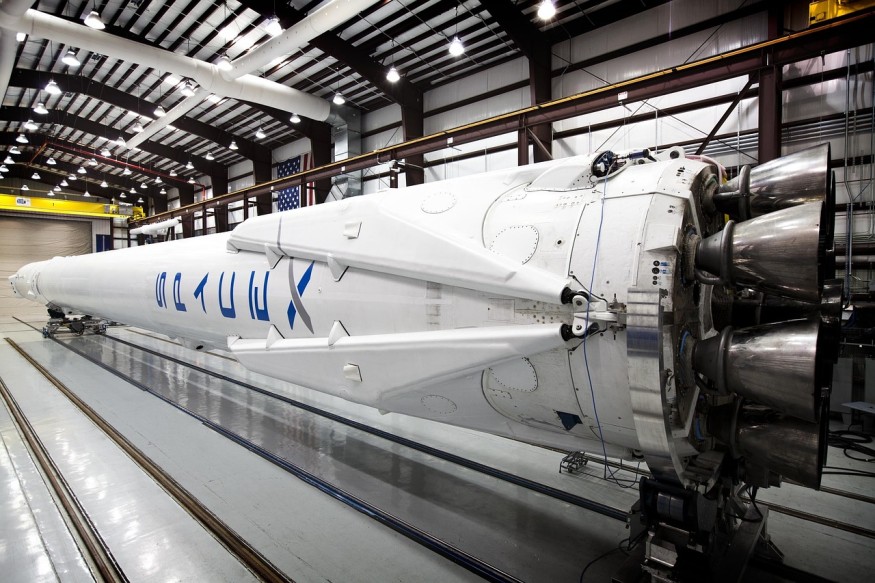
The space industry experienced a seismic transformation over the past two decades, driven primarily by SpaceX innovation that challenged decades-old assumptions about space access.
What was once an exclusive domain reserved for government agencies and legacy contractors has evolved into a dynamic commercial marketplace where private space companies compete to deliver faster, cheaper, and more reliable launch services.
Founded in 2002 by entrepreneur Elon Musk, SpaceX emerged with an audacious vision: reduce launch costs dramatically and make humanity a multiplanetary species.
The company's trajectory from near-bankruptcy after three consecutive rocket failures to becoming the world's most prolific launch provider demonstrates how disruptive innovation can reshape an entire sector.
SpaceX completed 165 orbital launches in 2025 alone, representing 85% of all American orbital missions that year, a staggering cadence that launches a rocket nearly every other day.
Revolutionary Technology That Transformed Launch Economics
SpaceX's most significant contribution to the space industry lies in perfecting reusable rocket technology. Traditional launch vehicles were expendable, discarded after a single use like throwing away an airplane after one flight.
This approach made space access prohibitively expensive, with costs reaching $25,000 per pound during the Space Shuttle era.
The Falcon 9 rocket changed everything by implementing vertical propulsive landing, allowing the first-stage booster to return to Earth and land on autonomous drone ships or landing pads.
The technical complexity involves multiple precision maneuvers: stage separation, boostback burn to reverse flight direction, re-entry burn to protect the vehicle through atmospheric heating, and a final landing burn.
Grid fins provide aerodynamic steering during descent while autonomous flight computers manage GPS and inertial navigation in real-time.
This breakthrough reduced launch costs by 30-65% compared to traditional expendable rockets. SpaceX's internal costs for a Falcon 9 launch now range between $15-28 million, while the commercial price remains $67 million, a fraction of competitors' pricing.
The company has successfully landed 562 boosters out of 585 attempts, achieving a 96% success rate, with individual boosters flying up to 32 times. One booster recently completed a turnaround in just nine days, demonstrating unprecedented operational efficiency.
Competitive Landscape and Market Response
The success of private space companies, particularly SpaceX, catalyzed intense competition. Rocket Lab developed the Neutron rocket with 13,000 kg payload capacity targeting the Falcon 9's market segment, while Blue Origin's New Glenn promises 45,000 kg capability competing with Falcon Heavy.
United Launch Alliance introduced the Vulcan Centaur with its SMART Reuse system, acknowledging that reusability became an industry standard rather than an experimental concept.
Despite emerging competition, SpaceX maintains technological leadership through operational experience. The company achieved its 500th rocket landing and 500th reuse of a previously-flown booster in 2025.
Starlink missions dominated the manifest, comprising 123 of the 165 Falcon 9 launches, deploying over 3,000 satellites and expanding the constellation to more than 9,300 active spacecraft.
The company's Starship program represents the next frontier. Standing 123 meters tall and capable of delivering 100-150 metric tonnes to orbit in fully reusable configuration, Starship would be the most powerful launch vehicle ever developed.
Five test flights in 2025 demonstrated rapid iteration, with the final two achieving all mission objectives. Internal documents suggest operational readiness for lunar missions by 2028, though development continues at an aggressive pace.
Partnership With Government Programs
SpaceX's relationship with NASA exemplifies successful public-private collaboration. The Commercial Resupply Services and Commercial Crew Programs transformed NASA from direct operator to customer, allowing the agency to focus resources on deep-space exploration while purchasing launch services competitively.
SpaceX handles two-thirds of NASA's launches at prices ranging from $62-67 million, substantially less than alternatives, while maintaining perfect reliability for crewed missions.
The Dragon spacecraft completed 35 cargo missions and 18 crewed flights to the International Space Station, delivering approximately 70 tonnes of cargo upward and returning 49 tonnes.
The transition from cost-plus contracting, where contractors received guaranteed payments regardless of overruns, to fixed-price contracts incentivized efficiency and accountability. This model shift saved taxpayers billions while accelerating development timelines.
The Path Forward for Space Exploration
Looking ahead, SpaceX innovation continues driving industry transformation. The space industry growth trajectory suggests continued expansion, with launch frequency increasing 50% annually and over 203 commercial launches completed in the first ten months of 2024.
Infrastructure development accelerates at both Starbase, Texas and Kennedy Space Center in Florida, with new launch mounts and support systems enabling higher launch cadence.
Planned Mars missions represent the ultimate validation of reusable launch economics. SpaceX targets initial uncrewed Starship flights during the 2026 transfer window, with cargo missions launching as early as 2027.
On-orbit refueling demonstrations, scheduled for 2026, will prove critical technologies for deep-space missions requiring multiple tanker launches.
These ambitious timelines face technical challenges, including heat shield development and regulatory approval, but the iterative development approach that brought Falcon 9 to operational status suggests eventual success.
The Starlink constellation, already generating positive cash flow with 9 million subscribers, finances broader exploration goals while providing global broadband coverage.
This revenue stream enables sustained investment in Mars colonization infrastructure, demonstrating how commercial applications subsidize exploratory objectives that lack immediate return on investment.
The Lasting Impact on Space Industry Development
Private space companies fundamentally altered the competitive landscape, technological standards, and economic models governing space access.
SpaceX's achievements forced an industry accustomed to incremental progress and guaranteed profits to embrace rapid iteration, aggressive cost targets, and operational efficiency. The shift from expendable to reusable launch vehicles, once dismissed as impractical by industry veterans, now defines competitive viability.
More than 500 private astronauts are expected by 2030 as space tourism and commercial space stations emerge alongside traditional government missions. The projected lunar economy could reach $100 billion by 2040, while space-based manufacturing and satellite internet services create entirely new markets.
These developments trace directly to cost reductions pioneered by SpaceX innovation, proving that technological breakthroughs in one area cascade throughout entire industries.
The space industry transformation initiated by private space companies represents more than incremental improvement, it constitutes a paradigm shift in how humanity accesses and utilizes space.
What began with a single company's determination to challenge aerospace orthodoxy evolved into a competitive marketplace driving rapid advancement across launch systems, satellite technology, and interplanetary mission architecture.
The legacy extends beyond any single achievement to encompass a fundamental reconfiguration of what remains possible when innovative companies pursue ambitious visions with technical excellence and operational discipline.
Frequently Asked Questions
1. How many times can a SpaceX Falcon 9 booster be reused before it needs to be retired?
SpaceX has reflown a single booster 32 times with turnarounds as quick as nine days. While designed for 10-15 reuses, the company continues pushing limits through operational testing and material improvements.
2. What are the environmental and atmospheric impacts of increased rocket launches?
Rocket debris releases black carbon, nitrogen oxides, and metal oxides that may damage the ozone layer. Scientists warn 1,000 launches annually could create high environmental impact, making monitoring critical as launch rates accelerate.
3. What is it like working at SpaceX compared to other aerospace companies?
SpaceX offers competitive salaries ($108,000-$147,000 for engineers) with equity vesting over four years, but demands intense schedules. Employees cite mission alignment as central to accepting the demanding work environment.
4. How does SpaceX's vertical integration strategy reduce costs compared to competitors?
SpaceX manufactures 90% of components internally, eliminating supplier markups and enabling faster decisions. This approach keeps projects to four years with 1.1% cost overruns compared to traditional aerospace's seven years and 90% overruns.
© 2026 ScienceTimes.com All rights reserved. Do not reproduce without permission. The window to the world of Science Times.


