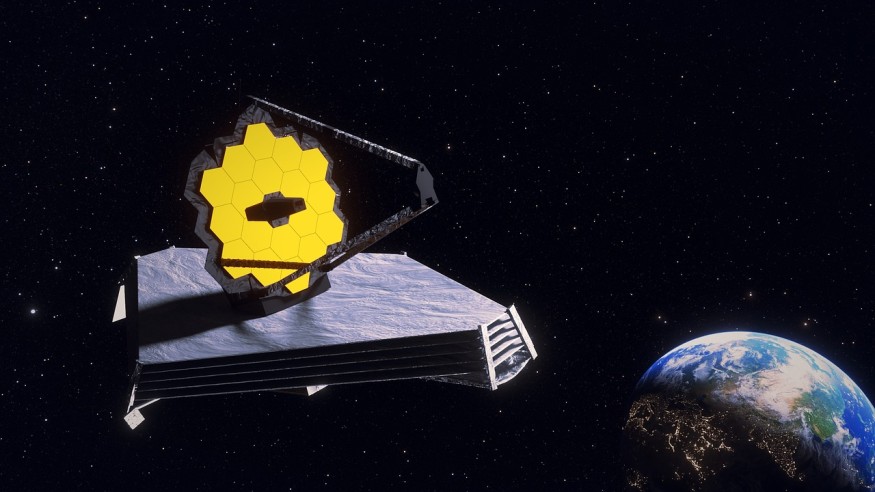
The James Webb Space Telescope discovery of MoM-z14 has pushed astronomy deeper into cosmic history than ever before. This newly confirmed galaxy sits at a redshift of 14.44, meaning its light has traveled for more than 13.5 billion years to reach us. That places it just 280 million years after the Big Bang, making it the closest galaxy to the Big Bang ever spectroscopically confirmed.
What makes this early universe galaxy remarkable is not just its age, but its unexpected brightness and maturity. Astronomers anticipated faint, primitive systems at this epoch, yet MoM-z14 appears surprisingly developed. The finding challenges long-standing models of early universe galaxy formation and raises new questions about how quickly stars and structure emerged after cosmic dawn.
James Webb Space Telescope Discovery: What Makes MoM-z14 the Closest Galaxy to the Big Bang?
The James Webb Space Telescope discovery of MoM-z14 was confirmed using NIRSpec spectroscopy, which detected the Lyman-alpha break at a redshift of z=14.44. That means its light has traveled more than 13.5 billion years, placing it just 280 million years after the Big Bang. This precise measurement secures its status as the closest galaxy to the Big Bang ever verified.
MoM-z14 formed during the epoch of reionization, when the first stars cleared the hydrogen fog filling the young universe. Observing a galaxy from this era offers a rare look at how the earliest luminous structures shaped cosmic history. It gives astronomers direct evidence of activity during a period once thought nearly unreachable.
Despite its early origin, this early universe galaxy appears compact yet surprisingly massive. It holds a stellar mass comparable to the Small Magellanic Cloud within only a few hundred light-years. Signs of rapid star formation and unexpected chemical enrichment suggest galaxies matured faster than many models predicted.
Closest Galaxy to the Big Bang: James Webb Telescope Discovery Details
The James Webb Telescope discovery began when MoM-z14 stood out in deep infrared imaging surveys. Its unusual brightness made it a prime candidate for follow-up spectroscopy. Nearly ten hours of NIRSpec exposure confirmed its extreme redshift and physical characteristics.
At z=14.44, MoM-z14 surpassed previous distance records and pushed the observable frontier even closer to cosmic dawn. Mid-infrared data revealed more about its structure and intense star-forming activity. For such a young galaxy, its luminosity is striking.
This brightness challenges earlier expectations that early universe galaxies would be faint and loosely formed. Instead of slow assembly through gradual mergers, MoM-z14 hints at rapid bursts of star formation. The closest galaxy to the Big Bang suggests the young universe was more energetic than once assumed.
Early Universe Galaxy Evolution: Why This James Webb Telescope Discovery Matters
The discovery of the closest galaxy to the Big Bang forces a rethink of early universe galaxy evolution. Traditional models suggest galaxies grew slowly as dark matter halos merged over time. MoM-z14 indicates that substantial growth may have occurred much earlier.
One explanation involves massive first-generation stars, known as Population III stars, which could have rapidly enriched their surroundings. Another possibility is the early formation of massive black holes accelerating gas inflow and star formation. Either scenario points to a faster path toward galactic maturity.
If more galaxies like MoM-z14 are found, timelines for reionization and structure formation may need adjustment. The James Webb Space Telescope discovery implies the early cosmos was bright, active, and evolving quickly. Each new observation reshapes how we understand the universe's first chapters.
Future James Webb Telescope Discovery Horizons
The James Webb Space Telescope discovery of MoM-z14 likely won't hold the distance record forever. Deeper surveys and longer exposures may reveal galaxies at redshifts of 15 or beyond. Each step moves astronomers closer to witnessing the first light in cosmic history.
Upcoming wide-field infrared missions will complement Webb's detailed observations by scanning larger portions of the sky. These surveys will help determine whether MoM-z14 is rare or part of a broader population of early universe galaxies. A larger sample will sharpen models of galaxy formation.
As technology advances, researchers will study not just distance but internal structure, chemistry, and possible black hole activity. The closest galaxy to the Big Bang marks both a milestone and a gateway. It signals that the cosmic dawn still holds deeper secrets waiting to be uncovered.
A New Era in Understanding the Closest Galaxy to the Big Bang
The James Webb Space Telescope discovery of MoM-z14 reshapes our picture of the infant universe. Instead of faint, slowly forming systems, we now see evidence of compact galaxies burning brightly only 280 million years after the Big Bang. This closest galaxy to the Big Bang highlights how quickly stars, structure, and chemical complexity emerged.
As more data arrives, early universe galaxy models will continue evolving. MoM-z14 reminds us that cosmic history is not static but full of unexpected turns. With each new James Webb Telescope discovery, humanity edges closer to witnessing the true beginnings of galaxies and the dawn of light itself.
Frequently Asked Questions
1. What is MoM-z14?
MoM-z14 is the most distant spectroscopically confirmed galaxy ever observed. It sits at a redshift of 14.44, placing it just 280 million years after the Big Bang. The galaxy was confirmed using the James Webb Space Telescope. Its brightness and maturity make it scientifically significant.
2. Why is MoM-z14 called the closest galaxy to the Big Bang?
The phrase refers to its position in cosmic time rather than physical proximity. Because its light began traveling only 280 million years after the Big Bang, it offers a glimpse into one of the earliest stages of galaxy formation. No other spectroscopically confirmed galaxy has been observed from an earlier epoch. This makes it the current record holder.
3. How did the James Webb Space Telescope detect it?
Astronomers first identified MoM-z14 in deep infrared images. They then used NIRSpec spectroscopy to measure its redshift precisely. The detection of the Lyman-alpha break confirmed its extreme distance. Long exposure times helped capture enough light for detailed analysis.
4. What does this discovery mean for cosmology?
It suggests that galaxy formation may have progressed faster than older models predicted. Early galaxies might have been brighter and more chemically evolved than expected. This could reshape timelines for reionization and structure growth. Future observations will determine how common such galaxies truly are.
© 2026 ScienceTimes.com All rights reserved. Do not reproduce without permission. The window to the world of Science Times.


