Industrial robots have become central to how modern factories approach manufacturing automation, reshaping production lines, workflows, and job roles. They allow manufacturers to boost output, improve product quality, and operate more safely and consistently. As manufacturing automation expands, industrial robots are now a core part of efficient, competitive production strategies.
Industrial Robots and Manufacturing Automation
Industrial robots are programmable machines designed to perform tasks such as welding, painting, assembly, or material handling with high precision and repeatability. In manufacturing automation, they take on repetitive or hazardous work that is difficult for humans to perform consistently over long periods.
By combining sensors, controllers, and software, industrial robots can follow complex instructions, adapt to different products, and integrate with other automated systems.
The rise of industrial robots in manufacturing automation has been driven by the pressure to reduce errors, increase throughput, and maintain quality at scale.
Instead of relying solely on manual labor, factories are using robots to stabilize production and reduce variability. Many plants now operate fully integrated robotic cells and lines that can run almost continuously with minimal interruption.
How Industrial Robots Work in Manufacturing
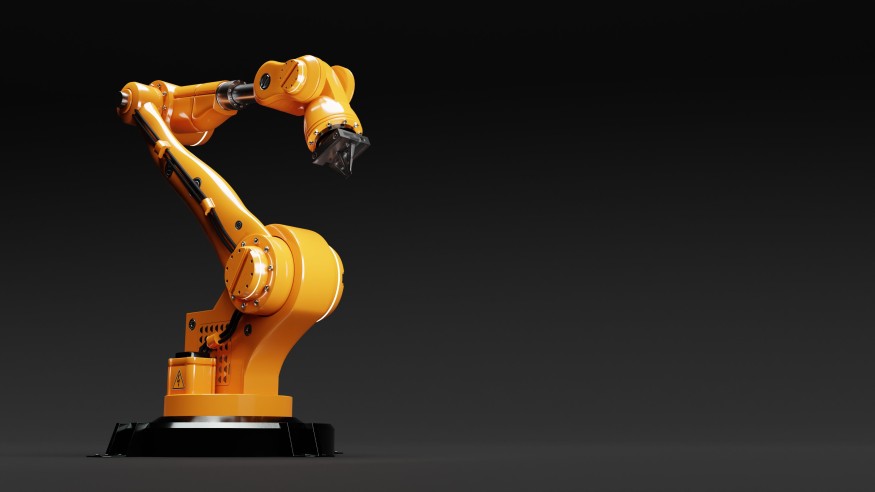
In factories, industrial robots typically include a mechanical arm with multiple joints, actuators to move those joints, a controller that serves as the robot's "brain," and end-effectors such as grippers, welders, or spray guns.
Sensors and vision systems help the robot detect parts, measure positions, and avoid collisions so that it can complete tasks quickly and accurately.
Different types of industrial robots serve different manufacturing automation needs. Articulated robots are common in automotive welding and material handling because of their flexibility.
SCARA robots excel at high-speed pick-and-place and assembly. Gantry robots move along linear axes for large workspaces like palletizing. Collaborative robots, or cobots, are designed to work safely near humans in lighter-duty, flexible tasks.
Common Applications of Industrial Robots in Factories
On the factory floor, industrial robots support material handling and palletizing, moving raw materials, transferring parts between machines, and stacking boxes for shipping. This reduces manual lifting while speeding up the flow of goods.
They are heavily used in welding, cutting, and painting, especially in automotive and metal fabrication. Robots perform welds and cuts with consistent quality and apply paint evenly, improving finishes and reducing waste.
In electronics, food, and consumer goods, industrial robots drive assembly and pick-and-place operations, often assisted by vision systems that also support basic inspection and testing.
Why Industrial Robots Matter in Manufacturing Automation
Industrial robots play a strategic role in manufacturing automation because they directly influence productivity, quality, and reliability. A well-designed robotic cell can run at a steady pace, shortening cycle times and increasing throughput without the fatigue or variation that manual work introduces.
They also support higher quality. Industrial robots repeat the same motion with minimal deviation, which is essential for tight tolerances and consistent product characteristics.
In sectors such as automotive or electronics, this repeatability underpins safety, performance, and brand reputation. Around-the-clock operation further allows factories to extend production hours and make better use of equipment.
How Industrial Robots Increase Factory Efficiency
Industrial robots improve efficiency by reducing cycle times and minimizing bottlenecks. They move quickly and smoothly between operations and can coordinate with conveyors and other machines to keep products flowing.
They also reduce waste and rework. Precise motion lowers misalignment, poor welds, and incorrect placements that lead to defective products. When integrated with sensors and data platforms, robots feed performance information back to managers, who can adjust processes and continuously optimize manufacturing automation.
Industries Using Industrial Robots the Most
Automotive manufacturing is one of the largest users of industrial robots, relying on them for welding, painting, and assembly. Here, manufacturing automation supports large-scale production with strict safety and quality standards.
Electronics and semiconductor plants use industrial robots for delicate, high-speed operations such as placing chips and assembling small components.
Food and beverage producers deploy robots for packaging, sorting, and palletizing, where hygiene and careful handling matter. Metal fabrication, plastics, and general manufacturing also benefit from industrial robots for cutting, machining, and machine tending.
Advantages and Challenges of Industrial Robots
The advantages of industrial robots in manufacturing automation include speed, accuracy, repeatability, and improved safety. Over time, lower waste, higher output, and reduced labor-related costs can offset the initial investment.
Challenges include high upfront costs, the need for skilled personnel to program and maintain systems, and organizational concerns such as job displacement. Many factories respond by investing in training and reskilling so that workers can move into technical and supervisory roles as industrial robots become more common.
Industrial Robots and Manufacturing Automation
As manufacturing automation evolves, industrial robots remain one of the most effective tools for achieving higher efficiency, quality, and flexibility.
They take on precise, repetitive, and hazardous tasks, enabling human workers to focus on supervision, problem-solving, and improvement. Across automotive, electronics, food, and other sectors, industrial robots are helping factories produce more with fewer errors and safer working conditions.
The combination of industrial robots, connected systems, and data-driven decision-making is defining a new generation of smart factories that respond quickly to changing demand.
For manufacturers planning long-term strategies, understanding how industrial robots fit into broader manufacturing automation initiatives is becoming essential. This shift points to a future in which industrial robots are embedded in resilient, efficient, and competitive production operations worldwide.
Frequently Asked Questions
1. What is the difference between industrial robots and traditional automation machines?
Industrial robots are programmable and reconfigurable for many tasks, while traditional automation machines are usually purpose-built for a single, fixed operation.
2. How long does it typically take to see ROI from industrial robots in manufacturing automation?
ROI often appears within 2–5 years, depending on factors like labor costs, production volume, and how well the robot cell is integrated into the line.
3. Can small and medium-sized factories benefit from industrial robots, or are they only for large plants?
Small and medium factories can benefit, especially from modular cells and cobots that are easier to deploy and can be repurposed for different products.
4. How do manufacturers decide which process to automate first with industrial robots?
They usually target repetitive, high-volume, or hazardous tasks where errors are costly and cycle-time reductions will have the biggest impact on overall throughput.
Originally published on Tech Times
ⓒ 2026 TECHTIMES.com All rights reserved. Do not reproduce without permission.


