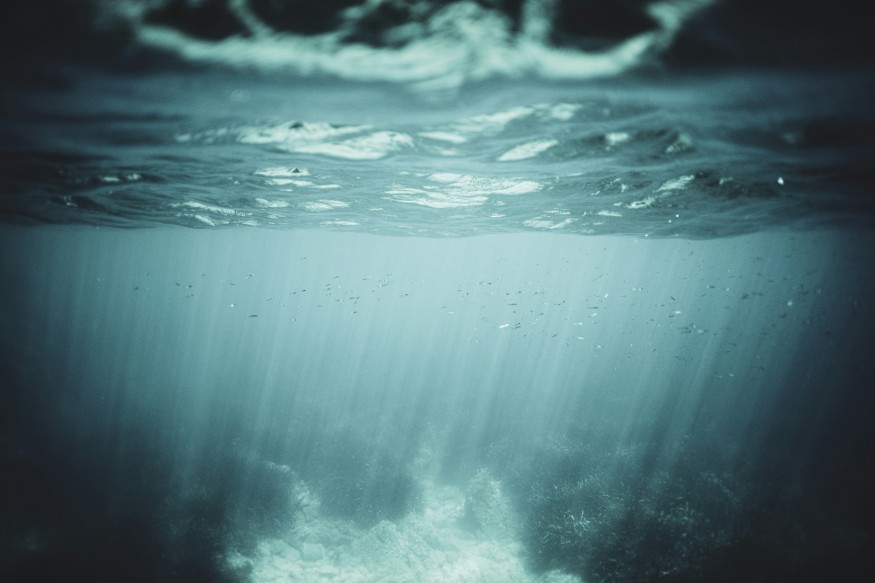
The Mariana Trench, the deepest part of the ocean, holds mysteries few have witnessed firsthand. Its Challenger Deep plunges nearly 10,984 meters below sea level, where pressures exceed 1,000 times that at the surface, crushing unprotected humans instantly. Yet, life persists in this extreme environment, with specialized creatures and microbial ecosystems thriving in total darkness and near-freezing temperatures.
The trench is home to snailfish, amphipods, xenophyophores, and chemosynthetic bacteria that survive around hydrothermal vents, where minerals and superheated water mimic early Earth conditions. Mariana Trench secrets also include the Bloop sound recorded in 1997, over 3,000 bacterial species, and plastic-degrading enzymes with commercial potential. Pioneering dives by James Cameron in 2012 and Victor Vescovo in 2019 uncovered new species and pressure-adapted microbes, offering unprecedented insight into life at the ocean's extreme depths and potential analogs for alien environments.
What Is the Mariana Trench and What Lives in Its Deepest Part?
The Mariana Trench is the deepest part of the ocean, plunging nearly 11,000 meters below sea level where pressures exceed 1,000 times that at the surface. Formed by the Pacific Plate subducting beneath the Mariana Plate, it stretches over 2,500 km long and up to 69 km wide. Its extreme conditions create a unique, largely unexplored environment with geological formations, hydrothermal vents, and microbial ecosystems that have remained isolated for millions of years.
Life in these depths has adapted to survive crushing pressures, near-freezing temperatures, and total darkness. Snailfish like Pseudoliparis swirei have translucent, gelatinous bodies and perfected buoyancy to thrive at 8,336 meters. Amphipods such as Hirondellea gigas scavenge the seafloor, while single-celled xenophyophores up to 20 cm recycle nutrients from sediments. Chemosynthetic bacteria near hydrothermal vents provide energy for tube worms, mussels, and other symbiotic organisms, creating a complex ecosystem independent of sunlight.
Why Mariana Trench Secrets Remain Unexplored?
Despite decades of interest, Mariana Trench secrets remain largely unexplored due to extreme conditions and technical challenges. Only five manned dives have reached Challenger Deep, including James Cameron's solo dive in 2012 and Victor Vescovo's 2019 expedition. Robotic missions like Kaiko and Nereus have suffered failures, as the immense pressures compromise electronics and endurance, limiting continuous exploration.
The trench spans 2,550 km in length and 69 km in width, formed by the collision of the Pacific and Mariana Plates about 180 million years ago. Geologic processes like serpentinization produce hydrogen, potentially fueling microbial life. Mysterious phenomena such as the 1997 Bloop sound, initially attributed to unknown creatures, were later linked to ice calving, but the trench continues to conceal acoustic and biological secrets awaiting further investigation.
What Mariana Trench Discoveries Change Science?
The Mariana Trench has revealed discoveries that are reshaping our understanding of life in extreme environments. Scientists have studied thousands of microbial species, uncovering unique adaptations that survive crushing pressures and complete darkness. These findings provide insights not only into Earth's ecosystems but also into potential life in extraterrestrial oceans.
- Extreme Microbial Life – Over 3,000 bacterial species have been studied, with enzymes capable of surviving extreme pressure and even breaking down plastics, showing promise for pharmaceuticals and environmental applications.
- Paleoclimate Records – Sediment cores from Challenger Deep offer 50-million-year-old records, including foraminifera and proxies for sea levels and CO2, helping scientists understand historical climate changes and ocean conditions.
- Geological Insights – Mapping of the subduction zone at 97 km depth reveals how tectonic and geological processes shape the deepest parts of the ocean, providing context for plate movements and mineral formations.
- Extraterrestrial Life Models – The genomes of xenophyophores, single-celled giants, demonstrate adaptations to pressure, darkness, and nutrient scarcity, offering analogs for potential life in oceans on Europa and Enceladus.
Are Scientists Actively Exploring the Mariana Trench? Past and Recent Expeditions
Scientists continue to push the limits of deep-sea exploration, studying the Mariana Trench to uncover its underwater mysteries. Because of its extreme depth, human exploration is limited, but technological advances in submersibles, remotely operated vehicles (ROVs), and sonar mapping have allowed unprecedented access to its deepest reaches. These missions help reveal unique species, geological formations, and chemical processes that are otherwise invisible from the surface.
Notable expeditions include James Cameron's 2012 solo dive to Challenger Deep in the Deepsea Challenger submersible, which provided high-resolution footage of the trench's seafloor and captured microbial samples. In 2019, Victor Vescovo completed multiple dives in the Limiting Factor, setting new depth records and mapping large portions of the trench. Earlier efforts, like the Trieste dive in 1960, marked the first manned descent to the trench, while unmanned missions such as ROVs Kaiko and Nereus expanded scientific sampling and geological surveys. Ongoing robotic missions continue to explore previously unreachable areas, revealing new species and helping scientists understand the trench's role in Earth's geology and ecosystem.
Mariana Trench Deepest Ocean Mysteries Revealed
The Mariana Trench secrets, the deepest part of the ocean, and its underwater mysteries continue to reshape our understanding of extreme life and Earth's geology. From pressure-adapted snailfish to hydrothermal vent ecosystems, this environment represents one of the planet's most isolated and biologically rich frontiers.
Continued exploration and research are uncovering Mariana Trench discoveries that impact climate science, astrobiology, and biotechnology. Each expedition reveals new species, unique microbial life, and geological features, offering insights into the limits of life on Earth and the potential for life elsewhere in our solar system. As technology advances, the trench's hidden ecosystems may provide critical clues to resilience, adaptation, and survival in the planet's most extreme environments.
Frequently Asked Questions
1. How deep is the Mariana Trench?
The Mariana Trench reaches a maximum depth of 10,984 meters at Challenger Deep. Pressures exceed 1,000 times that at the ocean surface. Temperatures hover between 1–4°C. Despite these conditions, specialized life continues to thrive.
2. What creatures live in the Mariana Trench?
Snailfish, amphipods, xenophyophores, and chemosynthetic bacteria dominate the trench's ecosystem. Many are adapted to extreme pressure, darkness, and cold. Hydrothermal vent communities rely on chemical energy instead of sunlight. These species demonstrate unique evolutionary adaptations.
3. Why is the Mariana Trench difficult to explore?
Extreme pressures and crushing depths make manned and robotic exploration challenging. Electronics and materials can fail under the conditions. Only a few dives and ROV missions have reached the bottom. The trench's vast size and remote location add logistical challenges.
4. What scientific discoveries have come from the Mariana Trench?
Researchers have uncovered over 3,000 bacterial species, hydrothermal vent ecosystems, and unique geological formations. Enzymes capable of plastic degradation and extreme pressure survival were identified. Sediment cores reveal 50-million-year-old paleoclimate data. These findings inform climate science, biotechnology, and astrobiology.
© 2026 ScienceTimes.com All rights reserved. Do not reproduce without permission. The window to the world of Science Times.


