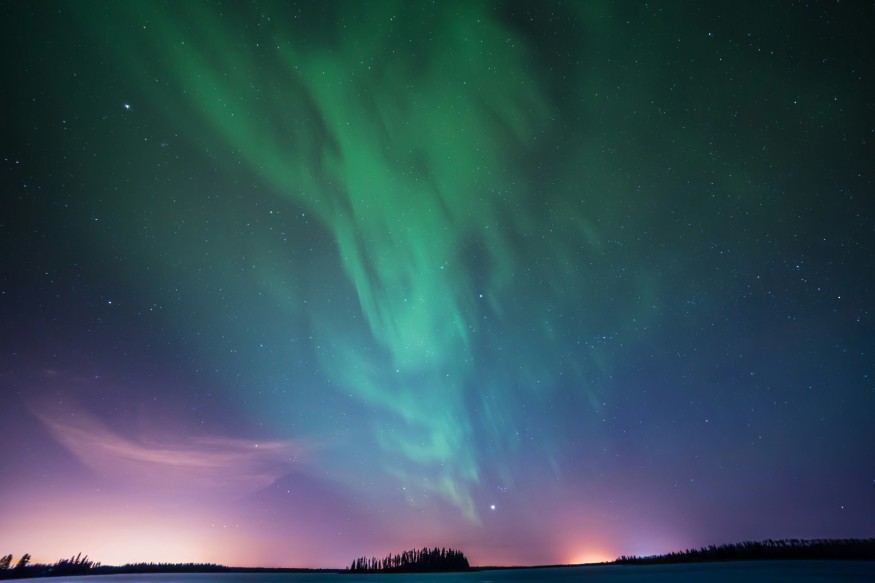
Why does the sky suddenly erupt into shimmering greens, reds, and purples during intense solar activity? That question continues to fascinate scientists and skywatchers, especially as solar storms become more frequent during the Sun's active cycle. Solar storms aurora displays occur when geomagnetic storms from the Sun energize Earth's upper atmosphere, creating breathtaking natural light shows that can sometimes stretch far beyond the polar regions.
These events happen when solar wind and massive bursts from coronal mass ejections (CMEs) interact with Earth's magnetic field. Charged particles accelerate toward the poles, colliding with atmospheric gases and generating vibrant auroral curtains. This magnetic field interaction reveals how dynamic the Sun–Earth connection truly is and why CME aurora events remain some of the most captivating phenomena in space weather.
Solar Wind and Geomagnetic Storms in Solar Storms Aurora Formation
The Sun continually releases a stream of charged particles known as the solar wind, which travels through the solar system and interacts with Earth's magnetic field. During heightened solar activity, this wind becomes stronger and more concentrated—especially when CMEs send massive bursts of plasma toward Earth. As this intensified stream reaches our planet, it compresses the magnetosphere and triggers geomagnetic storms that change how particles behave near the poles.
When these storms occur, the magnetic field becomes more receptive to incoming solar particles. A southward-turning solar wind allows magnetic reconnection, guiding electrons and protons along magnetic field lines directly into the upper atmosphere. Their collisions with oxygen and nitrogen produce bright green, red, purple, and blue auroral colors, and during strong geomagnetic storms, this glow stretches far beyond polar regions into mid-latitudes, creating dramatic skywide displays.
- What Causes Solar Storms? - Solar storms originate from two major solar activities: CMEs and solar flares. CMEs hurl massive plasma clouds into space, while solar flares release bursts of electromagnetic radiation. When these events are directed toward Earth, they carry energetic particles and twisted magnetic fields that can disturb our planet's magnetosphere. These disturbances trigger geomagnetic storms capable of powering auroras, disrupting satellites, and occasionally affecting electrical systems.
- How Do Auroras Form - Auroras form when incoming solar particles collide with atmospheric gases in the ionosphere. After magnetic reconnection occurs between the solar wind and Earth's magnetic field, particles are accelerated downward at high speeds. Once they strike atoms of oxygen or nitrogen, energy is released in the form of light. The color and intensity depend on the type of gas involved and the altitude of the collision.
- Can Solar Storms Damage Earth - Solar storms vary in strength, but the most intense ones can interfere with technologies humans depend on daily. Strong geomagnetic storms may disrupt power grids by inducing currents in long power lines, affect satellite operations, degrade GPS accuracy, and interrupt radio communications. Thankfully, Earth's atmosphere protects humans from harmful solar radiation, so while technology is vulnerable, the planet itself remains largely shielded.
- Where Are Auroras Visible During Solar Storms - Under normal solar activity, auroras remain concentrated near the poles. However, strong CME aurora events can push the auroral oval much farther south or north than usual. During major geomagnetic storms, observers as far south as the northern United States, Europe, or even parts of Asia may witness these remarkable light displays. The strength of solar wind and the direction of the magnetic field determine how far the auroras spread.
CME Auroras and Magnetic Field Interaction Dynamics
CME aurora events represent some of the most visually striking auroral displays, triggered when massive plasma clouds from the Sun collide with Earth's magnetosphere. These collisions set off rapid magnetic field interaction, often leading to substorms—sudden, intense bursts of energy that brighten and expand auroras across the sky. These substorms create dynamic patterns such as spirals, rays, and rippling curtains that shift in real time.
As CMEs strike the magnetosphere, particles are energized by mechanisms such as Alfvén waves, which accelerate electrons toward the atmosphere. Once they enter the thermosphere, they ionize atmospheric gases and produce vivid displays. The density and speed of the solar wind determine how energetic the auroras become. When the solar wind crashes into Earth's magnetic field at an optimal angle, the energy transfer intensifies, producing brighter and more colorful auroras.
These interactions emphasize why scientists closely track magnetic field interaction patterns. Understanding the solar wind's direction, speed, and density helps forecast CME aurora events and prepare for possible geomagnetic storms that may affect technology. As monitoring improves, predictions of auroral strength and visibility are becoming increasingly accurate.
How Solar Activity Cycles Influence Auroral Intensity
Auroral activity rises and falls with the Sun's 11-year solar cycle, marked by fluctuations in solar flares, sunspots, and CMEs. During solar maximum, when sunspot numbers peak, CMEs become more frequent and intense, increasing the likelihood of strong geomagnetic storms. This period often brings some of the most spectacular auroral displays, with colors becoming brighter and visible across wider regions. Solar minimum, by contrast, brings fewer storms and more subdued auroras. Understanding this cycle helps predict when auroral activity will be at its most active, guiding researchers, power grid operators, and aurora hunters alike.
Conclusion
Solar storms and aurora events reveal the powerful relationship between the Sun and Earth, fueled by solar wind, magnetic reconnection, and intense geomagnetic storms. These interactions create the brilliant colors and sweeping patterns that define CME aurora displays, turning the sky into a dynamic canvas of light during heightened solar activity.
Growing advancements in space weather forecasting allow scientists to anticipate these events better, improving our ability to monitor solar wind conditions and magnetic field interaction. As understanding of solar activity deepens, so does the ability to appreciate and prepare for the extraordinary phenomena that arise from the Sun–Earth magnetic connection.
Frequently Asked Questions
1. What is a CME aurora?
A CME aurora occurs when plasma from a coronal mass ejection crashes into Earth's magnetosphere, injecting energy that lights up the sky with vibrant colors.
2. How does solar wind create geomagnetic storms?
When the solar wind's magnetic field turns southward, it reconnects with Earth's magnetic field, transferring energy and fueling geomagnetic storms.
3. Why do auroras appear during solar storms?
Aurora displays during solar storms occur when energetic particles collide with atmospheric gases, causing them to emit visible light.
4. Can magnetic field interaction predict auroras?
Solar wind data and magnetic field orientation help forecast geomagnetic storms, making aurora prediction increasingly accurate.
© 2026 ScienceTimes.com All rights reserved. Do not reproduce without permission. The window to the world of Science Times.


