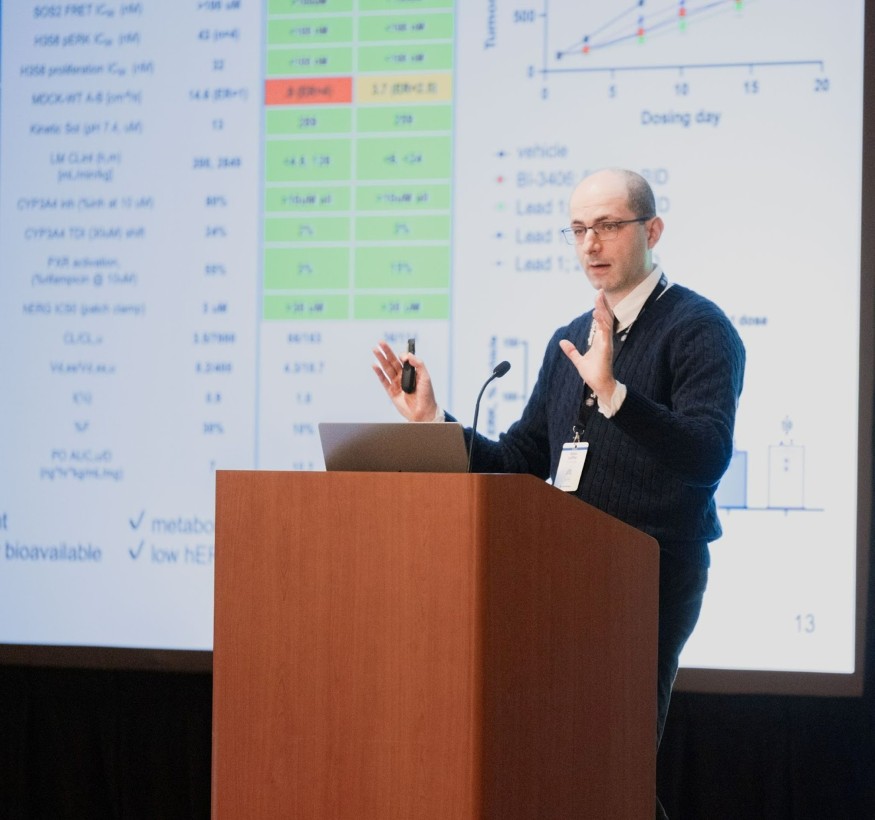
Advances in artificial intelligence and physics-driven computational methods have become crucial components of modern early-stage discovery. These technologies have been especially valuable in determining patients' suitability for pharmaceutical treatment.
Abba Leffler's experience at the advanced computational discovery firm Schrödinger has demonstrated how these tools help shorten the path from an early idea to a real therapeutic opportunity. His perspective on the future of drug discovery reflects a shift already reshaping research teams across the industry. This is especially true when it comes to peptides, a modality of growing importance in drug discovery.
Computational Work Aligned with Biology
As a senior principal scientist in Schrödinger's therapeutics division, Abba E. Leffler, Ph.D., integrates physics-based modeling with experimental data to guide researchers toward candidates that merit further investigation. This reflects a shift from traditional workflows heavily reliant on time-consuming sequential lab experiments toward more efficient strategies in which high-fidelity evaluations are performed earlier and at a broader scale.
Spearheading Modern Molecular Design
Physics-based computational environment enables scientists to run advanced molecular simulations before actual compound testing and benchmarking. This allows teams to assess chemical properties, anticipate molecular behavior, and navigate large regions of chemical space without physically synthesizing each compound. By pairing physics with algorithmic tools, the platform can accomplish more refined design work and reduce cycles of trial and error that routinely slow early discovery.
AI as a Tool for Faster and Deeper Insight
As a cross-disciplinary discovery scientist, Abba is deeply involved in initiatives that combine computation, chemistry, and biology. His projects rely on physics-based insights combined with experimental results, enabling him to evaluate the biological relevance of emerging concepts. Artificial intelligence is becoming a major part of this process.
Abba specializes in applying AI and computational chemistry tools to accelerate discovery timelines. These methods help teams analyze information at a scale that would be impossible via manual methods.
Machine learning models contribute predictions about structure, function, and molecular fit. When used alongside physics-based simulations rather than as standalone tools, these models provide a more complete view of potential candidates, helping researchers explore new directions faster.
A More Informed Route to Promising Candidates
Research teams are routinely challenged by time and cost constraints, as well as increasing biological complexity. The combined use of AI and physics-driven simulation gives scientists a way to overcome early uncertainty with greater clarity.
One example is the use of peptides as an application. Peptides are especially useful because they can be tuned with small, precise changes. Abba's research shows how a single adjustment in a peptide's charge can shift its behavior toward different receptor types. By using the AI structure prediction method AlphaFold to generate models of how these peptides attach to different proteins and then validating these models with physics-based Protein FEP+ predictions, the team unraveled why changes in charge affect which receptors the peptides prefer.
This degree of fine control makes peptides useful test beds when pairing AI prediction with physics-based models. They are especially crucial when teams need to understand how small edits might influence activity. When computational models can anticipate how a peptide mutation can shape selectivity, researchers can move from an early idea to a viable drug candidate faster and with greater accuracy.
Abba Leffler notes that computational modeling isn't meant to replace experiments. Rather, it strengthens them by providing sharper hypotheses before lab work begins, helping reduce the time, effort, and resources expended in producing compounds that would ultimately be discarded.
Abba's work highlights how computational and experimental disciplines can reinforce each other when integrated thoughtfully. As more organizations adopt methods similar to those used at Schrödinger, the science of early discovery continues to evolve. Faster iteration, more focused molecular design, and the ability to address complex biological questions earlier in the process are becoming part of the standard research methodology.
Traversing the path from idea to candidate still presents significant challenges. Nevertheless, advances in integrating physics-based modeling and AI are paving the way for a more direct route. Through Abba Leffler's work at Schrödinger, research teams can be more effective at advancing promising therapeutic concepts.
© 2026 ScienceTimes.com All rights reserved. Do not reproduce without permission. The window to the world of Science Times.


