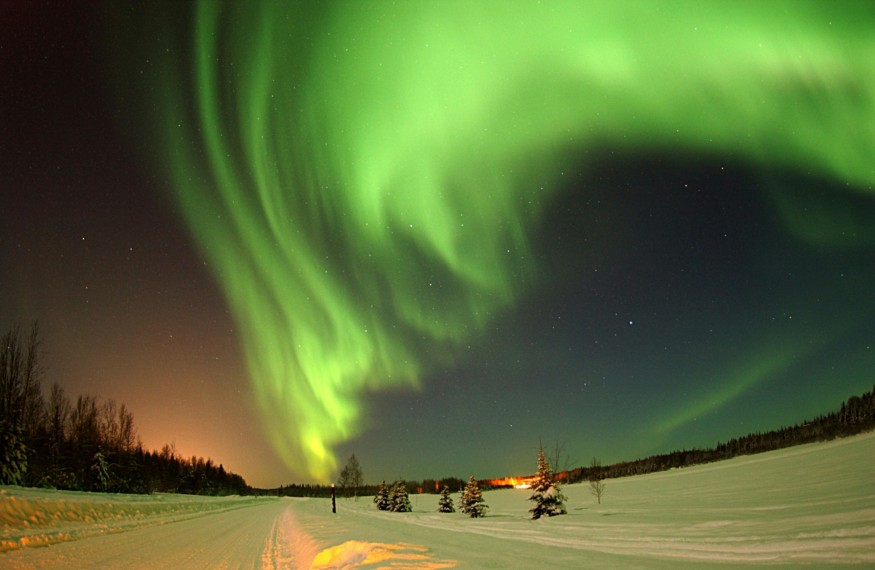
Magnetospheric substorms play a central role in producing auroras by releasing stored magnetic energy from solar wind interactions. These substorms accelerate plasma along Earth's magnetic field lines, funneling keV electrons into the upper atmosphere where they collide with atmospheric atoms and molecules, generating the characteristic glowing auroral curtains. Space plasma physics reveals that reconnection events in the magnetotail inject energy equatorward, producing dynamic auroral patterns that brighten and move poleward during the substorm expansion phase.
Understanding substorm processes is essential for interpreting the coupling between the solar wind, magnetosphere, and ionosphere. Observations from multi-satellite missions, such as THEMIS and Cluster, show that auroral intensifications are closely linked to earthward plasma flows and current systems in the magnetotail. These insights demonstrate how magnetospheric substorms serve as a primary aurora trigger while advancing our understanding of fundamental space plasma physics.
Growth Phase Dynamics in Magnetospheric Substorms
During the growth phase of a magnetospheric substorm, the solar wind compresses the dayside magnetosphere while stretching the nightside tail. This accumulation of energy in the tail's magnetic fields stores tens of gigajoules of energy. Reconnection at the distant neutral line in the magnetotail eventually snaps these tail fields earthward, creating rapid braking flows near -10 RE (Earth radii) that trigger substorm onset.
The plasma sheet thins to approximately 1 RE just prior to dipolarization, when the magnetic field lines suddenly return to a more dipolar configuration. This dipolarization injects energetic electrons equatorward, supplying the particle population necessary to generate auroral arcs. The growth phase establishes the energy reservoir that will be released during the expansion phase, directly linking magnetospheric dynamics to the auroral response.
Key Processes During the Growth Phase
- Solar wind compression of the dayside magnetosphere stores energy in stretched tail fields.
- Nightside magnetotail elongation creates the energy reservoir for substorm release.
- Reconnection at the distant neutral line triggers earthward plasma flows.
- Rapid braking flows near -10 RE initiate substorm onset.
- Plasma sheet thinning to ~1 RE precedes dipolarization.
- Dipolarization injects energetic electrons equatorward, seeding auroral arcs.
Expansion Phase and Auroral Acceleration
During the substorm expansion phase, the substorm current wedge forms, diverting Region 1 currents and intensifying field-aligned acceleration of electrons. Space plasma physics demonstrates that these partial ring currents redirect ionospheric closure currents, creating localized enhancements in auroral intensity. Parallel electric fields, or double layers, form with magnitudes of 0.1–1 kV/m, precipitating 1–10 keV electrons into the auroral oval and producing the vivid auroral displays observed from the ground.
Ionospheric conductance feedback plays a significant role in destabilizing the system further. As electrons collide with atmospheric particles, enhanced ionization increases local conductivity, which intensifies field-aligned currents and expands the auroral oval poleward. This process explains why auroras brighten and extend toward higher latitudes during the expansion phase, confirming the aurora trigger function of magnetospheric substorms.
Key Processes During the Expansion Phase
- Formation of the substorm current wedge diverts Region 1 currents.
- Partial ring currents redirect ionospheric closure currents, enhancing auroral intensity.
- Parallel electric fields (0.1–1 kV/m) accelerate 1–10 keV electrons into the auroral oval.
- Electron precipitation produces vivid auroral displays visible from the ground.
- Ionospheric conductance feedback increases local conductivity through enhanced ionization.
- Expansion of auroral oval poleward results from intensified field-aligned currents.
- Aurora brightening and poleward motion confirm magnetospheric substorms as aurora triggers.
Timing, Pulsations, and Recovery
Aurora trigger timing aligns closely with plasma flow vortices that reach the ionosphere 1–2 minutes after tail reconnection. Observations show that auroral streamers and bright arcs correspond directly to these earthward flows, confirming the causal link between magnetotail dynamics and auroral phenomena. This precise timing demonstrates how quickly energy stored in the magnetotail can be converted into visible auroral displays, highlighting the efficiency of space plasma processes during substorm events.
Pulsating auroras often appear during the substorm recovery phase, following the main auroral expansion. These pulsations occur as chorus waves interact with radiation belt electrons, scattering them into the ionosphere and producing quasi-periodic luminosity variations. The combination of these scattering processes and residual magnetotail flows creates dynamic, shimmering auroral patterns that can persist for tens of minutes, even after the peak of the substorm has passed.
Multi-satellite observations from missions like THEMIS and Cluster confirm that earthward plasma flows precede auroral streamers by a transit time consistent with distances across the magnetotail. This correlation validates models of substorm onset and energy transport, showing how reconnection, current wedge formation, and plasma transport work together to produce both steady and pulsating auroral features. Understanding these processes is critical for space plasma physics and for predicting auroral activity across different latitudes.
Conclusion
Magnetospheric substorms remain a fundamental aurora trigger, linking solar wind input to energetic particle precipitation in Earth's upper atmosphere. These events demonstrate how magnetotail reconnection, current wedge formation, and plasma acceleration collectively drive auroral intensification and poleward motion. By studying substorm dynamics, space plasma physics provides critical insights into energy transfer processes within Earth's magnetosphere and their visible manifestations.
Continued multi-satellite observations refine our understanding of substorm onset, expansion, and recovery, enabling better predictions of auroral activity. As instrumentation improves, researchers can quantify the fine-scale interactions between magnetospheric currents, plasma flows, and ionospheric responses, strengthening our comprehension of fundamental space plasma physics and aurora trigger mechanisms.
Frequently Asked Questions
1. What initiates a magnetospheric substorm?
Magnetic reconnection in the stretched magnetotail snaps tail fields earthward, releasing stored energy.
2. How do substorms create auroras?
Accelerated electrons precipitate along intensified magnetic field lines into the ionosphere, producing visible light.
3. What is the substorm current wedge?
A partial ring current diverts ionospheric closure currents during the expansion phase, intensifying auroral arcs.
4. Why does pulsating aurora occur after substorms?
Chorus wave scattering of injected electrons during recovery creates quasi-periodic pulsations in the aurora.
© 2026 ScienceTimes.com All rights reserved. Do not reproduce without permission. The window to the world of Science Times.


