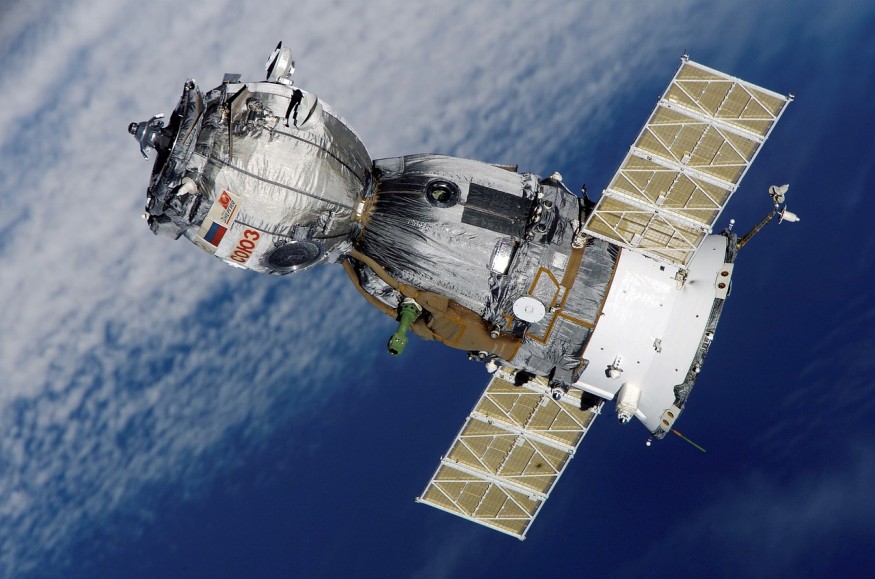
Modern satellite technology has become an invisible but indispensable force shaping how the world communicates, navigates, and understands its environment. From streaming media to monitoring deforestation, these artificial orbiters play a critical role in daily life.
As human dependence on digital connectivity and real-time data grows, the significance of satellite systems continues to expand, quietly orbiting above, yet deeply integrated into life on Earth.
What Is Satellite Technology?
Satellite technology refers to the use of human-made objects launched into space to perform tasks such as communication, navigation, data transmission, and Earth observation. These satellites orbit the planet in various paths, low Earth orbit (LEO), medium Earth orbit (MEO), or geostationary orbit (GEO), depending on their function.
There are several types of satellites. Communication satellites transmit television signals, mobile calls, and internet data across the globe. Navigation satellites, such as those in the GPS and Galileo systems, provide location and timing services.
Weather satellites track atmospheric conditions, while scientific and Earth observation satellites collect data crucial for environmental monitoring and research.
This complex technological web allows humanity to maintain constant connectivity and global awareness, even in the most remote corners of the planet.
How Do Satellites Affect Daily Life?
Few people realize how deeply satellite technology influences everyday routines. Most digital services, travel systems, and global communications rely on it. GPS satellites, for instance, guide drivers, ships, and airplanes with precise navigation down to the meter.
Without satellite-based navigation, air traffic management and maritime operations would face significant disruption.
Satellite communication also enables global broadcasting, from television channels to live sports coverage and international news feeds. Internet transmission in rural or isolated areas often depends on satellite links where terrestrial infrastructure is impractical.
Moreover, satellites synchronize time across financial networks, ensuring secure banking transactions and stable power grid operations. Every online transfer or global stock exchange transaction depends on satellite-based timing. Though largely unseen, satellite systems have become the foundation of modern connectivity.
What Is Earth Observation and Why Is It Important?
Earth observation, the use of satellites to monitor and analyze the planet's physical, chemical, and biological systems, has revolutionized scientific understanding and environmental management. By capturing images and sensor data from space, Earth observation satellites provide information that helps governments, researchers, and organizations make data-driven decisions.
These satellites record changes in vegetation, ocean temperature, ice cover, and atmospheric composition. For example, they allow scientists to monitor Amazon deforestation year after year or track polar ice melting due to climate change.
Agricultural applications are equally impactful: farmers can analyze soil conditions and crop health using satellite imagery to optimize yields and reduce resource waste.
In disaster response, Earth observation data helps evaluate damage from floods, wildfires, or earthquakes. It offers timely insights that ground teams use for relief and recovery planning. By providing a global perspective of local problems, Earth observation enables informed policies and a deeper understanding of Earth's changing environment.
How Do Satellites Help During Natural Disasters?
Satellite technology plays an essential role in disaster preparedness and recovery. When natural disasters strike, ground communication systems often fail, but satellites remain functional above the disruption. This capability makes them a lifeline for emergency response efforts.
For instance, during hurricanes, weather satellites supply real-time imagery to predict storm movements and intensity. Earth observation satellites assess affected regions after disasters such as tsunamis or wildfires, allowing relief agencies to prioritize areas needing immediate aid.
Data from radar and optical sensors improves situational awareness, helping responders act quickly and efficiently.
In addition, satellite-enabled navigation assists with coordinating logistics and directing rescue teams. Governments worldwide, including those in disaster-prone regions, have integrated satellite data into their national emergency management systems to minimize loss of life and property.
How Are Satellites Used in Communication and Navigation?
Satellites form the backbone of modern global communication. Communication satellites relay television broadcasts, international calls, and broadband internet between continents. They connect remote islands, aircraft, and ships where no terrestrial network can reach.
With innovations in low-Earth-orbit satellite constellations, providers such as Starlink and OneWeb are working to deliver high-speed internet to underserved regions.
In navigation, satellite technology powers Global Navigation Satellite Systems (GNSS) such as GPS (United States), Galileo (European Union), GLONASS (Russia), and BeiDou (China).
These systems provide precise location data for smartphones, vehicles, and mapping applications. Beyond civilian use, navigation satellites support aviation routing, traffic management, and logistics tracking.
Satellite-based communication and navigation together ensure global accessibility and operational reliability, even where cable-based systems cannot function.
How Does Satellite Technology Support Science and Space Exploration?
Satellite missions are central to advancing scientific knowledge and space exploration. Earth observation satellites provide atmospheric and climate data used by meteorologists and environmental scientists, while astronomical satellites such as the James Webb Space Telescope observe distant galaxies, stars, and planetary systems.
In planetary science, satellite probes orbit celestial bodies to study their composition and physical conditions. In space exploration, they act as communication relays and research platforms, bridging the gap between Earth and other parts of the solar system.
Beyond exploration, satellite data improves understanding of weather patterns, biodiversity, and geological hazards, further integrating science with societal development.
What Are the Challenges Facing Modern Satellite Technology?
While essential, satellite technology faces several challenges. Space debris is one of the most pressing issues. Thousands of inactive satellites and fragments orbit Earth, threatening functional spacecraft through potential collisions. Organizations such as NASA and the European Space Agency continuously monitor and manage these hazards.
Cost poses another barrier. Launching and maintaining satellites require significant investment, especially for governments and smaller nations. Cybersecurity is also an emerging concern, as satellites carry sensitive communication and navigation data that could be targeted by hackers.
Additionally, frequent launches contribute to atmospheric pollution. As more private companies enter the space industry, regulation and environmental oversight will become increasingly important to maintain sustainability in orbit.
The Future of Satellite Technology
The future of satellite technology points to miniaturization, lower cost, and greater accessibility. The development of small satellites, often launched in constellations, allows for faster deployment and frequent data collection at reduced expense. These satellites can work together to provide detailed Earth observation data and improve global coverage.
Artificial intelligence (AI) and machine learning will enhance data analysis by processing the vast amount of information satellites generate each day. This evolution will help detect anomalies, forecast weather trends, and manage natural resources more efficiently. Private companies are also expanding commercial satellite services, broadening competition and accelerating innovation.
Efforts toward cleaner launches and debris management signal a shift toward responsible space operations. As these advancements progress, satellite technology will continue to strengthen the digital and scientific infrastructure supporting modern civilization.
Satellites, though invisible to the naked eye, have become integral to nearly every aspect of modern life. They connect continents, guide travelers, forecast weather, and help humanity understand the planet from above.
Through communication systems, navigation networks, and Earth observation data, satellite technology supports scientific progress, safety, and environmental stewardship.
As innovation advances and challenges like orbital debris are addressed, the role of satellites will only continue to grow. These machines orbit silently in the night sky, yet their impact resonates across every digital interaction, every mapped route, and every step toward a smarter, more connected world.
Frequently Asked Questions
1. How does satellite technology affect global security?
Satellites enhance global security by monitoring borders, tracking military activities, and supporting secure communications. They provide real-time intelligence that helps nations detect threats and coordinate defense and humanitarian operations.
2. Can artificial intelligence improve Earth observation data analysis?
Yes. AI processes large volumes of satellite data quickly, spotting patterns like deforestation or extreme weather. This makes Earth observation data more actionable for researchers and policymakers.
3. How do satellites influence climate research and sustainability efforts?
Satellites track global temperature, sea-level rise, and greenhouse gases. Their continuous data helps scientists study climate change and policymakers plan sustainability strategies.
4. What is the difference between remote sensing and Earth observation?
Remote sensing gathers information from a distance using aircraft, drones, or satellites. Earth observation specifically uses satellites to monitor Earth's surface and atmosphere.
© 2026 ScienceTimes.com All rights reserved. Do not reproduce without permission. The window to the world of Science Times.


