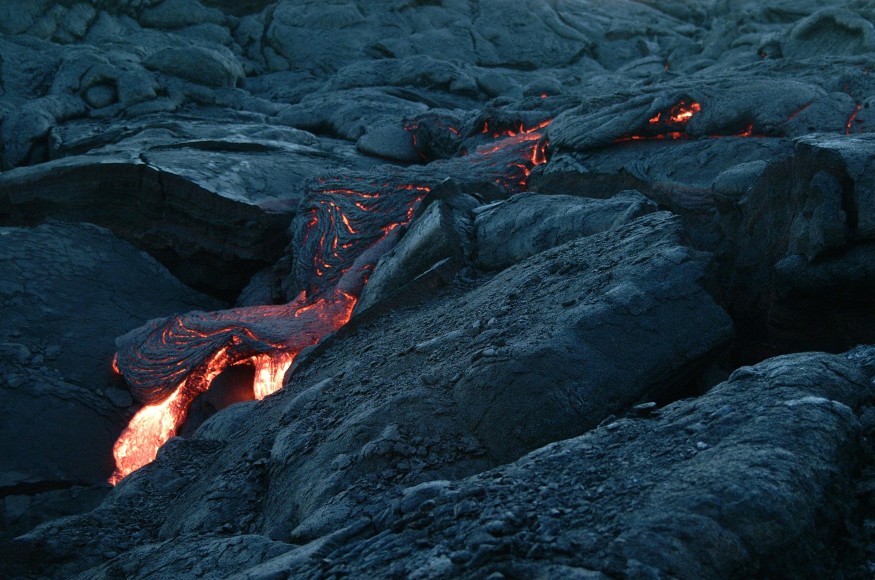
Researchers have unveiled what could be the longest underwater volcano chain ever documented, a sprawling network hidden beneath ocean waves that transforms our grasp of ocean geology. Stretching thousands of kilometers, this chain of seamounts and volcanic ridges challenges assumptions about how Earth's seafloor evolves over deep time.
This discovery pulls back the curtain on forces that have sculpted the planet's underwater landscape for millions of years. Oceanographers now see clear links between tectonic drift and these massive formations.
Unraveling the Underwater Volcano Chain Structure
Underwater volcano chains emerge when tectonic plates glide over fixed hotspots in Earth's mantle, spewing lava that hardens into towering peaks. Each volcano in the chain marks a snapshot of plate motion, with older ones trailing behind as the plate shifts. In ocean geology, these chains rank among the most dramatic features, often rising 1,000 to 4,000 meters from the seafloor yet remaining submerged.
The newly mapped chain boasts dozens of such giants, some rivaling Hawaii's Mauna Kea in height but spread across vast distances. High-resolution sonar from research vessels pierced the depths, revealing jagged rims and calderas that hint at explosive pasts. Unlike land volcanoes that dominate headlines, these underwater structures quietly build the ocean floor, covering over 70% of Earth's surface.
Scientists describe the chain's layout as linear yet branching, formed as plates tugged away from a central hotspot. Basaltic eruptions dominate here—molten rock rich in iron and magnesium that flows easily underwater, cooling into pillow lavas and hyaloclastite. Over eons, erosion flattens summits into guyots, table-top mountains unique to ocean geology.
This chain's scale sets it apart. Picture a line of peaks as long as the U.S. East Coast, dotted with craters deep enough to swallow small islands. Such formations trap sediments and minerals, creating fertile grounds for deep-sea life while steering global currents.
Pinpointing the Chain's Location and Discovery Story
Experts zeroed in on this underwater volcano chain during a 2025 expedition in the Southern Ocean, between Tasmania and Antarctica's edge. Bathymetric surveys lit up the seafloor with 3D images, exposing a 2,500-kilometer thread of volcanoes previously dismissed as random bumps. Some peaks scrape within 200 meters of the surface, making them prime spots for future study.
Alternate sightings pop up near Pacific hotspots, like extensions off the Cook Islands where similar chains snake eastward. Ocean geology ties these to the same mechanics: plates cruising 5-10 centimeters yearly over magma plumes. The Southern Ocean version stands out for its youth—some volcanoes dated to under 10 million years, fresh by geological standards.
Discovery hinged on satellite altimetry and shipboard multibeam echo sounders, tools that bounce sound waves off the bottom to map terrain invisible to satellites alone. Space.com covered how these efforts revealed spectacular ancient chains lurking below.
Challenges abounded. Harsh weather, ice floes, and depths exceeding 4,000 meters tested gear and crews. Yet the payoff reshapes maps, filling gaps in ocean geology knowledge that once relied on sparse soundings from passing ships.
- Main Ridge Length: 2,500 km, spanning 10-145 million years.
- Peak Heights: Up to 1,500 m, varying by position in the chain.
- Caldera Depths: 200-500 m, from recent to ancient formations.
How Ocean Geology Fuels Chain Formation
Ocean geology thrives on convection in the mantle, where hot rock rises, melts, and erupts through thinned crust. Hotspots differ from mid-ocean ridges by punching through stable plates, birthing isolated chains rather than continuous seams. The global mid-ocean ridge system spans 65,000 kilometers and hosts 90% of Earth's volcanism, but chains like this one add isolated drama.
Plates drift, hotspots stay put—that's the recipe. As a plate moves northwest at 8 cm/year, it strings out volcanoes: active ones over the plume, dormant ones stretching behind. Hawaii's chain exemplifies this, with Loihi seamount brewing next in line. Our featured chain mirrors that, potentially fed by a distant plume now 1,000 km away.
Eruptions here stay subdued thanks to water pressure, which quashes explosive blasts. Lava oozes out, building layers until buoyancy lifts cones high. Over time, currents erode them, while chemical reactions leach metals like cobalt and manganese into nodules prized for mining.
Teams at Woods Hole Oceanographic Institution have long tracked these processes through seafloor studies. These chains knit into broader ocean geology. They mark fracture zones where crust cracks, influencing earthquakes and magnetic stripes recorded in seafloor basalt. Isotopic studies of rocks from dredges reveal plume chemistry, linking chains to mantle plumes that rise from 2,900 km deep.
Why These Chains Matter for Climate and Life
Underwater volcano chains don't just sit pretty—they churn ocean dynamics. Seamount wakes spin off eddies that whisk heat poleward, tweaking the Antarctic Circumpolar Current. This mighty flow circles Antarctica, isolating it thermally but now amplified by these obstacles, possibly hastening ice shelf melt amid warming seas.
Nutrient upwelling around peaks sparks plankton booms, fueling food webs from microbes to whales. Corals, sponges, and fish clusters thrive on slopes, forming biodiversity hotspots. Ocean geology thus cradles life: iron from vents feeds phytoplankton that suck up CO2, quietly aiding carbon cycles.
Risks loom too. Active chains rumble with quakes, and flank collapses trigger tsunamis. Historical events like the 2022 Tonga eruption remind us of their power, ejecting water vapor that lingered in the stratosphere. Mapping helps forecast such outbursts, vital for coastal populations.
A Live Science article highlighted radar scans spotting 19,000 undersea volcanoes, setting the stage for chain discoveries like this. Biodiversity shines brighter here than on flat abyssal plains. Endemic species—fish that glow, crabs armored in iron—evolve in isolation, treasures for evolutionary biology. Conservation lags, though; mining proposals eye nodules, threatening these oases.
Ongoing Quests in Ocean Geology Frontiers
Dives with remotely operated vehicles now snag rocks for lab analysis, pinning eruption timelines via uranium-lead dating. Seismic networks listen for rumbles, gauging if chain segments stir. Satellite missions like SWOT refine gravity maps, unmasking more chains in unmapped expanses covering 80% of the seafloor.
Collaborations span nations, from Australia's CSIRO to Japan's JAMSTEC, pooling data into global atlases. AI sifts sonar pings for anomalies, accelerating discoveries. Questions persist: How many chains lurk? Do they link to superplumes? Answers will refine models of plate tectonics and climate feedback.
Phys.org noted how radar satellites keep revealing previously unknown seamounts. This underwater volcano chain underscores ocean geology's untapped secrets. As tools sharpen, expect revelations that tie seafloor giants to surface weather, biodiversity, and even human fates in a fluid world.
Frequently Asked Questions
1. What is an underwater volcano chain?
Underwater volcano chains form when tectonic plates move over fixed mantle hotspots, creating linear trails of seamounts and extinct volcanoes. These structures, key to ocean geology, stretch for thousands of kilometers across the seafloor.
2. Where was the largest underwater volcano chain discovered?
Researchers found this massive chain in the Southern Ocean between Tasmania and Antarctica during 2025 expeditions, with similar features near the Cook Islands in the Pacific. Bathymetric mapping revealed its 2,500 km span.
3. How do underwater volcano chains form?
Plates drift at 5-10 cm per year over stationary hotspots, triggering basaltic eruptions that build peaks. Older volcanoes erode into guyots as the chain elongates, a classic ocean geology process seen in Hawaii.
Originally published on natureworldnews.com


