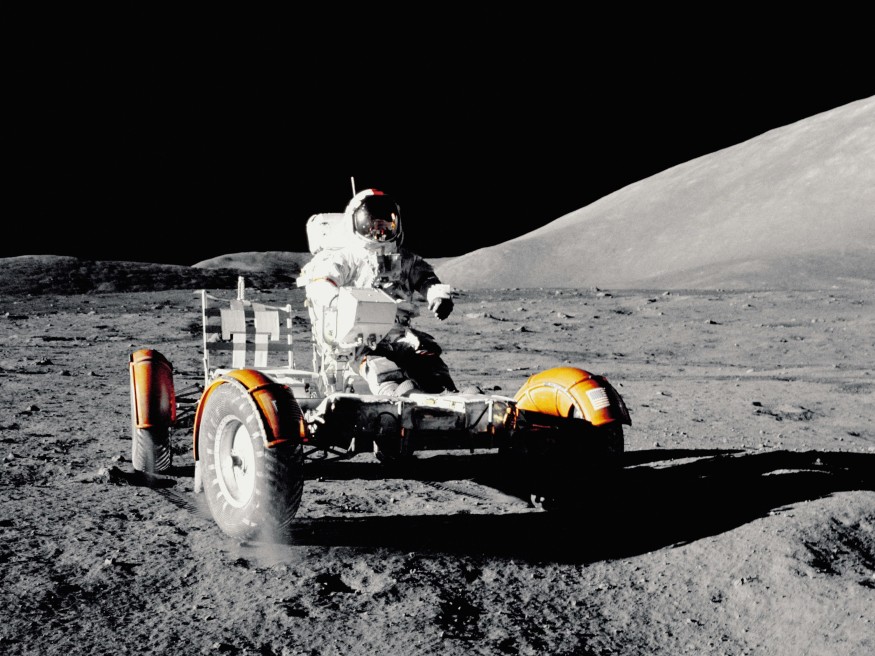
Living on the Moon provides a strategic advantage due to its proximity to Earth, allowing travel in just three days compared to Mars' six- to nine-month journey. This short distance enables frequent resupply missions and rapid emergency returns, which are critical during early colonization phases. Moon vs Mars colonization also considers gravity differences—lunar gravity is 1/6th of Earth's, providing easier adaptation, while Mars' 38% gravity and thin CO2 atmosphere create higher risks for human health.
Future of space living prioritizes establishing lunar habitats first, testing life support systems, rovers, and in-situ resource utilization (ISRU) technologies. The Moon's constant sunlight at the poles and accessible lunar water ice offer opportunities to refine techniques before committing to higher-risk Mars missions. Starting with the Moon allows gradual, methodical progress toward Mars colonization while minimizing early mission failures and technological gaps.
Why Scientists Are Considering Colonization of the Moon and Mars
Scientists view the Moon and Mars as stepping stones for humanity's expansion beyond Earth. The Moon's proximity, abundant sunlight at the poles, and confirmed water ice make it an ideal testing ground for habitats, life support systems, and in-situ resource utilization technologies. Lunar gravity at 1/6th of Earth's helps humans adapt gradually to low-gravity environments, while short travel times allow frequent resupply and emergency support.
Mars presents a longer-term colonization challenge but is highly appealing for scientific exploration and future habitation. Its thin CO2 atmosphere, polar water ice, and potential subsurface resources could support life support and fuel production, though higher gravity, radiation exposure, and long travel times make it less immediately habitable. Together, the Moon and Mars provide complementary opportunities: the Moon for short-term, low-risk experimentation, and Mars for testing endurance and self-sufficiency in more extreme conditions.
What Are the Travel Time Differences for Living on the Moon vs Mars?
Living on the Moon requires approximately a three-day journey, with near-constant launch windows and relatively low delta-V requirements of 15.3 km/s. This proximity simplifies resupply logistics, emergency returns, and iterative testing of habitats, suits, and rovers.
Mars missions, in contrast, demand six- to nine-month transits during 26-month synodic launch windows. Extended journeys expose crews to cosmic rays, solar flares, and psychological isolation, elevating both physical and mental risks. Moon vs Mars colonization clearly favors lunar operations for short-term missions, allowing engineers and scientists to refine technologies before attempting long-duration Martian missions.
How Does Radiation Protection Compare for Living on the Moon and Mars?
The Moon lacks both a magnetosphere and atmosphere, exposing its surface to galactic cosmic rays and solar particle events at levels around 1000 mSv/year. Without sufficient shielding, this dose is lethal within weeks. Solutions for lunar habitats include regolith coverings or 2–3 meters of water ice at the poles to protect colonists.
Mars has a thin atmosphere, roughly 1% of Earth's pressure, providing partial protection from cosmic rays and reducing exposure to 16–25 mSv/year. Natural shielding options, such as lava tubes or regolith bricks, make long-term surface operations safer. Moon vs Mars colonization strategies must carefully balance radiation exposure with available protection methods to ensure crew safety.
What Resources Are Available for Living on the Moon Compared to Mars?
The Moon contains confirmed water ice in permanently shadowed regions near the south pole. This resource enables in-situ propellant and oxygen production, life support, and construction using regolith sintering techniques. Constant sunlight in some areas provides reliable solar energy for operations.
Mars offers water in the form of permafrost at polar caps and a CO2-rich atmosphere. Chemical reactions like the Sabatier process allow methane and oxygen production, but higher gravity and launch costs make return missions significantly more challenging than on the Moon. Future of space living favors lunar colonization first, as water extraction is easier and lower gravity enables development of propellant depots for Earth-Mars missions.
Infrastructure Mission Plans
NASA's Artemis program (2026–2028) aims to establish a lunar base camp with international collaboration, testing propellant production, habitats, and scalable infrastructure for future missions. Starship lunar landings will support these efforts, creating a model for sustained lunar operations.
Mars missions, such as SpaceX Starship plans, target uncrewed launches in 2028 and crewed missions in the 2030s. These operations require higher delta-V, extensive life-support systems, and multi-year endurance from crews, increasing both psychological and physical risks. Validating ISRU and ensuring radiation protection are critical, but much remains to be tested before humans can safely live on Mars.
Why Moon vs Mars Colonization Favors Lunar Start
Living on the Moon establishes the foundation for living on Mars by providing a nearby, lower-risk environment. Moon vs Mars colonization allows future space living to progress methodically, validating habitats, life support, and resource utilization technologies. The Moon's proximity, water ice, and constant sunlight enable rapid iteration, preparing systems and crews for the challenges of Mars' gravity, thin atmosphere, and radiation. By starting on the Moon, humanity can build a sustainable, scalable approach to multi-planet colonization.
Frequently Asked Questions
1. Why is the Moon considered a better starting point than Mars?
The Moon is only three days away from Earth, enabling rapid resupply and emergency returns. Lunar gravity and constant sunlight make life support and construction easier. Accessible water ice allows for propellant and oxygen production. Starting on the Moon reduces risk while testing technologies for Mars.
2. How long does it take to travel to Mars compared to the Moon?
Moon missions take about three days, while Mars requires six to nine months depending on launch windows. Mars travel exposes crews to cosmic rays and isolation for extended periods. Lunar proximity allows rapid iteration and mission adjustments. Mars missions are logistically and psychologically more challenging.
3. How do radiation levels compare on the Moon and Mars?
The Moon has no atmosphere or magnetosphere, exposing colonists to lethal radiation without thick shielding. Mars has a thin atmosphere, reducing cosmic ray exposure but still requiring protective habitats. Lunar ice and regolith can provide immediate shielding. Mars requires a combination of natural and artificial protection for long-term operations.
4. What resources are most useful for colonization on the Moon vs Mars?
The Moon offers water ice, regolith for construction, and abundant sunlight for solar power. Mars has polar water permafrost and CO2 for fuel production, but higher gravity increases launch costs. Lunar resources are easier to access and process. Starting on the Moon lays the groundwork for future Mars missions.
© 2026 ScienceTimes.com All rights reserved. Do not reproduce without permission. The window to the world of Science Times.


