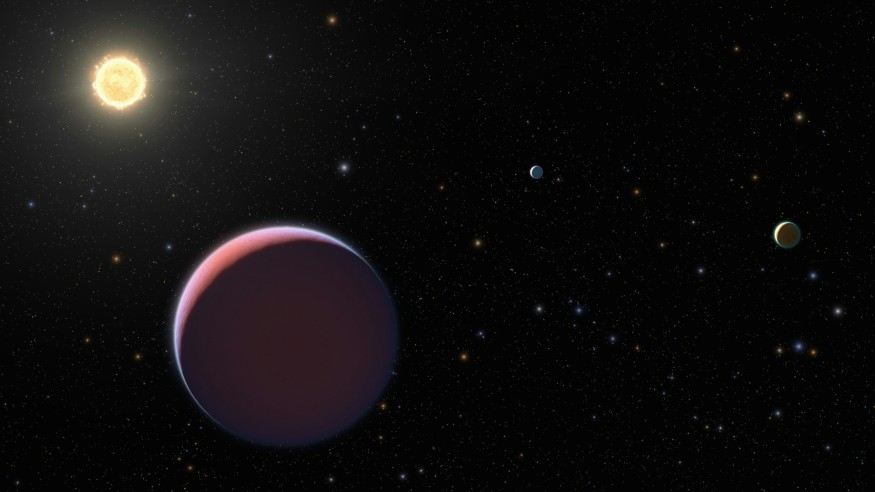
The search for habitable exoplanets has reshaped how we understand the universe and our place within it. Scientists use advanced tools and techniques to identify distant worlds that may have the right conditions for life. Missions like the TESS mission and the Kepler space telescope have played a major role in discovering thousands of potential planets beyond our solar system.
These discoveries rely on methods such as the transit method, radial velocity, and microlensing detection. Each approach helps scientists gather different types of data, from a planet's size to its mass and orbit. Together, these tools continue to expand our knowledge of planetary systems and bring us closer to finding Earth-like worlds.
Finding Habitable Exoplanets
The search for habitable exoplanets relies on multiple detection methods, including the transit method, radial velocity, and microlensing. These techniques help scientists identify planets that may support conditions like liquid water. The Kepler space telescope and TESS mission have confirmed thousands of exoplanets using these methods, expanding our understanding of distant worlds.
Each method provides a different way to detect and study planets orbiting other stars. The transit method measures dips in starlight when a planet passes in front of its star. Radial velocity detects the star's motion caused by gravitational pull, while microlensing reveals distant planets through light bending. Together, these approaches allow scientists to build a more complete picture of a planet's size, orbit, and potential habitability.
Detecting Exoplanets with the Kepler Space Telescope
The transit method is one of the most effective techniques for detecting habitable exoplanets using the Kepler space telescope. It works by measuring the slight dimming of a star when a planet passes in front of it. This method has led to the discovery of thousands of planets, including Earth-sized candidates in habitable zones.
The Kepler space telescope was designed to monitor large areas of the sky and detect these small changes in brightness with high precision. It has identified a wide variety of planets, from large gas giants to smaller rocky worlds similar to Earth. Its data has significantly improved our understanding of planetary systems. The TESS mission continues this work by scanning the sky for nearby stars and focusing on brighter targets for further study. This allows scientists to analyze planetary atmospheres and assess their potential for supporting life.
Read more: Habitable Planets: How the Goldilocks Zone and Planetary Science Reveal About Life‑Friendly Worlds
Radial Velocity Confirming Exoplanets and Their Mass
The radial velocity method helps confirm habitable exoplanets by measuring the gravitational effect they have on their host stars. This technique is essential for determining a planet's mass and understanding its physical properties. It complements the transit method by providing additional data about confirmed planets.
As a planet orbits a star, it causes the star to wobble slightly due to gravitational forces. Scientists observe this movement by analyzing shifts in the star's light spectrum. These shifts reveal important details such as the planet's mass and orbital path. The Kepler space telescope and TESS mission both use radial velocity follow-up to verify their discoveries. This method is especially useful for detecting larger planets and improving the accuracy of exoplanet classification.
Microlensing Detection Reveals Distant Habitable Exoplanets
Microlensing plays an important role in discovering habitable exoplanets that are too distant or faint to be detected using other methods. It uses the gravitational effects of massive objects to reveal hidden planets in faraway star systems. This technique helps expand our understanding of planets across the galaxy.
- Microlensing is a powerful method used to detect distant habitable exoplanets that cannot be seen with other techniques.
- It occurs when a massive object bends and magnifies the light of a background star.
- This allows scientists to detect planets that would otherwise remain invisible.
- The TESS mission supports microlensing efforts by providing additional data from wide sky observations.
- Ground-based telescopes also play a key role in tracking microlensing events.
- Together, they help identify planets in distant regions of the galaxy.
- Microlensing is especially useful for finding planets that are far from their stars or located in crowded star fields.
- It can detect planets with a wide range of sizes, including Earth-sized and smaller bodies.
- This method helps expand the search for habitable worlds beyond nearby star systems.
Direct Imaging and Astrometry: Advancing Habitable Exoplanet Discovery
Direct imaging and astrometry are emerging methods that help scientists study habitable exoplanets in greater detail. These techniques allow researchers to observe planets directly or measure precise movements of stars to infer the presence of orbiting planets. Unlike the transit method or radial velocity, these approaches can provide visual and positional data.
The Kepler space telescope and TESS mission have laid the foundation for these advanced techniques by identifying candidate planets. Future missions will improve imaging technology and detection accuracy, allowing scientists to study planetary atmospheres and surface conditions more closely. These advancements will continue to improve our understanding of distant worlds.
Future of Habitable Exoplanets
The study of habitable exoplanets continues to grow with the help of missions like the TESS mission and the Kepler space telescope. These tools, combined with methods such as the transit method, radial velocity, and microlensing, have transformed how scientists discover and study distant planets.
As technology advances, new missions will build on this foundation and improve our ability to detect Earth-like worlds. The search for planets with the right conditions for life remains one of the most exciting areas in modern science. With continued exploration, the possibility of finding another habitable world becomes increasingly real.
Frequently Asked Questions
1. What are habitable exoplanets?
Habitable exoplanets are planets outside our solar system that may have conditions suitable for life. These include the presence of liquid water and a stable atmosphere. Scientists look for Earth-like characteristics when identifying them. Detection methods help determine their size, orbit, and composition. These planets are key targets in space exploration.
2. How does the transit method detect exoplanets?
The transit method detects exoplanets by measuring the dimming of a star when a planet passes in front of it. This small drop in brightness indicates the presence of a planet. It also helps determine the planet's size and orbit. Missions like the Kepler space telescope use this method extensively. It is one of the most widely used detection techniques.
3. What role does the TESS mission play in discovering exoplanets?
The TESS mission scans the sky to find planets orbiting nearby bright stars. It uses the transit method to detect small changes in starlight. This allows scientists to identify potential habitable exoplanets quickly. TESS helps provide targets for further study and analysis. It continues to expand the number of known exoplanets.
4. Why is microlensing important in exoplanet detection?
Microlensing allows scientists to detect distant planets that cannot be observed directly. It works by using the gravitational lensing effect of stars to magnify background light. This method can detect planets that are far away or even free-floating. It complements other detection techniques like transit and radial velocity. Microlensing expands our ability to explore the galaxy.
© 2026 ScienceTimes.com All rights reserved. Do not reproduce without permission. The window to the world of Science Times.


