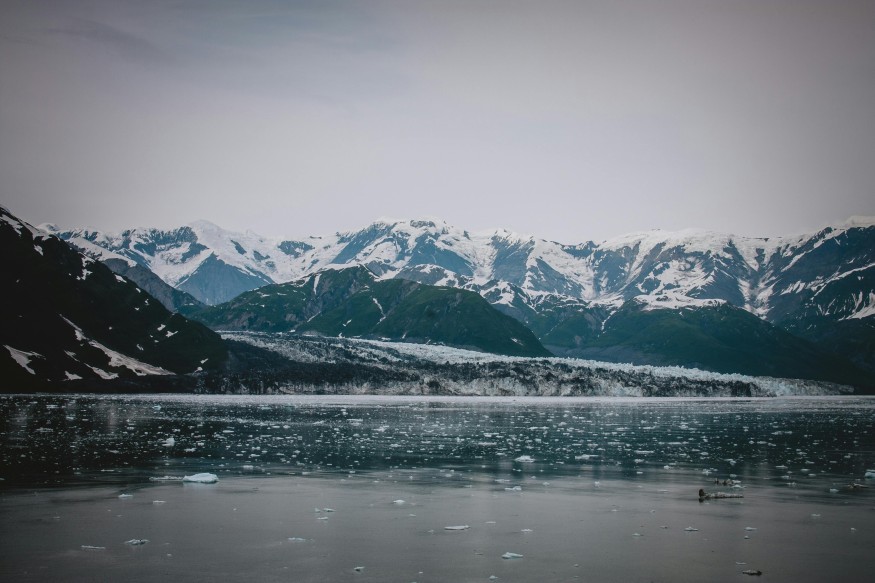
A massive Alaska landslide tsunami has stunned scientists after a giant wave surged nearly 1,580 feet up the walls of Tracy Arm Fjord in southeast Alaska. Researchers now rank the event among the largest megatsunamis ever recorded, second only to the famous 1958 Lituya Bay disaster.
The Tracy Arm megatsunami happened on Aug. 10, 2025, when millions of tons of rock collapsed directly into the narrow fjord, instantly displacing water and generating a towering wave powerful enough to strip vegetation from steep mountain walls. Scientists say the Alaska fjord wave, 1,580 feet high, offers another dramatic example of how unstable glacier landscapes can trigger extreme geological disasters.
What Triggered the Massive Alaska Landslide Tsunami?
The disaster began when a huge section of the mountainside suddenly failed near South Sawyer Glacier inside Tracy Arm Fjord. According to reports discussed by Phys.org, researchers believe retreating glaciers played a major role in destabilizing the slope over time. As glaciers shrink, they remove the icy support that once helped hold surrounding rock in place.
The collapse sent an enormous volume of rock crashing into the fjord within seconds. Because Tracy Arm is narrow and bordered by steep cliffs, the displaced water had nowhere to spread. Instead, the energy forced the water upward, creating the enormous wave run-up measured at about 1,580 feet. Scientists studying the event said several factors combined to create the extreme conditions:
- Rapid mountain slope collapse
- Deep confined fjord waters
- Steep surrounding rock walls
- Glacier retreat is weakening the terrain
- Heavy rainfall before the event
Researchers from the Alaska Earthquake Center reportedly detected seismic activity associated with the collapse, while satellite imagery later revealed the huge scar left behind on the mountainside.
Why the Tracy Arm Megatsunami Became So Powerful
Most people associate tsunamis with undersea earthquakes, but landslide tsunamis behave differently. A landslide-generated tsunami can produce far taller local waves because the energy is concentrated into a much smaller area.
The Tracy Arm megatsunami became especially destructive because fjords naturally amplify wave energy. Narrow waterways prevent water from dispersing efficiently, forcing it to rise vertically against nearby cliffs.
Scientists later found clear evidence of the wave's height. Vegetation and trees were stripped from the fjord walls, leaving behind what researchers described as a giant "bathtub ring" across the mountainside.
According to Reuters, the wave height exceeded the size of many skyscrapers and became one of the largest tsunami run-ups ever scientifically documented.
The event also generated seismic vibrations strong enough to be detected by monitoring stations far from Alaska.
Scientists Found Warning Signs Before the Collapse
One of the most important discoveries from the Alaska landslide tsunami involves the warning signals detected before the mountainside failed.
Researchers studying the disaster reportedly identified small seismic tremors and subtle slope movement in the days leading up to the collapse. These warning signs may eventually help scientists develop improved monitoring systems for unstable fjord regions. Modern geological monitoring methods include:
- Satellite radar imaging
- Ground deformation measurements
- Seismic monitoring stations
- Drone mapping surveys
- Computer-based tsunami simulations
Scientists from the University of Alaska Fairbanks noted that detecting dangerous slope movement in remote Arctic regions remains difficult, especially in areas with limited monitoring equipment. Still, advances in satellite technology are making it easier to identify unstable slopes before catastrophic failures occur.
Glacier Retreat Is Increasing Concern Across Alaska
The Tracy Arm megatsunami has renewed concerns about the effects of climate change on glacier-covered mountain regions. As temperatures rise, glaciers across Alaska continue to retreat rapidly. This process can destabilize slopes that were once supported by thick ice masses. Scientists say warming temperatures may also weaken frozen rock and permafrost, increasing the chances of landslides.
Researchers have already documented several major landslide tsunamis in Alaska over the past decade, including events at Taan Fjord and Barry Arm. Some experts now worry that similar disasters could happen in other glacier fjords around the world. Areas scientists are closely monitoring include:
- Glacier fjords in Alaska
- Greenland coastal regions
- Norwegian fjords
- Parts of British Columbia
- Arctic mountain valleys
A report covered by The Guardian noted that climate-driven landscape changes are becoming a growing geological hazard in Arctic environments.
Cruise Tourism Added Another Layer of Risk
Tracy Arm Fjord is a popular destination for cruise ships and sightseeing tours because of its dramatic scenery and nearby glaciers. During peak tourism season, multiple vessels can pass through the fjord daily.
Fortunately, the landslide occurred at a time when no nearby ships were directly in the path of the giant wave. Scientists said the outcome could have been catastrophic if tourist vessels had been closer to the collapse zone.
The event has increased discussions about safety planning in glacier tourism areas. Some experts are calling for stronger hazard monitoring systems and updated risk assessments for cruise routes near unstable slopes. Remote fjords remain particularly challenging because landslide tsunamis can occur with little warning.
How the Alaska Event Compares to Historic Megatsunamis
The Alaska fjord wave, 1,580 feet high, immediately drew comparisons to the famous 1958 Lituya Bay megatsunami, which produced the highest tsunami run-up ever recorded at more than 1,700 feet. Both events shared several similarities:
- Massive landslides entering confined water
- Extremely steep surrounding terrain
- Narrow bays or fjords concentrate wave energy
- Localized but incredibly destructive waves
Unlike earthquake tsunamis, which can travel across entire oceans, landslide tsunamis are usually confined to the immediate area of the collapse. However, their local power can be extraordinary. Scientists also compared the Tracy Arm megatsunami to recent Greenland fjord tsunamis, where glacier retreat and unstable slopes have created similar hazards.
These events are helping researchers better understand how changing Arctic landscapes may increase future geological risks.
Why Scientists Are Watching Arctic Fjords More Closely
The Alaska landslide tsunami has become one of the clearest modern examples of how glacier retreat, unstable mountainsides, and confined waterways can combine to produce extreme natural disasters.
Researchers continue studying the Tracy Arm megatsunami to improve tsunami modeling and landslide detection systems. Scientists hope the findings will help identify dangerous slopes before future collapses occur.
Although events like this remain relatively rare, experts believe warming Arctic conditions may increase the chances of similar disasters over time. The towering Alaska fjord wave, 1,580 feet high, now stands as a powerful reminder of the rapidly changing conditions affecting glaciers worldwide.
Frequently Asked Questions
1. What caused the Alaska landslide tsunami?
The tsunami was triggered by a massive mountainside collapse into Tracy Arm Fjord near South Sawyer Glacier. The falling rock displaced large amounts of water, creating the giant wave.
2. How high was the Tracy Arm megatsunami?
Scientists measured the wave run-up at approximately 1,580 feet, making it one of the tallest megatsunamis ever recorded.
3. Is climate change linked to the Alaska megatsunami?
Researchers believe glacier retreat and warming temperatures may have contributed to slope instability that eventually led to the collapse.
Originally published on natureworldnews.com


