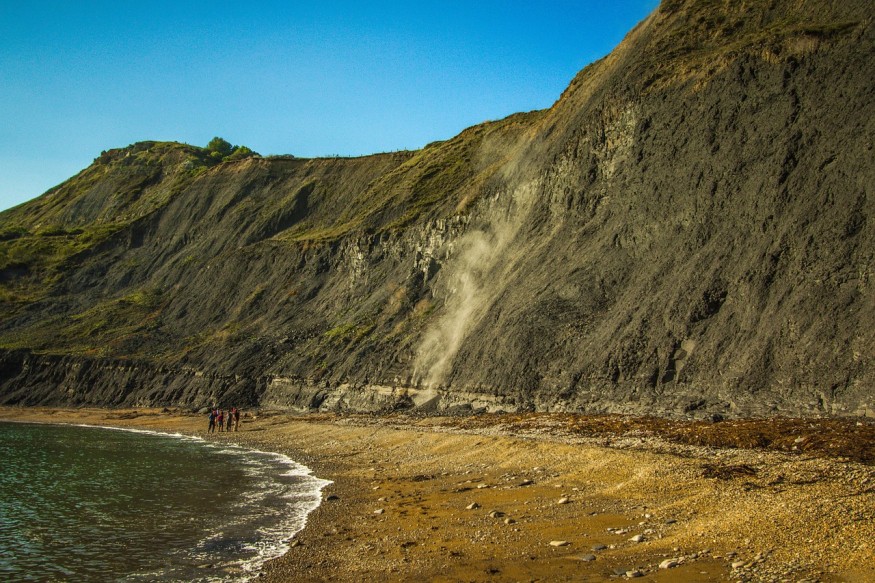
Landslides are among the most damaging natural hazards on steep terrain, so systematic Landslide Risk Assessment is essential for planning and design in hilly and mountainous areas.
By understanding key failure mechanisms such as debris flows, rotational slips, and soil liquefaction, engineers and planners can select slope stabilization, retaining walls, and drainage systems that genuinely reduce the likelihood and impact of ground movement.
What Landslide Risk Assessment Involves
Landslide Risk Assessment identifies where landslides might occur, how likely they are, and what consequences they may have for people, infrastructure, and the environment. It considers slope geometry, geology, groundwater, land use, and seismic activity, looking at how these factors interact to create or reduce instability.
Specialists use site inspections, mapping, subsurface investigations, and numerical models to understand how a slope behaves under different conditions.
Risk reflects not only probability of failure but also potential damage to buildings, roads, utilities, and natural resources. When done early in a project, Landslide Risk Assessment guides design choices and helps prioritize mitigation where it offers the greatest benefit.
Why Failure Mechanism Matters
Different types of landslides respond differently to rainfall, groundwater changes, earthquakes, and human activities.
A measure that works well for a shallow slide may be ineffective for a deep-seated failure or a fast-moving flow. Designing retaining walls or drainage systems without understanding the failure mechanism can lead to underperforming or counterproductive solutions.
A robust Landslide Risk Assessment therefore classifies the type of movement and likely failure surface so that countermeasures directly address the underlying problem rather than just its symptoms.
Debris Flows
Debris flows are fast-moving mixtures of water, soil, rock fragments, and organic material that travel downslope along channels or steep gullies.
They often start when intense rain or rapid snowmelt saturates loose material, causing it to mobilize and behave more like a fluid than a sliding block. Because debris flows can move quickly and carry large boulders, they are highly destructive even if infrequent.
Mitigation focuses on both source and path: stabilizing susceptible slopes, improving drainage to limit saturation, and constructing debris basins, check dams, or deflection structures. When debris flows are a key hazard, planning often discourages development within identified flow paths and fan areas.
Rotational Slips
Rotational slips involve a curved failure surface, with the upper slope moving downward and backward and the lower part bulging outward.
They commonly occur in cohesive soils such as clays, especially where weak layers and high groundwater coincide. Because rotational slips can be deep-seated, they may affect large areas and compromise foundations, roads, and buried utilities.
Stabilization typically aims to reduce driving forces or increase resisting forces along the curved surface.
Common methods include regrading to reduce slope height and steepness, adding toe buttresses, installing deep drainage to lower pore-water pressures, and using piles or anchors. Monitoring is important, as rotational slips can develop gradually before a major failure.
Soil Liquefaction
Soil liquefaction occurs when saturated, loose, granular soils temporarily lose strength and stiffness during cyclic loading, usually in earthquakes.
In a liquefied state, soil behaves more like a liquid, causing settlements, tilting of structures, and lateral spreading on gentle slopes or near water bodies. Poor drainage and high groundwater can increase liquefaction susceptibility.
Mitigation focuses on ground improvement and water management: densifying the soil, installing drains to relieve pore-water pressure, or replacing liquefiable layers with more stable material.
Where Landslide Risk Assessment shows high liquefaction potential, foundations and retaining structures must be designed to perform even if surrounding soil loses much of its strength.
Slope Stabilization, Retaining Walls, and Drainage
Slope stabilization modifies slope geometry, improves soil or rock strength, or manages water to reduce failure risk.
Typical methods include cutting back steep slopes, adding fill at the toe, reinforcing soil with nails or anchors, and protecting surfaces with vegetation or engineered coverings. Geosynthetics such as geogrids and geotextiles can strengthen fills and improve erosion resistance.
Retaining walls provide lateral support where slopes are steepened or cut. Gravity, mechanically stabilized earth, cantilever, anchored, and gabion walls each suit different conditions.
However, retaining walls are rarely sufficient on their own where debris flows, rotational slips, or soil liquefaction are present. They must be integrated with slope stabilization and drainage so that both earth and water pressures are controlled.
Drainage is central to almost every landslide mitigation strategy. Surface systems—interceptor ditches, swales, lined channels, and diversion drains—keep runoff away from vulnerable slopes and wall backfills.
Subsurface systems—French drains, horizontal drains, subdrains, and deep wells—lower groundwater and reduce pore-water pressures along potential failure surfaces. For retaining walls, drain pipes, weep holes, drainage layers, and filters prevent hydrostatic pressure buildup and help maintain long-term performance.
Strengthening Long-Term Landslide Resilience
When Landslide Risk Assessment drives design, slope stabilization, retaining walls, and drainage can be combined into site-specific systems that address debris flows, rotational slips, and soil liquefaction in a coordinated way.
Over time, changing weather, construction, and groundwater conditions can alter slope behavior, so periodic reassessment and maintenance are essential.
By treating Landslide Risk Assessment as an ongoing process rather than a one-time task, communities can maintain more stable slopes, safer structures, and drainage systems that actively support long-term landslide resilience.
Frequently Asked Questions
1. How often should a slope be reassessed for landslide risk?
Slopes in active climates or near construction are typically reassessed every few years, or immediately after major storms or earthquakes that could change stability conditions.
2. Can vegetation alone prevent debris flows on steep slopes?
Vegetation helps bind shallow soil and reduce erosion, but it cannot reliably stop debris flows on steep, highly loaded, or deeply weathered slopes; engineering measures are usually needed as well.
3. Are small residential retaining walls enough to control rotational slips?
Small garden or gravity walls rarely control deep rotational slips, which usually require geotechnical design, deeper structural elements, and drainage beyond typical residential walls.
4. Does soil liquefaction only happen in coastal or river areas?
Liquefaction is more common near water bodies but can occur inland anywhere loose, saturated, granular soils and strong ground shaking are present.
© 2026 ScienceTimes.com All rights reserved. Do not reproduce without permission. The window to the world of Science Times.


