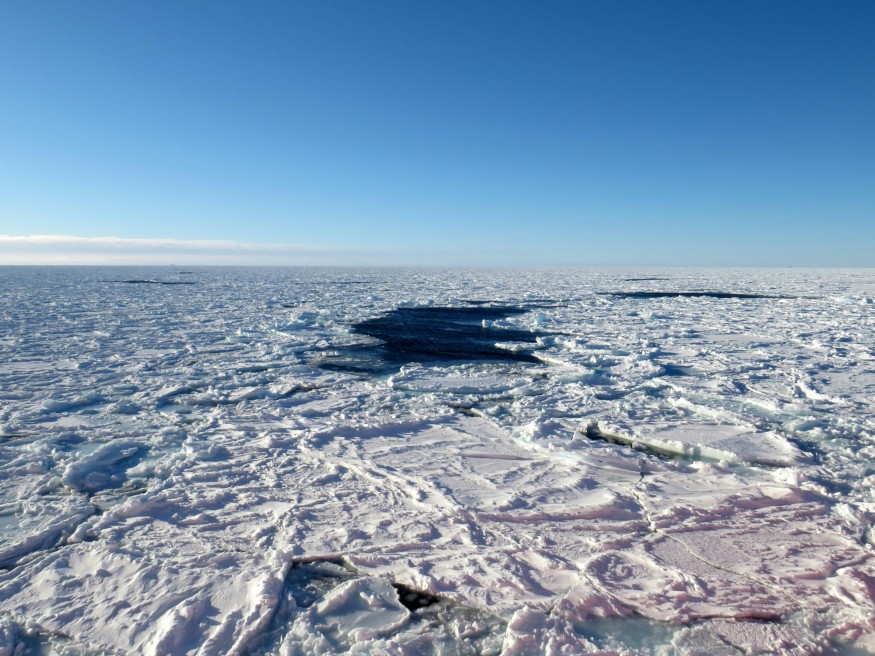
Antarctica appeared to resist the kind of dramatic ice decline seen across the Arctic. While northern polar ice shrank steadily under rising global temperatures, Antarctic sea ice often fluctuated without showing a clear long-term collapse. That trend has now changed in dramatic fashion.
Scientists are increasingly sounding the alarm over a sudden Antarctic sea ice decline that has shattered previous records and surprised climate researchers worldwide. Large areas of sea ice have disappeared far faster than expected, while deep ocean heat beneath the Southern Ocean is now emerging as one of the biggest drivers behind the change.
Several recent studies suggest that Antarctica may be entering a new climate state, one where warming oceans destabilize sea ice from below and create feedback loops that accelerate future melting.
Antarctic Sea Ice Has Fallen to Record Lows
Satellite observations over the last several years have revealed historic declines in Antarctic sea ice extent. In 2023 and 2024, winter sea ice levels reached some of the lowest measurements ever recorded since satellite monitoring began in the late 1970s.
Researchers describe the recent losses as unusual not only because of their size, but because of how abruptly they appeared. Antarctic sea ice had remained relatively stable for decades despite ongoing global warming. Then, beginning around 2015, the system shifted rapidly.
According to a report discussed by ScienceAlert, researchers believe the Southern Ocean's protective cold surface layer is weakening, allowing deep ocean heat to rise upward and melt ice from underneath.
Unlike land-based glaciers, sea ice forms directly from ocean water. Although melting sea ice does not directly raise sea levels, it plays a critical role in regulating global temperatures by reflecting sunlight away from Earth. As sea ice disappears:
- More dark ocean water becomes exposed
- Oceans absorb additional solar heat
- Regional warming intensifies
- Ice formation becomes more difficult during winter
Scientists warn that this process may now be reinforcing itself across large parts of Antarctica.
Ocean Heat Antarctica Is Becoming a Major Climate Threat
One of the biggest concerns among researchers is the growing influence of warm deep water beneath the Southern Ocean.
Far below Antarctica's cold surface waters lies a warmer layer called Circumpolar Deep Water. Historically, colder surface layers helped trap this heat below the ocean surface. New research suggests that changing wind patterns and ocean circulation are weakening that barrier.
As the layers mix together more aggressively, warm water rises upward and melts sea ice from below.
This hidden source of Ocean heat Antarctica is especially dangerous because it continues affecting ice growth even during colder seasons. Instead of allowing thick winter ice to rebuild naturally, warmer ocean temperatures slow or prevent recovery.
Researchers from Stanford University recently explained that stronger ocean mixing may be one reason Antarctic sea ice shifted so suddenly after decades of relative stability.
Some scientists also believe the Southern Ocean has absorbed enormous amounts of excess global heat generated by greenhouse gas emissions. Once that heat reaches the surface, the impact on Antarctic sea ice can become rapid and difficult to reverse.
Why Scientists Call the Antarctic Shift a "Shock" Decline
Climate researchers are particularly concerned because many climate models did not fully predict how quickly the Antarctic sea ice decline would happen.
Some experts now believe Antarctica may be responding to warming through abrupt climate shifts rather than slow gradual change. In climate science, these sudden changes are sometimes associated with tipping points, where small disturbances trigger much larger system-wide effects. Several warning signs are now being closely monitored:
- Reduced winter sea ice recovery
- Increasing ocean surface temperatures
- More frequent disruptions in Southern Ocean circulation
- Growing instability near Antarctic ice shelves
According to research published in Nature, some scientists suspect Antarctica could already be transitioning into a fundamentally different climate state compared to the late 20th century.
That possibility carries major implications because Antarctica influences weather, ocean currents, and temperature regulation across the planet.
Antarctic Climate Change Could Affect Global Weather Systems
Although Antarctica feels geographically distant from most populated regions, changes there can influence the entire world.
Sea ice plays a major role in balancing Earth's climate system. When ice disappears, the Southern Ocean absorbs more heat, which can alter atmospheric circulation and ocean currents. Potential global effects linked to Antarctic climate change include:
- Stronger marine heatwaves
- Shifts in rainfall patterns
- Changes in ocean circulation systems
- Faster warming in some regions
- Increased stress on marine ecosystems
Scientists are also monitoring how Antarctic changes could affect the Southern Ocean's ability to absorb carbon dioxide from the atmosphere. The ocean currently acts as one of Earth's largest carbon sinks, helping slow the pace of global warming.
Wildlife is already showing signs of disruption. Penguins, seals, and krill depend heavily on stable sea ice conditions for feeding and reproduction. Krill populations are particularly important because they support much of the Antarctic marine food chain.
In years with unusually low sea ice coverage, some penguin colonies have experienced significant breeding failures.
Can Antarctica Recover From the Current Ice Loss?
One of the biggest unanswered questions is whether the present Antarctic sea ice decline represents a temporary fluctuation or the beginning of a long-term transformation.
Natural climate cycles such as El Niño can temporarily affect Antarctic conditions, but researchers increasingly believe human-driven warming is becoming the dominant force behind the changes.
Some scientists remain cautious about declaring a permanent shift because Antarctic climate systems are highly complex and naturally variable. However, others argue that the scale and speed of recent ice losses suggest something more significant may already be underway. Researchers are now relying on:
- Satellite monitoring
- Deep-sea robotic instruments
- Ocean temperature tracking
- Climate modeling systems
These tools are helping scientists understand how Ocean heat Antarctica continues spreading through the Southern Ocean and whether winter ice can recover in future years.
Why Antarctica's Rapid Ice Loss Matters More Than Ever
The Antarctic sea ice decline is becoming one of the clearest signs that Earth's climate system may be changing faster than expected. What once seemed like a relatively stable region is now showing signs of major disruption fueled by warming oceans and shifting atmospheric patterns.
Scientists say the next decade could determine whether Antarctica stabilizes or continues moving toward a long-term decline in sea ice coverage. If deep ocean heat keeps breaking through the Southern Ocean's natural barriers, Antarctic climate change could reshape weather systems, ecosystems, and global temperatures for generations to come.
Frequently Asked Questions
1. Why is Antarctic sea ice declining so quickly?
Scientists believe a combination of rising global temperatures, changing wind patterns, and warm deep ocean water is accelerating Antarctic sea ice decline faster than expected.
2. What is causing Ocean heat Antarctica?
Warm deep water known as Circumpolar Deep Water is rising closer to the surface as ocean circulation patterns change, allowing heat to melt sea ice from below.
3. Does melting Antarctic sea ice raise sea levels?
Sea ice itself does not directly raise sea levels because it already floats in the ocean. However, warming conditions can destabilize nearby glaciers and ice shelves, which can contribute to sea level rise.
4. Why is Antarctic climate change important globally?
Antarctica helps regulate Earth's climate by reflecting sunlight and influencing ocean circulation. Major changes there can affect global temperatures, weather patterns, and marine ecosystems worldwide.
Originally published on natureworldnews.com


