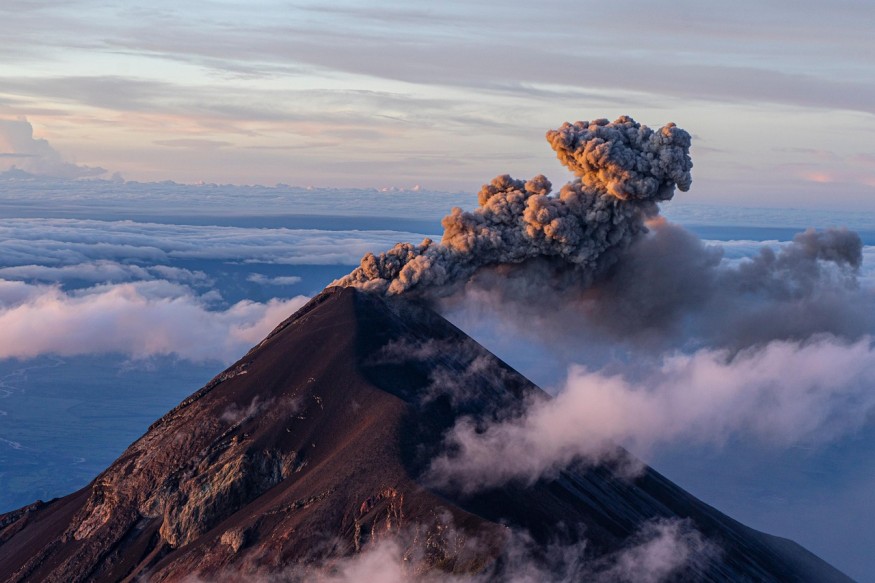
Volcanoes, weathering, climate, and the carbon cycle are closely connected processes that regulate Earth's environment over millions of years. Together, they form a natural system of long-term climate regulation that stabilizes global temperatures.
While short-term climate shifts often draw attention, these deeper processes explain how Earth maintains balance across geologic time.
What Is the Carbon Cycle and Why It Matters for Climate
The carbon cycle describes how carbon moves through the atmosphere, oceans, land, and rocks. The long-term carbon cycle is especially important for climate because it operates over thousands to millions of years.
Carbon dioxide (CO₂) enters the atmosphere through sources like volcanoes and is removed through processes such as weathering and sediment formation. Because CO₂ is a greenhouse gas, its concentration directly affects Earth's temperature. Higher levels lead to warming, while lower levels contribute to cooling.
Volcanoes as a Source of Carbon in the Carbon Cycle
Volcanoes play a key role in the carbon cycle by releasing carbon dioxide from deep within Earth. This carbon originates in the mantle and reaches the surface through tectonic activity.
Although volcanic eruptions can cause short-term cooling due to reflective particles, their long-term effect is the steady addition of CO₂ to the atmosphere. Over geologic time, volcanoes help maintain greenhouse conditions that prevent extreme global cooling.
Tectonic processes also recycle carbon. Subduction carries carbon-rich materials into Earth's interior, where they are eventually returned to the atmosphere through volcanic activity.
How Weathering Removes Carbon and Stabilizes Climate
Weathering is the breakdown of rocks at Earth's surface and acts as a major carbon sink. Chemical weathering, particularly of silicate rocks, removes CO₂ from the atmosphere.
Rainwater absorbs carbon dioxide to form a weak acid, which reacts with rocks and breaks them down. The dissolved carbon is transported to the oceans, where it forms carbonate minerals like limestone. This process locks carbon away for long periods.
Weathering also functions as a climate feedback. Warmer temperatures and increased rainfall accelerate weathering, which removes more CO₂ and helps cool the planet.
The Balance Between Volcanoes and Weathering in Long-Term Climate Regulation
Long-term climate regulation depends on the balance between volcanic carbon input and weathering-driven carbon removal. These processes act as a natural feedback system.
When volcanic activity increases, atmospheric CO₂ rises, leading to warming. This warming speeds up weathering, which removes excess CO₂ and gradually cools the climate. When CO₂ levels fall, weathering slows, allowing volcanic emissions to rebuild atmospheric carbon.
This negative feedback helps maintain a relatively stable climate over millions of years, even as Earth's surface and atmosphere change.
Long-Term Climate Regulation Mechanisms in Earth's History
Earth's history shows how the carbon cycle, volcanoes, and weathering shape climate. Periods of intense volcanic activity have been linked to warmer climates, while increased weathering has contributed to cooling.
Mountain building events expose fresh rock, enhancing weathering and CO₂ removal. The oceans also store large amounts of carbon, which can become locked in marine sediments over time.
These processes have driven transitions between warmer and cooler climate states throughout Earth's history.
Evidence from the Geological Record
Scientists rely on geological evidence to understand long-term climate regulation. Carbon isotopes in marine sediments reveal changes in the carbon cycle and atmospheric CO₂ levels.
Rock formations such as limestone indicate periods of active weathering and carbon storage, while volcanic rocks mark episodes of increased carbon release. Fossils also provide clues about past climates by showing how life responded to environmental changes.
How Do Volcanoes Affect Climate Over Long Periods?
Over long timescales, volcanoes influence climate by adding carbon dioxide to the atmosphere. While individual eruptions may cool the planet briefly, the cumulative effect of volcanic activity is gradual warming.
This steady input of CO₂ is essential for maintaining Earth's habitability over geologic time.
What Is the Role of Weathering in Climate Regulation?
Weathering acts as a natural regulator by removing carbon dioxide from the atmosphere. Its rate increases with temperature and rainfall, making it an effective mechanism for stabilizing climate.
By counteracting greenhouse warming, weathering helps keep Earth's climate within a livable range.
How Does the Carbon Cycle Control Earth's Climate?
The carbon cycle controls climate by regulating atmospheric CO₂ levels. Through the combined effects of volcanoes, weathering, and ocean processes, it maintains a balance between carbon sources and sinks.
This balance has allowed Earth to remain habitable despite long-term changes in solar energy and planetary conditions.
Can Volcanic Eruptions Cause Global Warming?
Volcanic eruptions can contribute to global warming over long periods by releasing CO₂. However, their short-term impact is usually cooling due to particles that reflect sunlight.
The warming effect becomes significant only over extended timescales.
Why Is the Carbon Cycle Important for Long-Term Climate Regulation?
The carbon cycle is essential for long-term climate regulation because it prevents extreme fluctuations in atmospheric CO₂. By balancing volcanic emissions with weathering, it stabilizes Earth's climate over millions of years.
Interactions That Keep Earth's Climate in Check
Volcanoes, weathering, climate, and the carbon cycle interact continuously. Rising temperatures accelerate weathering, which removes more CO₂ and cools the planet. Cooler conditions slow weathering, allowing volcanic emissions to rebuild atmospheric carbon.
This self-regulating system explains how Earth maintains long-term stability.
Understanding Long-Term Climate Regulation Today
Volcanoes, weathering, climate, and the carbon cycle continue to shape Earth's environment, but their effects occur over very long timescales. These processes provide long-term climate regulation, not rapid change.
Studying this system helps explain how Earth has remained habitable for billions of years and highlights the importance of the carbon cycle in maintaining climate balance.
Frequently asked Questions
1. How long does the long-term carbon cycle take to affect climate?
It typically operates over hundreds of thousands to millions of years, making it much slower than short-term climate processes.
2. Do human activities affect the same carbon cycle as volcanoes and weathering?
Yes, but at a much faster rate, adding carbon to the atmosphere far more quickly than natural geologic processes.
3. What types of rocks weather the fastest and remove more CO₂?
Silicate rocks, especially basalt, weather more quickly and are highly effective at removing carbon dioxide.
4. Can the carbon cycle completely prevent extreme climate changes?
No, it helps stabilize climate over long timescales but cannot stop rapid or sudden climate shifts.
© 2026 ScienceTimes.com All rights reserved. Do not reproduce without permission. The window to the world of Science Times.


