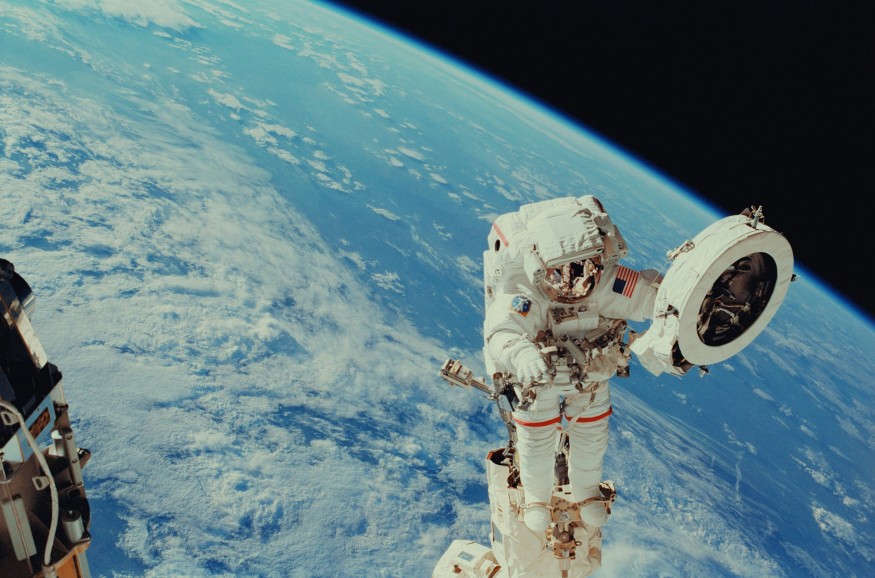
Space missions are entering a new era of innovation, with NASA missions and global partnerships pushing technology to extremes once considered impossible. These upcoming explorations focus on answering humanity's biggest questions: Are we alone? How did the cosmos begin? And what worlds beyond Earth might support life? With powerful spacecraft targeting moons, planets, and deep space, the upcoming decade marks a turning point in how future astronomy will evolve.
From probing Europa's hidden ocean to deploying next-generation telescopes capable of spotting Earth-like planets, these missions will expand scientific reach in ways unmatched by previous decades. As space agencies refine propulsion, imaging, and robotic systems, the coming wave of exploration signals a bold step forward for astronomy. These missions will also reshape how scientists study climate patterns, cosmic origins, and the chemistry of alien environments.
NASA Missions Targeting Habitable Worlds and Solar System Exploration
NASA missions in the coming decade are focused heavily on identifying environments that could sustain life, particularly on icy moons and chemically rich worlds. These destinations remain among the most promising candidates for habitability because they hold oceans, organic molecules, and heat sources beneath their surfaces. NASA's investment in these missions reflects a strategic shift toward exploring locations with the highest biological potential rather than simply mapping planetary bodies.
7 Major Space Missions
1. Europa Clipper (2030 arrival)
This flagship spacecraft will conduct nearly 50 flybys of Jupiter's moon Europa, analyzing its ice shell, subsurface ocean, and potential saltwater plumes. As one of the most crucial NASA missions, it aims to detect chemical ingredients linked to habitability.
2. Dragonfly (2028 landing)
A nuclear-powered quadcopter destined for Titan, Saturn's largest moon. Dragonfly will explore organic dunes, icy surfaces, and possible prebiotic chemistry, making it a standout probe for space missions 2030.
3. Venus Atmospheric Probes (2031)
Twin orbiters will investigate Venus's extreme atmosphere, searching for volcanic activity, cloud chemistry, and possible phosphine traces. These probes offer a rare opportunity to revisit Earth's "sister planet" with modern instruments.
4. Mars Sample Return (early 2030s)
A multi-stage mission designed to transport Martian rock and soil samples back to Earth. If successful, it will mark the first time material from another planet is delivered for laboratory study.
5. Artemis Lunar Gateway (late 2020s–2030s)
This orbiting station will support future astronaut missions, advanced robotics, and long-duration lunar science, creating a permanent foothold near the Moon.
6. Comet Astrobiology Exploration Sample Return (CASR)
A proposed sample return from a dynamically new comet, offering insights into the solar system's earliest organic compounds.
7. Near-Earth Asteroid Scout Missions
Small spacecraft using solar sails to study asteroids up close, contributing vital data on planetary defense and resource potential.
These seven missions emphasize NASA's investment in exploring worlds with water, complex chemistry, and potential biological signatures.
Read more: NASA to Launch This Month Three Spacecraft That Could Save Your Next Flight or Bank Transfer
Future Astronomy Telescopes Redefining Cosmic Understanding
Beyond planetary exploration, future astronomy will be shaped by powerful telescopes designed to study the universe's earliest moments, dark energy, black holes, and distant exoplanets. These observatories will extend humanity's view deeper into space than at any point in history, revealing processes once hidden from scientific instruments.
The Nancy Grace Roman Space Telescope is one of the most anticipated launches. Equipped with a wide-field lens offering 100 times Hubble's survey capability, it will map billions of stars and galaxies to understand the role of dark energy in cosmic expansion. Its microlensing tools will detect exoplanets across the Milky Way, delivering a massive leap in planet cataloguing.
The Habitable Worlds Observatory, planned for the late 2020s to early 2030s, aims to directly image Earth-sized planets around Sun-like stars—something current telescopes can only attempt indirectly. Using cutting-edge starshade technology, it may capture actual photographs of worlds that could support life.
Another groundbreaking concept is the Lynx X-ray Observatory, a proposed NASA mission designed to detect faint X-ray signals from black holes, galaxy cluster cores, and supernova remnants. Lynx would operate with a sensitivity many times that of Chandra, pushing future astronomy deeper into high-energy cosmic environments. These observatories work together to fill crucial gaps in cosmic understanding, bridging the scale from planetary systems to the structure of the universe itself.
Conclusion
Space missions 2030 represent a monumental shift in how humanity observes and understands the cosmos. With Europa Clipper, Dragonfly, Venus probes, and major telescopes converging within the decade, NASA missions are entering a period of rapid scientific acceleration. These explorations target the most compelling environments for life while strengthening knowledge of planetary evolution and cosmic origins.
Future astronomy will grow more data-rich, precise, and interconnected as agencies and nations collaborate on advanced observatories and long-range probes. Each mission not only answers existing questions but sparks new ones, ensuring the next decade becomes a defining era for scientific discovery. Through these ambitious efforts, humanity steps closer to unveiling the mysteries of habitable worlds, distant galaxies, and the forces that shape the universe.
Frequently Asked Questions
1. Which space missions 2030 target ocean worlds?
Europa Clipper and Dragonfly are the leading missions focused on ocean-bearing or liquid-rich bodies.
2. How will NASA missions advance exoplanet detection?
Future telescopes like Roman and the Habitable Worlds Observatory will detect planets via direct imaging, microlensing, and wide-field surveys.
3. What future astronomy tools launch next decade?
Upcoming tools include next-generation X-ray, infrared, and wide-field telescopes designed to capture deeper and clearer cosmic data.
4. Can private companies compete with NASA missions?
Private companies support launches and lunar transport, but deep-space exploration, sample return, and large space telescopes remain dominated by NASA and global agencies.
© 2026 ScienceTimes.com All rights reserved. Do not reproduce without permission. The window to the world of Science Times.


