Animals sometimes move, jump, or cling in ways that look impossible at first glance. A lizard sprinting across water or a shrimp creating flashes of light can feel like nature ignoring gravity, friction, or speed limits. In reality, these feats come from anatomy shaped by evolution to exploit physical rules more efficiently than machines ever could.
Animals and physics intersect through clever use of momentum, elasticity, surface tension, and airflow. Biological physics reveals how muscles, tendons, shells, and microscopic structures amplify force without breaking natural laws. Extreme animal abilities feel supernatural only because human bodies lack the same mechanical advantages.
Animals and Physics: Animals That Appear to Break the Rules
Animals and physics collide in species whose movements seem to ignore gravity, speed limits, or material strength. Each of these animals exploits physical laws with extreme precision rather than breaking them.
- Basilisk Lizard – Runs across water by slapping the surface fast enough to trap air pockets that briefly support its weight.
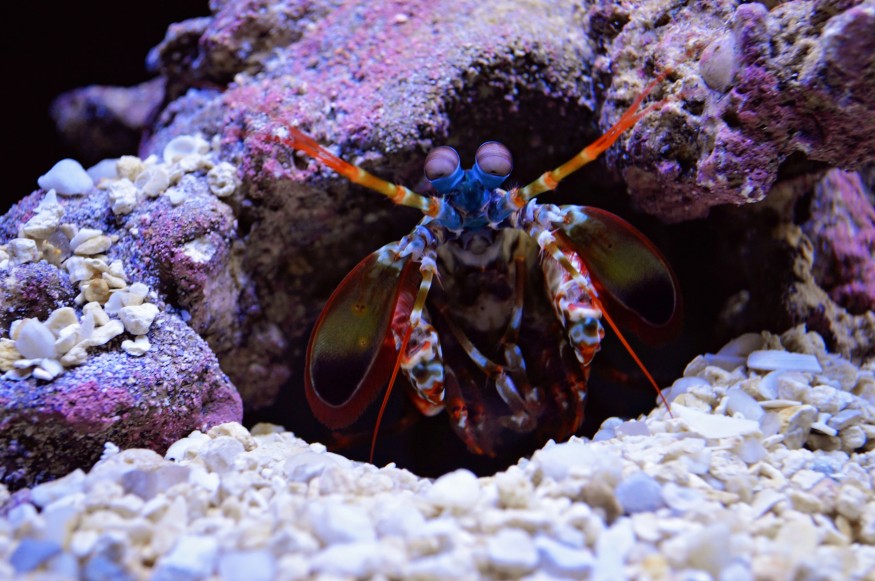
- Mantis Shrimp – Delivers ultra-fast punches that create cavitation bubbles collapsing with explosive force.
- Gecko – Climbs walls and ceilings using millions of microscopic hairs that generate van der Waals attraction.
- Peregrine Falcon – Dives at extreme speeds by streamlining its body to reduce drag and stabilize airflow.
- Flea – Launches itself vast distances by storing energy in elastic resilin pads and releasing it instantly.
- Hummingbird – Hovers and flies backward using figure-eight wing strokes that generate lift on both strokes.
- Mountain Goat – Balances on near-vertical cliffs using hooves that spread pressure and increase friction.
- Chameleon – Fires its tongue at extreme acceleration using elastic recoil and hydrostatic pressure.
- Archerfish – Shoots water jets that compensate for light refraction to hit insects above the surface.
- Trap-Jaw Ant – Snaps mandibles so fast the recoil launches its body backward to escape danger.
Animals and physics align through timing, structure, and material efficiency, making these feats look impossible while remaining firmly grounded in biological physics.
Read more: 10 Smartest Animals on Earth: Incredible Intelligence, Tool Use, and Problem-Solving Skills
Biological Physics Behind Water-Walking and Surface Tension
Biological physics explains how certain animals interact with fluids in ways that seem counterintuitive. The basilisk lizard, for example, doesn't float—it creates upward force by striking the water hard enough to trap air beneath its feet. That trapped air delays sinking just long enough for the next step to land. Tail movements add stability and extra thrust, keeping the animal upright.
Surface tension also plays a role at smaller scales. Insects that skim water rely on the cohesive forces between water molecules to resist penetration. Hydrophobic skin textures further reduce drag, allowing motion across liquid surfaces without submersion. These effects work only within narrow speed and weight limits, making them finely tuned evolutionary solutions.
Extreme Animal Abilities in Flight, Speed, and Jumping
Extreme animal abilities are especially visible in creatures that move through air or launch themselves explosively. Peregrine falcons streamline their bodies during dives, reducing turbulence while maintaining visual focus at extreme speeds. Their skeletal structure absorbs high g-forces during rapid pullouts. This makes controlled flight possible even at velocities exceeding most race cars.
Jumping animals rely on stored energy rather than raw muscle power. Fleas compress resilient pads that release energy far faster than muscles can contract. Trap-jaw ants use a similar spring-loaded system, snapping jaws so quickly that the recoil launches them into the air. These systems bypass muscle limitations using mechanical amplification.
Adhesion, Strength, and Material Science in the Animal Kingdom
Some of the most impressive physics-based tricks happen at microscopic scales. Geckos cling to walls using millions of tiny hairs that conform to surface irregularities, maximizing contact area. The attraction involved is weak at the molecular level, but when multiplied millions of times, it becomes incredibly strong. Release is just as efficient, requiring a simple change in angle.
Strength scaling also favors smaller animals. Ants lift many times their body weight because muscle strength scales differently than mass. Their exoskeletons distribute stress efficiently, preventing structural failure. Nature repeatedly shows that smart design often beats sheer size.
Why These Animals Don't Break Physics—They Exploit It
None of these animals violate physical laws. Instead, evolution fine-tunes anatomy, timing, and material properties to work at the edge of what physics allows. Each ability depends on precise conditions—speed, scale, environment—that can't simply be copied at human size. When those conditions change, the "magic" disappears.
Animals and physics work together through efficiency, not excess. Biological physics turns small advantages into survival tools, whether escaping predators or catching prey. Extreme animal abilities are reminders that physics doesn't limit life—it shapes how life adapts.
Nature's Physics Masters: What These Animals Teach Us
Animals and physics, biological physics, and extreme animal abilities reveal how evolution engineers solutions without shortcuts. What seems impossible is often just unfamiliar physics in action. These creatures show that understanding forces, materials, and motion can unlock extraordinary performance. Nature doesn't cheat the rules—it plays them perfectly.
Frequently Asked Questions
1. Do any animals actually break the laws of physics?
No animal breaks the laws of physics. Their abilities rely on precise use of known forces like momentum, elasticity, and surface tension. These effects only work within specific sizes and speeds. Outside those limits, the abilities fail.
2. How can geckos stick to walls without glue?
Geckos use microscopic hairs that create weak molecular attractions with surfaces. Individually the forces are tiny, but together they generate strong adhesion. This method leaves no residue and works repeatedly. A small change in angle allows instant release.
3. Why can't humans run on water like basilisk lizards?
Humans are too heavy and too slow to generate the necessary force. The basilisk's size and foot speed create air pockets that briefly support its weight. Scaling that mechanism up would require unrealistic strength and speed. Physics works differently at larger masses.
4. Are these animal abilities being used in technology?
Yes, many are inspiring new designs. Gecko adhesion influences climbing robots and medical grips. Elastic energy storage informs prosthetics and robotics. Studying extreme animal abilities often leads to practical engineering breakthroughs.
© 2026 ScienceTimes.com All rights reserved. Do not reproduce without permission. The window to the world of Science Times.


