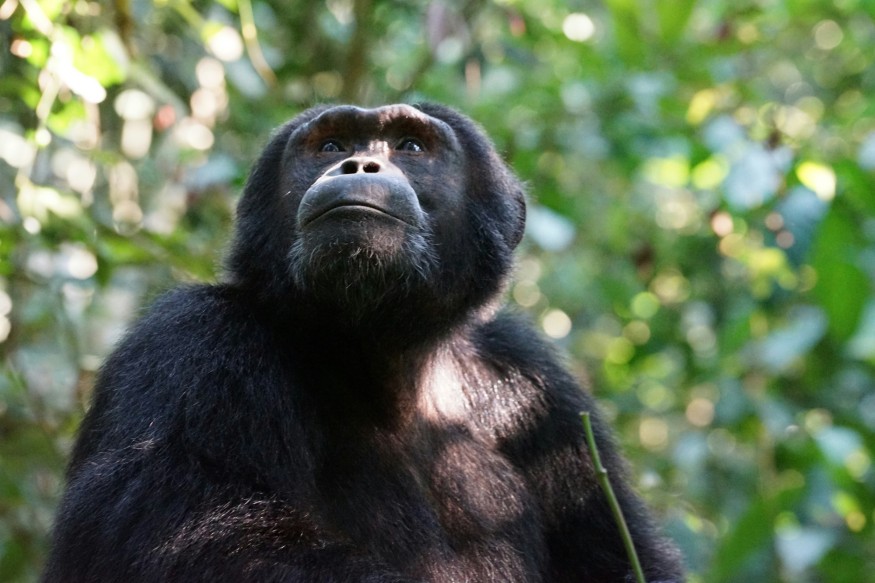
Animal intelligence spans far beyond human assumptions, with species demonstrating problem-solving, memory, and social skills that rival human capabilities. Smartest animals like chimpanzees, dolphins, and octopuses use tools, communicate complex ideas, and even recognize themselves in mirrors, challenging traditional ideas of cognition. Observing animal cognition across species helps scientists understand evolution of intelligence, empathy, and social learning. These insights provide a broader perspective on consciousness and the remarkable ways animals interact with their environments.
Understanding intelligence in animals also highlights convergence between species; corvids and primates both solve multi-step puzzles, while octopuses display neural plasticity surpassing vertebrates. Vocal learning, cultural transmission, and cooperative hunting reflect highly adaptive behaviors, indicating that intelligence is not limited to humans but expressed in diverse ways across the animal kingdom.
Top 10 Smartest Animals Scientific Rankings
Animal intelligence rankings highlight the most cognitively advanced species on Earth, measured by tool use, problem-solving, social cooperation, and self-awareness. These smartest animals demonstrate behaviors once thought uniquely human, from planning for the future to complex communication and cultural transmission. Studying them provides insight into evolution, neural development, and the diversity of intelligence across species.
- Chimpanzee – Uses 70+ types of tools, passes mirror self-recognition tests, and nut-cracking techniques are culturally transmitted across 50+ generations, showing advanced social learning.
- Orangutan – Stacks boxes to reach food, fashions leaf umbrellas for rain, exhibits foresight in problem-solving, and passes mirror recognition, highlighting individual planning skills.
- Bottlenose Dolphin – Employs signature whistles as individual names, coordinates hunting with acoustic strategies, demonstrates cooperative intelligence, and passes mirror self-awareness tests.
- Elephant – Performs mourning rituals for deceased kin, engages in cooperative mud baths, displays large terrestrial brains, and recognizes itself in mirrors, indicating high social and emotional intelligence.
- African Grey Parrot – Counts objects aloud, distinguishes same/different shapes and colors, solves optical illusions, and has a vocabulary of over 100 words, showing advanced vocal learning and abstract reasoning.
- Octopus – Unscrews jars to escape enclosures, carries coconut shells as mobile armor, and edits RNA to enhance neural adaptability, demonstrating problem-solving and flexibility in behavior.
- Crow / New Caledonian Crow – Creates multi-step tools, solves intricate puzzles faster than humans in some tasks, and recognizes individual human faces, revealing remarkable memory and reasoning skills.
- Pig – Masters video game-like joystick tasks, shows candidates for mirror self-recognition, and exhibits emotional contagion, demonstrating both cognitive and social intelligence.
- Raven – Plans for events weeks ahead, uses meta-tools to solve problems, and demonstrates theory-of-mind behaviors, such as deceiving other ravens to protect food caches.
- Rhesus Macaque – Memorizes long numerical sequences, uses over 1000 sign language symbols, exhibits delayed gratification, and applies learning across different contexts, indicating advanced memory and adaptability.
These rankings reflect diverse forms of intelligence, from solitary problem-solving in octopuses to social planning in primates, proving that cognitive sophistication is widespread across animal taxa.
Read more: What Black Holes Really Do to Space and Time: Black Hole Science and Spacetime Distortion
Animal Intelligence Mirror Self-Recognition Test
Mirror self-recognition tests measure self-awareness in the animal kingdom. Smartest animals like chimpanzees remove marks from their foreheads while viewing reflections, elephants recognize themselves in water, and magpies identify painted dots invisible without mirrors. Even cleaner wrasse fish have passed recent protocols by scraping marks off their bodies, demonstrating a surprising capacity for visual self-awareness.
Animal intelligence also appears in corvid tool innovation; New Caledonian crows solve three-step hook puzzles and perform water displacement tasks based on Aesop's fable experiments. Neural correlates, like von Economo neurons in apes, elephants, and whales, are linked to social complexity and self-modeling. Octopuses demonstrate distributed body awareness, suggesting a non-unified, flexible sense of self. Mirror recognition highlights cognitive sophistication and provides insight into social learning and environmental problem-solving.
Animal Cognition Vocal Learning and Communication
Vocal learning is a hallmark of animal intelligence, with species like African grey parrots, dolphins, whales, seals, and elephants imitating novel sequences without innate templates. African grey parrots count aloud, differentiate shapes, and identify colors, while dolphins use signature whistles as names across pods. Sperm whales develop clan dialects, and honeybees communicate precise 3D locations through waggle dances.
Cooperative hunting displays intelligence in both marine and terrestrial species; dolphins herd fish with acoustic coordination, orcas execute complex beach strandings, and wolves synchronize movements to encircle prey. Vocal mimicry also enables deception; lyrebirds imitate chainsaws, ravens mislead others by hiding fake caches, and octopuses mimic toxic species for predator avoidance. These behaviors indicate advanced problem-solving, social learning, and adaptability, highlighting how animal cognition manifests in communication, culture, and cooperation.
Why Understanding Animal Intelligence Matters
Studying animal cognition helps humans better understand consciousness, evolution, and ecosystem interactions. Recognizing intelligence across diverse species challenges anthropocentric perspectives and provides ethical insights for conservation.
Smartest animals exhibit empathy, foresight, and problem-solving that reflect advanced neural architectures. Observing these behaviors informs research in neuroscience, AI modeling, and comparative psychology, highlighting intelligence as a widespread, multifaceted phenomenon.
Frequently Asked Questions
1. What are the top smartest animals on Earth?
The top smartest animals include chimpanzees, dolphins, elephants, octopuses, African grey parrots, crows, pigs, ravens, rhesus macaques, and orangutans. They display intelligence through problem-solving, tool use, and self-recognition. Each species exhibits unique cognitive strengths, from vocal learning to cooperative hunting. Their diverse abilities show intelligence is not uniform but highly context-specific.
2. Which animals pass the mirror self-recognition test?
Animals passing the mirror test include chimpanzees, orangutans, elephants, dolphins, magpies, and cleaner wrasse. They recognize painted marks invisible without reflections. This demonstrates self-awareness and social learning capabilities. Mirror test performance is often linked to brain structures specialized for complex social interactions.
3. How do parrots demonstrate intelligence?
African grey parrots can count, understand shapes and colors, and use over 100 words in context. They solve optical illusions and perform problem-solving tasks. Parrots exhibit vocal mimicry and comprehension similar to early human language acquisition. Their cognitive abilities reflect both social learning and memory skills.
4. How do animals communicate complex information?
Animals communicate through vocal learning, body language, and cooperative behaviors. Dolphins use signature whistles, bees use waggle dances, and wolves coordinate hunts. Ravens and lyrebirds use deception to manipulate conspecifics or avoid predators. Communication is often linked with problem-solving and survival strategies.
© 2026 ScienceTimes.com All rights reserved. Do not reproduce without permission. The window to the world of Science Times.


