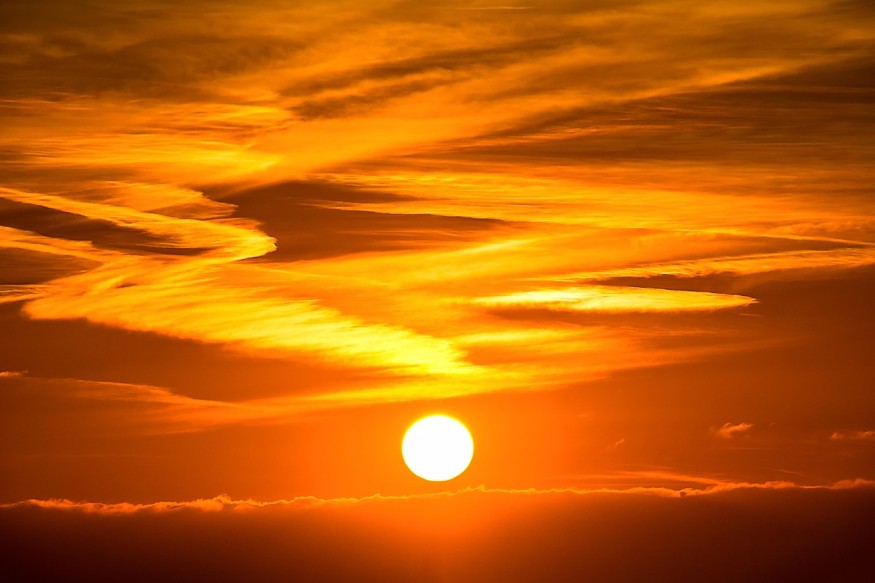
What happens if the Sun dies is a scientific question about how stars evolve and how their changes shape the future of Earth. Astronomers see the Sun as a typical star with a predictable solar lifecycle, from its stable present to its quiet end as a stellar remnant.
By following this lifecycle, scientists can estimate how long the Sun will shine, how it will transform, and what those transformations will mean for Earth and the rest of the solar system.
What Does It Mean for the Sun to "Die"?
When scientists talk about sun death, they mean the end of nuclear fusion in the Sun's core, not a sudden blackout. Right now, the Sun is a main‑sequence star, steadily fusing hydrogen into helium and producing the light and heat that support life on Earth. This stage is very stable and changes only slowly over hundreds of millions of years.
The Sun does not have enough mass to explode as a supernova. Instead, its solar lifecycle leads to a gentler, though still dramatic, sequence: the Sun will expand into a red giant, shed its outer layers, and leave behind a dense white dwarf.
In astrophysics, "death" refers to this point when the Sun can no longer sustain fusion and stops generating new energy.
How Old Is the Sun and Where Is It in Its Life Cycle?
The Sun is about 4.6 billion years old and is roughly halfway through its main‑sequence lifetime of around 10 billion years. That means it still has billions of years of hydrogen fuel left before the most extreme changes occur.
Even during this stable period, the Sun slowly grows brighter. Over very long timescales, this gradual increase in energy affects the future of Earth, because more solar radiation drives a warmer climate.
These changes are extremely slow, far beyond any human planning horizon, but they do set an eventual limit on how long Earth can stay comfortably habitable.
What Will Happen to the Sun as It Runs Out of Fuel?
As hydrogen runs out in the Sun's core, the balance between gravity and pressure changes. The core contracts and heats up, while fusion continues in a shell around it. This internal shift causes the Sun's outer layers to swell dramatically.
The Sun will enter its red giant phase, becoming much larger and more luminous than it is today. Its surface will cool and appear redder, but the total energy output will be far higher.
Over time, the Sun will lose a large fraction of its mass in powerful stellar winds. Eventually, those outer layers will drift away as a glowing shell of gas, while the exposed core remains at the center.
Will the Sun Become a Red Giant?
The red giant phase is one of the most important stages of sun death. The Sun's radius could expand to reach or even surpass Earth's current orbit, and its brightness may increase hundreds or thousands of times. For the inner planets, this means extreme heating, loss of atmospheres, and major changes in orbital behavior.
For the future of Earth, this phase is critical. A red giant Sun would bake the inner solar system, turning familiar worlds into scorched, hostile environments. The idea of a huge red Sun dominating the sky comes directly from stellar evolution models informed by observations of similar stars.
What Happens After the Red Giant Phase?
After the red giant stage, the Sun will no longer be able to support further fusion. It will shed its outer layers, forming a planetary nebula—an expanding, illuminated cloud of gas. At the center, a white dwarf will be left behind: a small, dense object about the size of Earth, made mostly of carbon and oxygen.
This white dwarf is the final stage in the solar lifecycle of a Sun‑like star. It will no longer generate energy through fusion, but will gradually cool and fade over billions or trillions of years.
In theory, after an immense time, it could become a black dwarf so cold and dim that it emits virtually no light, though the universe is not yet old enough for any black dwarfs to exist.
What Will Happen to Earth When the Sun Dies?
The future of Earth is tightly linked to the Sun's changing brightness and size. As the Sun slowly brightens over the next billion to two billion years, Earth is expected to warm significantly.
Climate models suggest that this increased energy could trigger a runaway greenhouse effect, causing oceans to evaporate and the atmosphere to change in ways that make the planet inhospitable to complex life.
By the time the Sun reaches its full red giant size, Earth's surface will already be drastically transformed. The planet would likely be dry, extremely hot, and possibly partly molten, with most or all of its atmosphere lost to space.
Whether Earth is finally engulfed by the Sun or survives just outside its swollen atmosphere is still uncertain, but in either case it would no longer be habitable.
How Long Until the Sun Kills Life on Earth?
Life is expected to vanish long before the Sun becomes a red giant. As solar brightness slowly increases, temperatures on Earth will eventually rise enough to destabilize climate systems.
In roughly a billion years or more, a runaway greenhouse effect could eliminate oceans and make the surface unfit for complex organisms. Simple microbes might persist longer in protected environments, but large plants and animals would likely disappear.
In terms of habitability, the limiting factor is not the final sun death, but earlier stages of the solar lifecycle that raise the Sun's energy output. The window for a life‑friendly Earth closes well before the star reaches its last phase.
What Will Happen to the Rest of the Solar System?
Under sun death, the inner planets—Mercury, Venus, and probably Earth—face the harshest fates. Mercury and Venus are almost certain to be engulfed during the red giant phase, falling into the Sun's extended atmosphere and being destroyed.
Earth's fate lies near the edge of the red giant's reach, which is why models disagree on whether it is swallowed or merely seared.
The outer planets, such as Jupiter and Saturn, are expected to survive as orbiting companions to the Sun's white dwarf remnant. As the Sun loses mass, their orbits will expand, and the solar system will become more spread out.
Some icy moons may briefly experience warmer conditions as the habitable zone moves outward, potentially allowing liquid water to appear on or near their surfaces for a limited time.
How Do Scientists Know What Will Happen When the Sun Dies?
Predictions about sun death are based on physical theory and observations of other stars. Astrophysicists use equations describing gravity, nuclear fusion, and energy transport to model how stars behave.
They adjust these models to match the Sun's mass, composition, and brightness, then project them forward to see how the Sun will change over time.
Observations of Sun‑like stars in different stages of the solar lifecycle provide real‑world examples.
Red giants, planetary nebulae, and white dwarfs in our galaxy each offer a snapshot of what the Sun may become. By comparing models to these observed systems, scientists refine their expectations for the Sun's evolution and the distant future of Earth.
Frequently Asked Questions
1. Can the Sun's death trigger new life somewhere else in the solar system?
Yes. During the red giant phase, distant icy moons may briefly warm enough for liquid water, creating short-lived windows where conditions could be friendlier to life than they are today.
2. Will humans be able to move Earth to escape the Sun's red giant phase?
Some theoretical ideas suggest gradually shifting Earth's orbit outward using repeated gravitational assists or propulsion, but this is far beyond current or near-future technology.
3. Could advanced technology protect Earth from the increasing brightness of the Sun?
In theory, giant space shades or engineered atmospheres could reduce incoming sunlight, but such megastructures would require enormous resources and engineering capabilities.
4. Will the night sky look different as the Sun ages?
For many millions of years, the night sky will look almost the same, but over very long timescales, stellar motions and the Sun's changing brightness will slowly alter constellations and the overall appearance of the sky.
© 2026 ScienceTimes.com All rights reserved. Do not reproduce without permission. The window to the world of Science Times.


