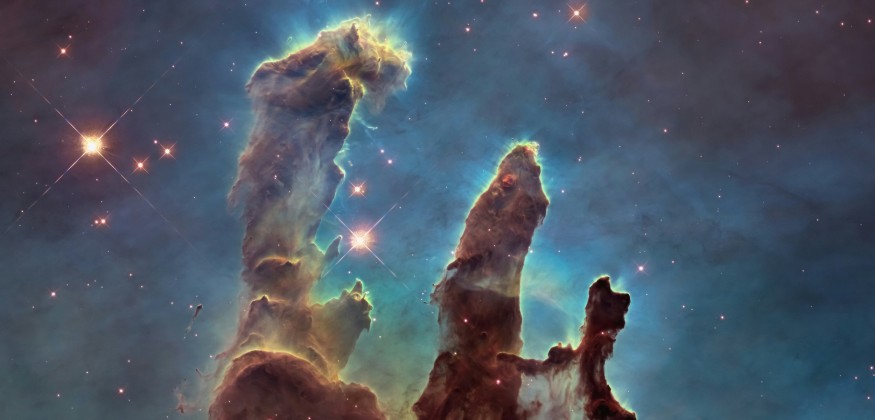
The Hubble Ultra Deep Field transformed how scientists understand cosmic evolution by capturing thousands of distant galaxies in a tiny patch of sky. It revealed how the universe looked billions of years ago and opened new pathways for studying galaxy formation and deep-space structures. Alongside this, iconic images like the Pillars of Creation and discoveries in the Eagle Nebula continue to shape modern astronomy.
Servicing missions played a major role in extending the life and capabilities of the Hubble Space Telescope, allowing it to capture sharper, deeper images over decades. These missions improved instruments and ensured continuous observation of distant cosmic phenomena. Together, these advancements offer a clearer view of how stars, galaxies, and planetary systems evolve across time, giving astronomers valuable insight into the structure and history of the universe.
What Is the Hubble Deep Field and Ultra Deep Field?
The Hubble Deep Field and Hubble Ultra Deep Field are among the most important observations in modern astronomy, offering a clear look at the distant universe and early cosmic evolution. These deep-sky images were taken by focusing on seemingly empty areas of space for long periods, revealing thousands of galaxies. The Hubble Deep Field (1995) captured about 3,000 galaxies, while the Hubble Ultra Deep Field (2004) revealed around 10,000 galaxies, including some more than 13 billion years old.
These observations showed galaxies at different stages of cosmic evolution, from newly formed systems to more developed structures. They also highlighted galaxy diversity, including spiral, elliptical, and irregular types, helping scientists better understand how galaxies form and evolve. Thanks to servicing missions, Hubble could capture infrared light, allowing it to see galaxies hidden by cosmic dust. These deep-field images continue to guide studies on how the universe expanded and developed over time.
What Are the Pillars of Creation and How Were They Imaged?
The Pillars of Creation are one of the most recognizable cosmic structures captured by the Hubble Space Telescope, located within the Eagle Nebula. According to the Space Telescope Science Institute, these towering columns of gas and dust are active star-forming regions where new stars are born. The name reflects the way these structures continuously shape and create stellar systems within the universe.
- Structure and size: The Pillars span several light-years and consist of dense clouds of gas and dust where star formation occurs.
- Star formation activity: Young stars form inside the pillars, emitting radiation that shapes and erodes the surrounding material.
- Imaging techniques: Hubble used visible and infrared imaging to penetrate dust and reveal hidden protostars.
- Multi-wavelength imaging: Different filters captured ionized gas, oxygen emissions, and infrared light to reveal structure details.
- Dynamic changes: The pillars are slowly being eroded by radiation, a process that takes millions of years.
- Scientific importance: These images provide insight into how stars and planetary systems form in dense nebulae.
- Ongoing observations: Newer telescopes have confirmed that these structures continue to evolve over time.
The Pillars of Creation remain a powerful example of how star formation shapes the universe, offering a close look at the early stages of stellar development within the context of cosmic evolution.
What Eagle Nebula Discoveries Changed Astronomy?
Eagle Nebula discoveries have significantly expanded our understanding of star formation and cosmic evolution. According to NASA's Hubble research, observations of the Eagle Nebula revealed detailed structures within star-forming regions, including protoplanetary disks and dense gas formations where new stars emerge. These findings provided critical evidence of how stars and planetary systems develop within nebulae.
- Star-forming regions: The Eagle Nebula contains dense clouds where new stars are actively forming.
- Protoplanetary disks: Hubble identified disks of gas and dust around young stars, which may eventually form planets.
- Evaporating gas structures: Intense radiation from nearby stars shapes and erodes surrounding gas clouds.
- Triggered star formation: Shock waves from nearby stellar activity can compress gas and initiate new star formation.
- Brown dwarf formation: Observations suggest the presence of objects that are too small to become full stars.
- Impact on cosmic evolution: These discoveries help explain how star formation contributes to the growth of galaxies.
- Advanced imaging contributions: Servicing missions allowed for clearer, more detailed images of these distant structures.
These discoveries highlight how dynamic and active regions like the Eagle Nebula are essential to understanding cosmic evolution, as they provide a real-time look at how stars and planetary systems are formed.
Track Cosmic Evolution Through Hubble's Enduring Legacy
The Hubble Ultra Deep Field, Pillars of Creation, and Eagle Nebula discoveries together provide a timeline of cosmic evolution, from the early universe to active star-forming regions today. These observations show how galaxies, stars, and planetary systems develop over billions of years, offering valuable insights into the structure of the universe.
Servicing missions played a crucial role in extending Hubble's capabilities, allowing it to capture more than a million scientific images throughout its lifetime. These advancements continue to influence modern astronomy and guide future missions, helping scientists explore deeper into space and better understand the origins and evolution of the cosmos.
Frequently Asked Questions
1. What makes the Hubble Ultra Deep Field important?
The Hubble Ultra Deep Field is important because it shows some of the most distant galaxies ever observed. It helps scientists understand how galaxies formed and evolved over time. The image reveals galaxies from billions of years ago. This makes it a key tool in studying cosmic evolution.
2. What are the Pillars of Creation?
The Pillars of Creation are massive columns of gas and dust located in the Eagle Nebula. They are regions where new stars are forming. These structures are shaped by radiation from nearby stars. They provide insight into star formation processes.
3. How did servicing missions improve Hubble?
Servicing missions upgraded Hubble's instruments and repaired key systems. These improvements allowed the telescope to capture clearer and deeper images. They also extended Hubble's operational life significantly. Without these missions, many discoveries would not have been possible.
4. What have Eagle Nebula discoveries revealed?
Eagle Nebula discoveries have revealed how stars and planetary systems form. Scientists observed protoplanetary disks and dense gas regions. These findings show how new stars emerge within nebulae. They help explain the processes behind cosmic evolution.
© 2026 ScienceTimes.com All rights reserved. Do not reproduce without permission. The window to the world of Science Times.


