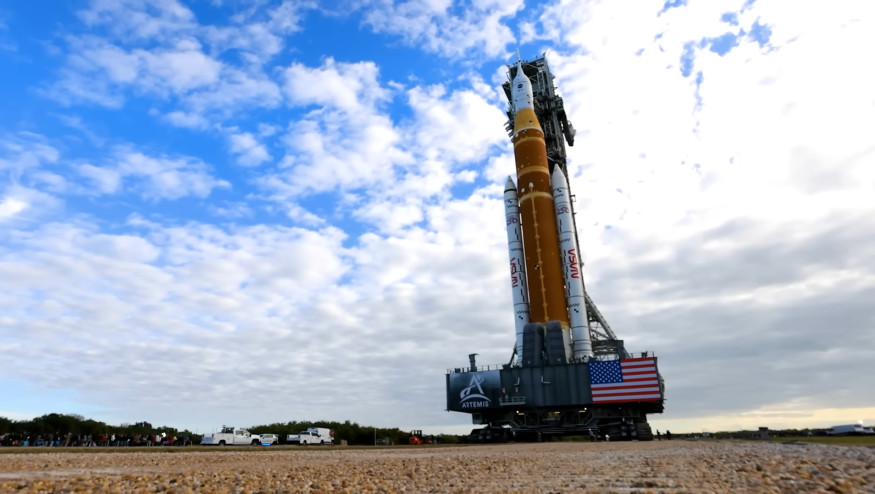
The Artemis II update marks a major milestone in modern space exploration, as NASA continues its first crewed mission beyond low Earth orbit in over 50 years. This mission, part of the broader NASA Artemis II program, successfully launched from Kennedy Space Center, carrying astronauts Reid Wiseman, Victor Glover, Christina Koch, and Jeremy Hansen aboard the Orion spacecraft. The early Artemis II mission progress confirms that key systems such as solar arrays, navigation, and life support are functioning as planned.
The Artemis II latest news highlights steady progress toward the Moon, including a successful translunar injection burn that propelled the spacecraft into deep space. Along the journey, astronauts are conducting health checks, testing spacecraft systems, and preparing for upcoming proximity operations and lunar observations. This mission is not just about reaching the Moon—it is about validating technologies, crew safety systems, and long-duration spaceflight capabilities for future missions.
Artemis II Update Timeline: Key Milestones Post-Launch and Mission Events
The Artemis II update timeline began with a flawless liftoff at 6:35 p.m. EDT from Launch Pad 39B. Shortly after launch, the SLS rocket placed Orion into orbit, followed by the deployment of solar arrays and the separation from the upper stage. These early steps confirmed strong Artemis II mission progress, setting the stage for deeper space operations.
The NASA Artemis II mission quickly moved through critical milestones, including orbit-raising burns and the successful translunar injection burn, which sent the spacecraft on a path toward the Moon. During this phase, Orion also deployed CubeSats to support scientific experiments. The Artemis II latest news shows that all major systems remain stable as the crew approaches lunar orbit and prepares for flyby observations.
NASA Artemis II Crew Activities and Spacecraft Demonstrations
The NASA Artemis II crew has been actively engaged in spacecraft demonstrations and daily operations to validate Orion's capabilities. One key part of the Artemis II mission progress is the proximity operations demonstration, where the crew manually maneuvered the spacecraft near the ICPS stage to test navigation and handling in space.
The Artemis II update also highlights crew activities such as exercise routines, health monitoring, and manual piloting tests. These tasks are essential for long-duration missions and help prepare astronauts for future deep-space travel. In addition, lunar flyby observations are being planned, where the crew will capture images of the Moon's far side and study surface features under unique lighting conditions.
Read more: Apollo Program Saturn V Moon Missions: F-1 Engines Powering Historic Launches to the Moon
Artemis II Mission Progress: Trajectory and Lunar Flyby Preparations
The Artemis II mission progress continues smoothly as the spacecraft follows a precise trajectory toward the Moon. With the earlier translunar injection burn executed successfully, the mission is now entering its most exciting phase—the lunar flyby.
- The spacecraft remains on a highly accurate trajectory with no major course corrections needed.
- Navigation stability is largely due to the precision of the earlier translunar injection burn.
- The crew is now preparing for the upcoming Artemis II update lunar flyby phase.
- Astronauts will conduct detailed lunar flyby observations of the Moon's surface.
- The flyby will include capturing images of regions never seen directly by humans before.
- The NASA team has identified key scientific targets such as craters, basins, and surface formations.
- These observations will help improve understanding of lunar geology and terrain evolution.
- During the flyby, the spacecraft will pass behind the Moon.
- A temporary communication blackout is expected during this period.
- This blackout tests spacecraft autonomy and deep-space communication systems.
- The NASA Artemis II mission uses this phase to validate resilience in long-distance operations.
- These developments are key highlights in the Artemis II latest news, showing steady mission progress.
Track Artemis II Latest News and Mission Impact on Future Space Exploration
The Artemis II update represents more than just a mission—it is a stepping stone toward sustained human presence on the Moon. Through successful demonstrations of life support, navigation, and proximity operations, NASA is proving that crewed deep-space missions are possible and repeatable. The Artemis II mission progress is laying the groundwork for Artemis III and future lunar landings.
The NASA Artemis II program also plays a key role in preparing for Mars exploration. Insights gained from the Artemis II latest news, including crew performance, spacecraft systems, and translunar injection burn efficiency, will guide future mission designs. Each phase of this mission strengthens confidence in humanity's ability to explore deeper into space.
Artemis II Mission Insights and What Comes Next for NASA
The Artemis II update shows a mission that is progressing smoothly, with astronauts safely traveling farther from Earth than any humans have in decades. From launch to the successful translunar injection burn, each step of NASA Artemis II has demonstrated strong system performance and mission readiness.
The Artemis II mission progress continues as the crew approaches its lunar flyby and prepares for return to Earth. The insights gathered from lunar flyby observations and spacecraft testing will shape future missions, including crewed landings on the Moon. With each milestone, the Artemis II latest news brings humanity closer to a new era of space exploration.
Frequently Asked Questions
1. What is the Artemis II update about?
The Artemis II update covers the progress of NASA's first crewed mission beyond Earth orbit since Apollo 17. It includes details about the spacecraft's journey, crew activities, and mission milestones. The update also highlights the success of key operations like the translunar injection burn. Overall, it provides insight into how the mission is progressing in real time.
2. What is the translunar injection burn in Artemis II?
The translunar injection burn is a critical engine firing that sends the spacecraft from Earth orbit toward the Moon. It gives Orion the speed and trajectory needed for its lunar journey. This maneuver is essential for the success of the Artemis II mission. It marks the transition from Earth orbit operations to deep-space travel.
3. What are proximity operations in the Artemis II mission?
Proximity operations involve maneuvering the spacecraft near another object, such as the ICPS stage. This tests Orion's ability to handle precise movements in space using onboard controls. It helps prepare astronauts for docking and rendezvous in future missions. These tests are a key part of Artemis II mission progress.
4. Why are lunar flyby observations important in Artemis II?
Lunar flyby observations allow astronauts to study the Moon's surface up close. They will capture images of regions not visible from Earth and gather valuable scientific data. These observations help scientists better understand lunar geology and terrain. The findings will support future missions and landing site selection.
© 2026 ScienceTimes.com All rights reserved. Do not reproduce without permission. The window to the world of Science Times.


