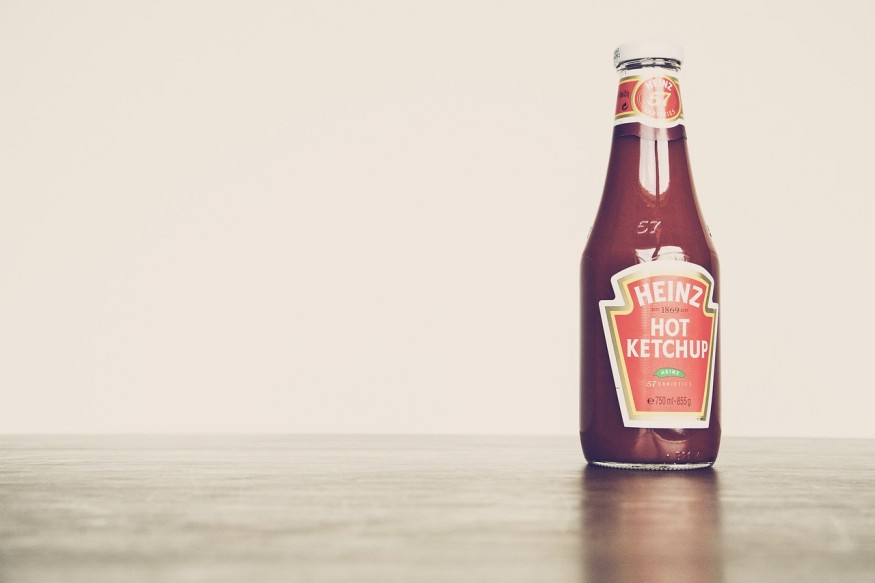
Non-Newtonian fluids might look ordinary, but they behave in ways that challenge everyday intuition about liquids and solids. These fluids have a viscosity that changes when they are stirred, squeezed, or struck, which is why some can seem to "turn solid" when hit or punched.
In daily life, people encounter many everyday Non-Newtonian fluids in the kitchen, bathroom, workplace, and even inside their bodies, often without realizing it.
What Are Non-Newtonian Fluids?
In classical physics, a Newtonian fluid has a constant viscosity under different flow conditions, as long as temperature and pressure remain the same. Water, air, and simple oils are Newtonian because they flow predictably when a force is applied; stirring a cup of water faster does not suddenly make it thicker or thinner.
Non-Newtonian fluids do not follow this rule. Their viscosity changes depending on the rate or type of deformation. When these fluids are stirred, shaken, squeezed, or hit, they can either become runnier or dramatically thicker.
This is what makes Non-Newtonian fluids distinctive: their internal structure responds to applied stress in complex ways, so their flow behavior cannot be described with a single, constant viscosity.
Viscosity itself is a measure of how strongly a fluid resists flowing. Honey, which pours slowly, has a high viscosity, while water, which pours easily, has a low viscosity. For Newtonian fluids, viscosity mainly depends on temperature and pressure.
For Non-Newtonian fluids, viscosity is more dynamic and can change with shear rate (how fast one layer slides past another), with time under continuous stress, or with sudden changes in force. This is why the study of Non-Newtonian fluids is central to rheology, the science of flow and deformation.
Non-Newtonian fluids can be grouped by how their viscosity responds to shear stress:
- Shear thinning (pseudoplastic): Viscosity decreases at higher shear rates. Ketchup, paint, blood, and many shampoos behave this way, flowing more easily when force is applied.
- Shear thickening (dilatant): Viscosity increases with higher shear rate. A suspension of cornstarch in water is a classic example, behaving almost like a solid when hit quickly.
- Time-dependent behaviors: Thixotropic fluids become thinner over time under constant shear, while rheopectic fluids become thicker with continued deformation.
Kitchen Examples
The kitchen offers some of the clearest examples of everyday Non-Newtonian fluids. Ketchup is a familiar shear thinning fluid. At rest, it may cling stubbornly to the bottle, but once shaken or tapped, its viscosity decreases and it flows more easily.
This change in viscosity with applied force explains why a steady squeeze is often more effective than hard shaking.
Cornstarch mixed with water creates a classic Non-Newtonian fluid known as oobleck. When pressure is applied slowly, it behaves like a thick liquid, allowing fingers or objects to sink.
When struck quickly, its shear thickening behavior dominates, and it feels solid, resisting penetration. The suspended cornstarch particles interact and jam under high shear, producing this dramatic shift.
Many sauces and gravies also show Non-Newtonian traits, becoming smoother and easier to pour when stirred. These behaviors come from complex interactions among dissolved molecules, suspended particles, and the surrounding liquid.
Bathroom and Personal Care Products
Several bathroom products are everyday Non-Newtonian fluids. Shampoos and liquid soaps are often designed to be shear thinning. They have enough viscosity in the bottle to avoid spilling too easily but become runnier when squeezed or rubbed between the hands, making them easy to spread.
Toothpaste behaves almost like a soft solid on the brush due to a yield stress that must be overcome before it flows. Once squeezed from the tube or moved by brushing, it begins to flow like a thick fluid. This combination of yield stress and time-dependent viscosity gives toothpaste its familiar feel and function.
Biological and Industrial Fluids
Blood is a well-known Non-Newtonian fluid. It tends to be shear thinning, so its effective viscosity decreases at higher shear rates. This property helps blood flow efficiently through narrow capillaries, where shear rates are relatively high because of the small diameters.
Synovial fluid in joints has complex rheological characteristics. It acts as both lubricant and shock absorber, adapting its viscosity under different loads and movement speeds.
In industry, paints, coatings, polymer solutions, and slurries are engineered as Non-Newtonian fluids so that their viscosity responds in useful ways during pumping, spraying, spreading, and storage.
Why Some Non-Newtonian Fluids Feel Solid When Hit
Shear thickening is a specific type of Non-Newtonian behavior in which a fluid's viscosity increases with increasing shear rate.
In everyday terms, a fluid that flows easily under gentle motion can become stiff or nearly solid when subjected to sudden high-speed impacts. This effect is especially strong in suspensions of fine solid particles in liquids, such as cornstarch in water.
In shear thickening Non-Newtonian fluids, the structure within the fluid reconfigures under stress. At low shear rates, particles are separated by thin liquid layers and can slide past each other.
At higher shear rates, these lubricating layers become less effective, and the particles are forced into close contact. This can create a temporary "jammed" state, where particles form networks that resist deformation.
The fluid behaves like a solid because this jammed structure carries most of the stress. Once the force is reduced, the structure relaxes and the fluid flows again.
Simple experiments highlight this behavior. A bowl of oobleck can support a rapidly moving hand or even a person running across its surface because the fast motion triggers a high shear rate and a solid-like response.
A slow press, however, allows the hand or foot to sink as the fluid has time to flow. Similar principles are used in some modern protective materials, where shear thickening Non-Newtonian fluids remain flexible in normal use but stiffen instantly on impact, offering lightweight shock absorption.
Non-Newtonian Fluids: Everyday Materials with Extraordinary Behavior
Non-Newtonian fluids show that familiar liquids can hide rich and surprising physics. In kitchens, bathrooms, factories, and bodies, everyday Non-Newtonian fluids adjust their viscosity in response to how they are handled, stirred, or struck.
This variable behavior explains why ketchup resists pouring, why toothpaste holds its shape, why oobleck can be walked on, and how blood flows smoothly through tiny vessels.
By understanding key ideas such as viscosity, shear thinning, and shear thickening, it becomes easier to recognize these materials and appreciate how Non-Newtonian fluids quietly shape modern life.
Frequently Asked Questions
1. Are all thick liquids Non-Newtonian fluids?
No. Some thick liquids like pure honey can still be Newtonian if their viscosity stays constant under different flow rates; Non-Newtonian behavior depends on how viscosity changes with applied force, not just how thick a fluid appears.
2. Can Non-Newtonian fluids be gases as well as liquids?
In practice, Non-Newtonian behavior is almost always discussed for liquids and suspensions, because gas molecules are so far apart that they rarely form the complex structures needed for changing viscosity under shear.
3. Do Non-Newtonian fluids always return to their original state after stress?
Most everyday Non-Newtonian fluids recover once the stress is removed, but the recovery time and completeness depend on their composition; some may take time to relax or can be permanently altered if overworked.
4. Are Non-Newtonian fluids safe to touch or play with?
Common household examples like cornstarch-and-water mixtures are generally safe with normal hygiene, but industrial or chemical Non-Newtonian fluids may contain additives or solvents and should only be handled following safety guidelines.
© 2026 ScienceTimes.com All rights reserved. Do not reproduce without permission. The window to the world of Science Times.


