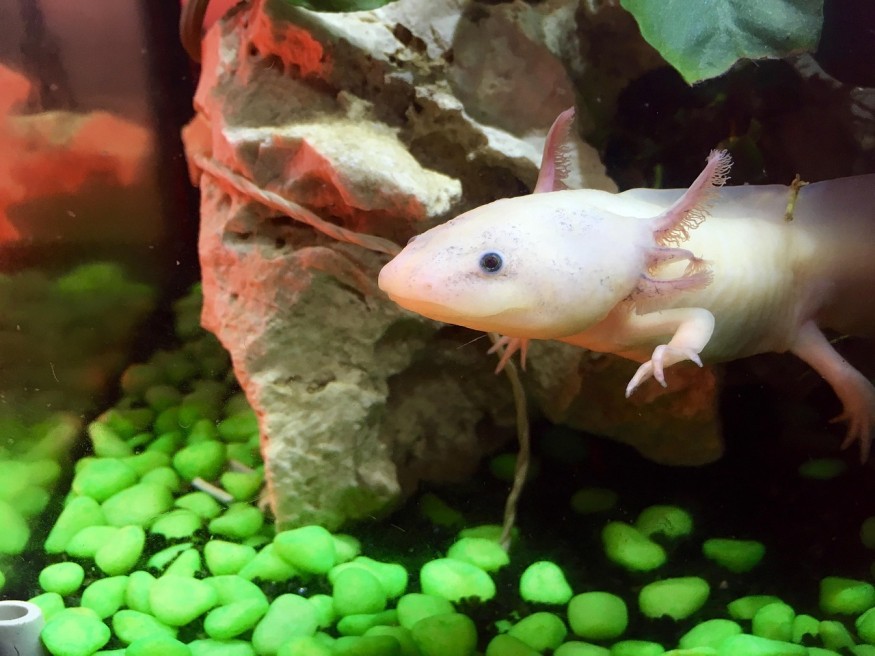
Neoteny is a striking example of how evolution can reshape life's developmental rules, allowing some organisms to achieve reproduction without ever fully "growing up." In this process, known as neotenous development, species retain juvenile characteristics while still becoming sexually mature.
Found across various paedomorphic species, neoteny challenges the assumption that adulthood must follow a fixed physical progression.
What Is Neoteny in Biology?
Neoteny refers to the retention of juvenile traits in reproductively mature organisms. It is a form of heterochrony, where the timing of developmental processes shifts during evolution.
In neotenous development, physical growth slows or halts, but reproductive systems mature on schedule. This creates organisms that resemble juveniles but are fully capable of reproduction. Neoteny is one pathway to paedomorphism, a broader category describing species that retain early-life traits into adulthood.
Hormonal regulation plays a key role, particularly thyroid hormones in amphibians, along with genetic controls that influence developmental timing.
How Does Neoteny Work in Evolution?
Neoteny arises when natural selection favors organisms that reproduce earlier or avoid costly developmental transitions. Instead of progressing to a more complex adult form, species may remain in a juvenile state if it is already well-suited to their environment.
This evolutionary strategy can:
- Reduce energy demands by skipping metamorphosis
- Enable faster reproduction cycles
- Allow specialization within stable ecological niches
Over time, these advantages can make neotenous development a permanent trait within a species.
What Are Paedomorphic Species?
Paedomorphic species are organisms that retain juvenile features as adults. Neoteny is one mechanism behind this, but another is progenesis, where reproductive maturity accelerates relative to physical growth.
The distinction is important:
- Neoteny slows body development
- Progenesis speeds up reproduction
Both result in paedomorphic speciesthat can thrive under specific environmental conditions.
Examples of Neoteny in Animals
The axolotl is the most well-known example of neoteny. Unlike most amphibians, it retains larval traits such as external gills and an aquatic lifestyle while remaining capable of reproduction.
Other examples include:
- Salamanders that never transition to terrestrial adulthood
- Certain insects that reproduce in larval stages
- Marine organisms that retain early developmental forms
Some researchers also suggest humans display mild neotenous traits, such as flatter faces and prolonged developmental periods, though this remains debated.
Why Do Some Species Evolve Neoteny?
Neoteny often evolves in environments where juvenile traits already provide survival advantages. Instead of changing form, species maintain what already works.
Key benefits include:
- Energy conservation from avoiding metamorphosis
- Faster access to reproduction
- Adaptation to stable or resource-rich environments
However, this strategy can reduce flexibility if environmental conditions shift, limiting long-term adaptability.
How Does Neoteny Affect Reproduction?
Neoteny directly links development and reproduction by allowing organisms to reproduce while still in a juvenile-like state.
This is driven by:
- Early activation of reproductive systems
- Hormonal pathways that prioritize reproduction
- Genetic mechanisms that delay physical maturation
Compared to species that undergo full transformation, neotenous organisms often reproduce sooner, which can support rapid population growth.
What Is the Difference Between Neoteny and Paedomorphism?
Neoteny is a specific developmental process, while paedomorphism is the broader outcome.
- Neoteny: Slowed physical development with normal reproductive timing
- Paedomorphism: Retention of juvenile traits through processes like neoteny or progenesis
Understanding this distinction helps clarify how different evolutionary mechanisms produce similar biological results.
Can Humans Exhibit Neoteny?
The concept of human neoteny suggests that humans retain certain juvenile traits compared to other primates. These may include:
- Larger brain size relative to body
- Reduced facial projection
- Extended learning periods
Some scientists argue these features support cognitive and social complexity, though the idea remains under discussion.
What Causes Neotenous Development?
Neotenous development results from a combination of genetic, hormonal, and environmental influences.
Key factors include:
- Genetic control over developmental timing
- Hormonal regulation, especially thyroid hormones
- Environmental conditions such as nutrient availability
In amphibians, for example, low iodine levels can inhibit metamorphosis, promoting neoteny.
Is Neoteny an Advantage or Disadvantage in Evolution?
Neoteny can offer clear advantages:
- Efficient energy use
- Reduced developmental risk
- Faster reproduction
At the same time, it can limit adaptability in changing environments. This balance explains why neoteny appears in some evolutionary lineages but not others.
The Role of Neoteny in Evolution and Reproduction
Neoteny highlights the flexibility of evolution, showing that survival does not always require increased complexity. Through neotenous development, paedomorphic species can achieve reproduction while maintaining forms that are already effective in their environments.
Rather than following a fixed path to adulthood, evolution can favor alternative strategies that prioritize efficiency, timing, and ecological fit. Neoteny ultimately demonstrates that in evolution, success is defined not by how much an organism changes, but by how effectively it can survive and reproduce.
Frequently Asked Questions
1. Can neoteny be reversed in certain species?
Yes. In some species like axolotls, exposure to specific hormones such as thyroid hormones can trigger metamorphosis, shifting them from a neotenous to a more typical adult form.
2. Does neoteny occur in plants or only in animals?
Neoteny is primarily studied in animals, but similar concepts of delayed development and retained juvenile traits can occur in plants, though they are described using different terms.
3. How does neoteny influence lifespan?
Neoteny does not directly determine lifespan, but in some species, retaining juvenile traits may be associated with slower aging processes or extended regenerative abilities.
4. Are there environmental risks linked to neotenous species?
Yes. Because many paedomorphic species rely on stable environments, they can be more vulnerable to habitat changes, pollution, or climate shifts that disrupt their developmental balance.
© 2026 ScienceTimes.com All rights reserved. Do not reproduce without permission. The window to the world of Science Times.


