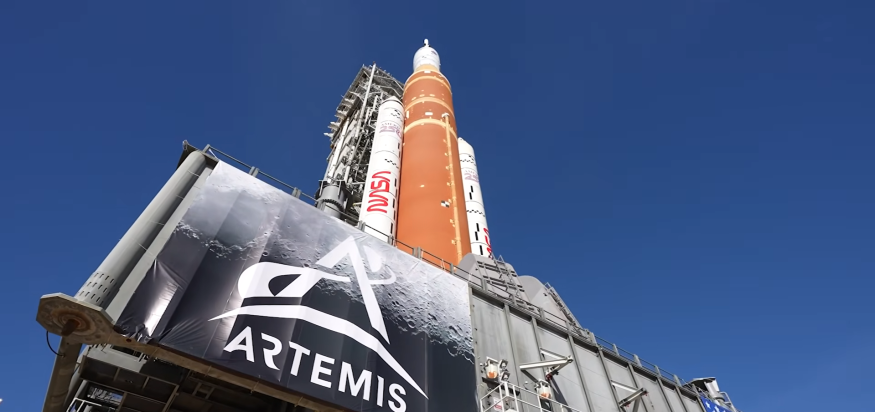
NASA's Artemis II, the first crewed Orion mission since Apollo, is facing a rocket issue that has delayed its lunar flyby. Engineers discovered a helium flow interruption in the upper stage ICPS during the February 19 wet dress rehearsal, preventing proper tank pressurization and engine conditions. As a result, the 322-foot SLS rocket will be rolled back from Launch Pad 39B to the Vehicle Assembly Building for repairs. Artemis II mission update confirms the crew—Commander Reid Wiseman, Pilot Victor Glover, Mission Specialist Christina Koch, and Canadian astronaut Jeremy Hansen—remain in Houston preparing for the lunar flyby once the issue is resolved.
The rollback preserves the potential April launch window, allowing engineers to troubleshoot valves, filters, and connections. NASA space mission delay protocols, refined during Artemis 1, ensure crew safety while maintaining readiness. Flight readiness reviews and system integration tests will verify the rocket and Orion spacecraft for a successful lunar mission, advancing Artemis 3's 2028 lunar landing goals.
NASA Artemis 2 Rocket Problem
The Artemis II rocket issue centers on the ICPS helium system, which maintains optimal tank pressure and engine environmental conditions. Without proper helium flow, the rocket cannot proceed with a safe launch. Post-wet dress rehearsal data review revealed the blockage, prompting teams to remove pad access trusses in advance of high winds and prepare for a controlled 4-mile rollback. Engineers will spend weeks in the VAB diagnosing connection valves, filters, and ground interface systems. The issue is reminiscent of Artemis 1, where similar LH2 anomalies were corrected through valve replacements, filter cleanings, and cryogenic handling protocols.
Rollback and Launch Preparations
NASA's rollback plans began on February 24, 2026, weather permitting, using the Mobile Launcher and crawler transporter to return the stack to the Vehicle Assembly Building. Once inside, crews will conduct repairs and system checks, ensuring helium and propellant lines function correctly. The April launch window could open as early as April 1, with additional target dates throughout the month. Meanwhile, the Artemis II crew continues training in Houston, including lunar orbit simulations, rendezvous practice, life support drills, and emergency procedures, ensuring readiness for the 10-day lunar flyby covering 1.2 million miles.
Artemis II showcases the engineering rigor of modern spaceflight, combining SLS thrust, Orion systems, and international partnerships with CSA, ESA, and JAXA. Once repaired, the mission will advance human exploration beyond low Earth orbit, testing radiation shielding, crew endurance, and orbital operations that are critical for future lunar landings and Gateway station deployments.
Artemis 2: A Lunar Milestone in the Making
Despite delays, Artemis II remains a pivotal step in NASA's return to the Moon. The rollback and subsequent troubleshooting highlight the complexity of crewed deep-space missions and the safety-first approach of modern spaceflight. With the SLS rocket and Orion spacecraft undergoing meticulous inspections, the mission is on track to validate systems, launch safely, and inspire the next era of lunar exploration. Artemis II not only marks humanity's farthest journey since Apollo but also sets the stage for a sustainable lunar presence and future Mars missions.
© 2026 ScienceTimes.com All rights reserved. Do not reproduce without permission. The window to the world of Science Times.


