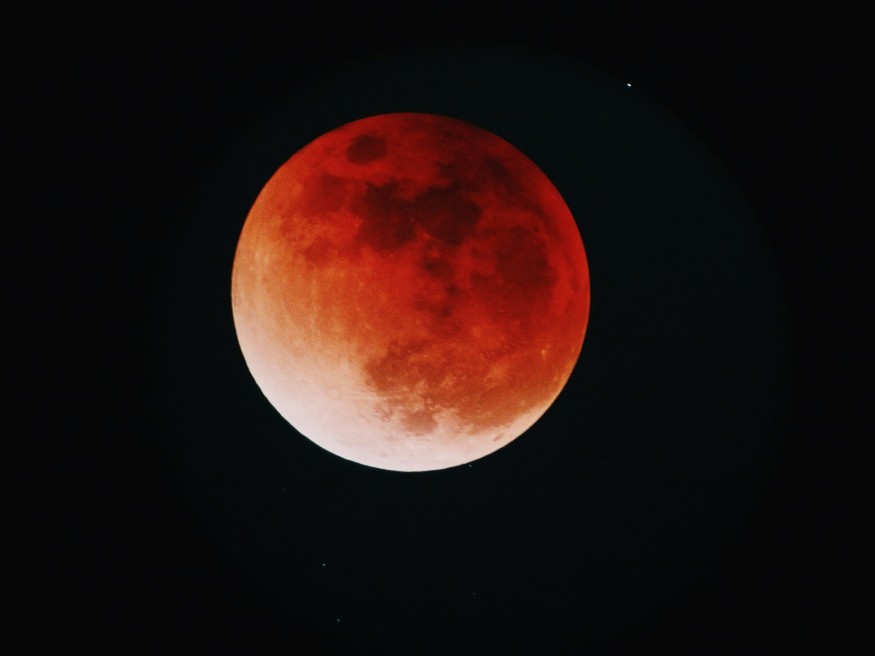
The blood moon 2026 will captivate skywatchers on March 3, as the Moon passes fully into Earth's shadow. This total lunar eclipse occurs when the Sun, Earth, and Moon align precisely, allowing sunlight to filter through Earth's atmosphere. Shorter blue wavelengths scatter, leaving longer red wavelengths to color the Moon in deep copper and crimson hues. Lunar eclipses are rare and memorable events, marking one of the most striking astronomical phenomena of 2026.
Totality lasts 58 minutes at maximum depth, with the penumbral and partial phases extending the eclipse over 5 hours and 39 minutes. Observers in North America, the Pacific, Australia, and East Asia will enjoy varying visibility, while Europe and Africa will miss the event. Worm Moon namesake reflects seasonal thawing of the soil, signaling the emergence of earthworms—a reminder of the natural rhythms tied to celestial cycles.
Blood Moon 2026 Visibility Map
The blood moon 2026 is fully visible from the Pacific Northwest in pre-dawn hours, including California, Oregon, and Washington, with totality from 3:04–4:03 a.m. PT. Eastern U.S. viewers see partial phases as the Moon sets, with maximum eclipse near sunrise, while Central Time zones catch more of totality. In Eastern Australia and New Zealand, the red Moon rises high in the evening sky, with maximum depth March 4 local time. Observers in Asia see a full eclipse in Japan, Korea, and eastern China, while central Asia gets partial phases.
Using binoculars or small telescopes enhances the view, showing lunar craters and maria illuminated in the eerie red glow. Local apps and simulators help time the eclipse precisely for each location. Clear skies and minimal urban light pollution ensure the best experience. No eye protection is required, as the Moon reflects sunlight rather than emitting it.
Lunar Eclipse Science Mechanics
The lunar eclipse occurs when the Moon enters Earth's umbra, about 1.3 million km long, 384,000 km from Earth. Sunlight bending through Earth's atmosphere refracts red light onto the Moon, producing the characteristic blood color. Volcanic aerosols and clouds can deepen or mute the shade of red, making each eclipse unique.
The March 3, 2026 eclipse begins with a subtle penumbral dimming, followed by a partial eclipse lasting over an hour. Totality, the most dramatic phase, immerses the Moon completely in Earth's shadow, while a rare selenelion may allow sunrise or sunset eclipses to appear simultaneously with atmospheric refraction. The eclipse demonstrates orbital mechanics, shadow geometry, and the curved Earth's silhouette, observable even without equipment.
Total Lunar Eclipse March 3 Observation
No special equipment is needed, though binoculars or a small telescope enhance lunar surface details. Photography enthusiasts can capture phases with DSLRs or smartphones using tripods and long exposures. Observers should prioritize dark locations with clear western skies in North America, or evening skies in Australia and Asia. The eclipse provides a prime opportunity for public astronomy events, live streams, and backyard skywatching sessions, making it accessible to families and enthusiasts alike.
Experience the Blood Moon 2026: A Celestial Highlight
The March 3, 2026 blood moon offers a unique chance to witness Earth's shadow on the Moon during a rare total lunar eclipse. Observing this event connects people to centuries of celestial knowledge, from Aristotle to modern orbital calculations. The Moon's red glow illustrates atmospheric optics and reinforces the predictability of astronomy events 2026. With proper planning, anyone can safely enjoy the fleeting beauty of this red-tinted celestial spectacle.
© 2026 ScienceTimes.com All rights reserved. Do not reproduce without permission. The window to the world of Science Times.


