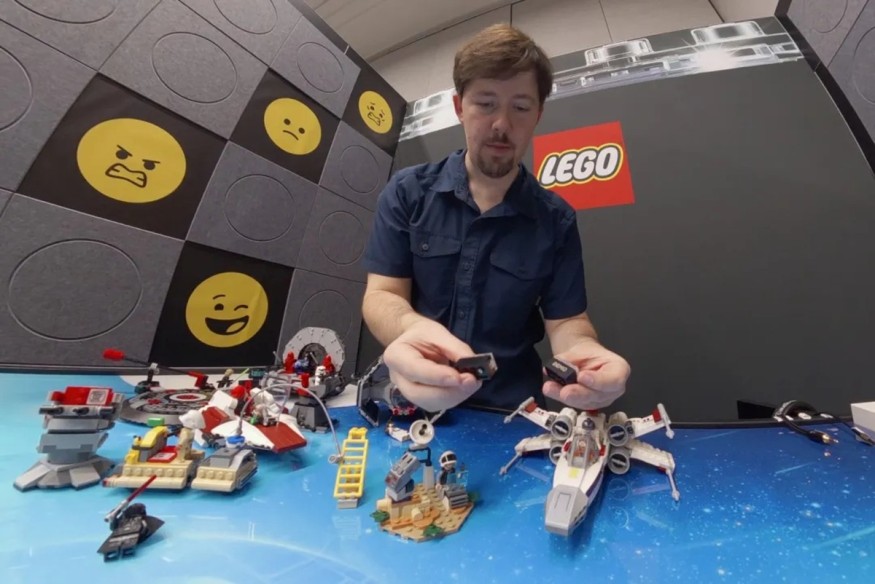
CES 2026 highlighted how AI and robotics are merging with everyday life. Legos with smart bricks demonstrated interactive STEM play, robotics breakthroughs showcased humanoids and stair-climbing household machines, and AI-assisted devices delivered advanced at-home diagnostics. These innovations show how modular, intelligent, and connected technology is moving from concept to practical use across homes, industry, and health.
The event emphasized real-world applications of physical AI, generative learning, and sensor integration. Smart toys turn play into STEM exploration, humanoid robots perform industrial tasks autonomously, and AI-assisted devices extend human perception and wellness. Attendees saw how technology now adapts to users, learns from environments, and blends physical and digital interfaces for both fun and function.
Top 10 Scientific and Robotics Innovations
1. Lego Smart Brick – Best in Show
Lego with smart bricks stole the spotlight at CES 2026, embedding NFC chips, RGB LEDs, gyroscopes, and haptic motors into classic 2x4 bricks. Phone apps detect builds and trigger lighting sequences, character voices, and physics simulations, turning traditional play into a hands-on STEM experience. VR180 demos further immerse users, while integration with Arduino hubs allows IoT experiments and CAD exports, creating a platform for generative design and structural testing.
2. Boston Dynamics Atlas 3.0 – Humanoid Robotics Breakthrough
Atlas 3.0 integrates Google DeepMind AI to perform complex factory tasks, including handling 25kg payloads. After 10 million virtual training hours, this humanoid adapts faster than previous models, reducing the need for human oversight. Its reinforcement learning capabilities make industrial deployment efficient, and the robot's ability to lift heavier objects and simulate new scenarios sets a new standard for robotics in production lines.
3. Roborock Saros Rover – Household Automation
The Saros Rover uses AI vision to map multi-level homes and climb stairs autonomously, completing cleaning tasks 40% faster than prior models. Flexible legs handle 15cm steps, while real-time path prediction optimizes movement through cluttered environments. This robot demonstrates how AI can combine household convenience with breakthroughs in robotics, offering reliable, adaptable smart cleaning solutions.
4. LG CLOiD Household Robot – Kitchen Assistant
LG CLOiD navigates kitchens to serve food and manage objects, using recognition of over 1,000 items. The prototype bridges concept and commerce, showing how robotics can integrate into daily household routines. From loading dishwasher cycles to organizing spaces, CLOiD demonstrates autonomous assistance that adapts to changing environments.
5. Haply Inverse3X Haptics – Tele-Surgery
Haply Inverse3X uses advanced haptics to transmit tissue resistance for remote surgery, achieving 95% teleoperation accuracy. Surgeons can perform operations across continents as if they were physically present, with tactile feedback that closely matches local procedures. This innovation extends the reach of medical expertise while providing training simulations that maintain precision and safety.
6. Ultrahuman Blood Analyzer – At-Home Health Diagnostics
Ultrahuman AI-powered analyzers measure 25 biomarkers at home and provide lifestyle recommendations to prevent chronic health issues. The device interprets data, offering insights on diet, exercise, and wellness strategies. By turning raw biomarker readings into actionable guidance, it makes preventive healthcare accessible and personalized.
7. NuraLogix Longevity Mirror – Facial Biometrics
The Longevity Mirror scans faces to measure vascular age, HbA1c, and stress hormones in seconds without invasive tests. It converts biometric data into actionable health insights and connects to home wellness systems. With over 100 metrics available, it rivals professional clinical equipment at a fraction of the cost, offering fast, non-invasive diagnostics.
8. Naqi Neural Earbuds – Gesture Control
Naqi earbuds detect subtle head tilts and jaw movements, allowing hands-free control for accessibility and convenience. Micro-gestures translate into interface commands, enhancing user interaction beyond touchscreens. Recognized as the Best of Innovation for accessibility, they extend AI-assisted device applications to everyday tasks.
9. Neurable HyperX Headset – Brain-Computer Interface
Neurable HyperX uses EEG sensors to interpret brain activity, enabling thought-based control of software interfaces. It tracks focus, adapts system responses, and integrates with VR/AR environments for immersive experiences. This headset exemplifies the convergence of AI-assisted devices and wearable technology for intuitive, mind-driven interaction.
10. Siemens Digital Twin Composer – Industrial Optimization
Siemens Digital Twin Composer simulates entire factories to enable rapid planning and optimization, achieving results 7x faster than traditional CAD. By modeling real-world processes digitally, it predicts workflow efficiency, reduces errors, and accelerates metaverse-scale industrial design. Coupled with AI, it enables data-driven decisions and rapid iteration in large-scale manufacturing environments.
Innovations in Smart Bricks, Robotics, and AI-Assisted Devices
Legos with smart bricks have evolved into powerful STEM tools, connecting to Arduino hubs for modular prototyping, IoT experiments, and generative design. Robotics breakthroughs at CES 2026, such as the Saros Rover and Atlas 3.0, leverage modular sensor arrays for rapid development, enabling humanoids and household robots to perform complex tasks, including autonomous stair climbing, object recognition, and kitchen automation. AI-assisted devices enhance these innovations by analyzing built structures, exporting CAD/STL files, and simulating physics to predict outcomes, while immersive 8K VR180 demonstrations via Qoocam Q3 Ultra bring mixed-reality engagement to life.
In health and diagnostics, AI-assisted devices are redefining accessibility and wellness. Haply haptics deliver tactile feedback for remote surgery, while Ultrahuman blood analyzers and NuraLogix mirrors provide real-time insights into biomarkers and facial health.
Wearables like Naqi earbuds and Neurable headsets extend control through gestures and EEG signals, enabling novel ways of bridging human-computer interaction. Together, smart bricks, robotics breakthroughs, and AI-assisted devices illustrate a modular, interconnected approach to technology that accelerates innovation across education, industry, and personal health.
CES 2026 Highlights: Physical AI Transforming Everyday Life
Legos with smart bricks, robotics breakthroughs, and AI-assisted devices merge education, health, and automation into interactive experiences. Modular design enables prototyping, AI learning enables adaptability, and physical computing bridges the digital and real worlds. CES 2026 proved these technologies are no longer futuristic—they're accessible, scalable, and designed to enhance productivity, wellness, and play.
Frequently Asked Questions
1. How do LEGO with smart bricks integrate AI?
Smart bricks embed sensors like NFC, gyroscopes, and haptics. AI-assisted devices detect structures, simulate physics, and provide interactive feedback. VR or phone apps trigger lights, sounds, and analysis. These features transform play into hands-on STEM education.
2. Can household robots climb stairs reliably?
Yes, AI vision and flexible leg designs handle steps safely. Path prediction ensures smooth navigation. Multi-level mapping reduces human supervision. Devices complete tasks autonomously with speed and precision.
3. Are AI-assisted health devices accurate for home use?
Devices like Ultrahuman and NuraLogix measure multiple biomarkers non-invasively. AI interprets the data and predicts health risks. Results are not replacements for professional testing but provide preventive insights. Apps track long-term health trends effectively.
4. How do industrial AI and robotics improve efficiency?
Atlas 3.0 and Siemens Digital Twin Composer simulate and optimize tasks. AI accelerates adaptation to new processes. Simulation reduces human error. Factories achieve faster, safer, and more precise production outcomes.
© 2026 ScienceTimes.com All rights reserved. Do not reproduce without permission. The window to the world of Science Times.


