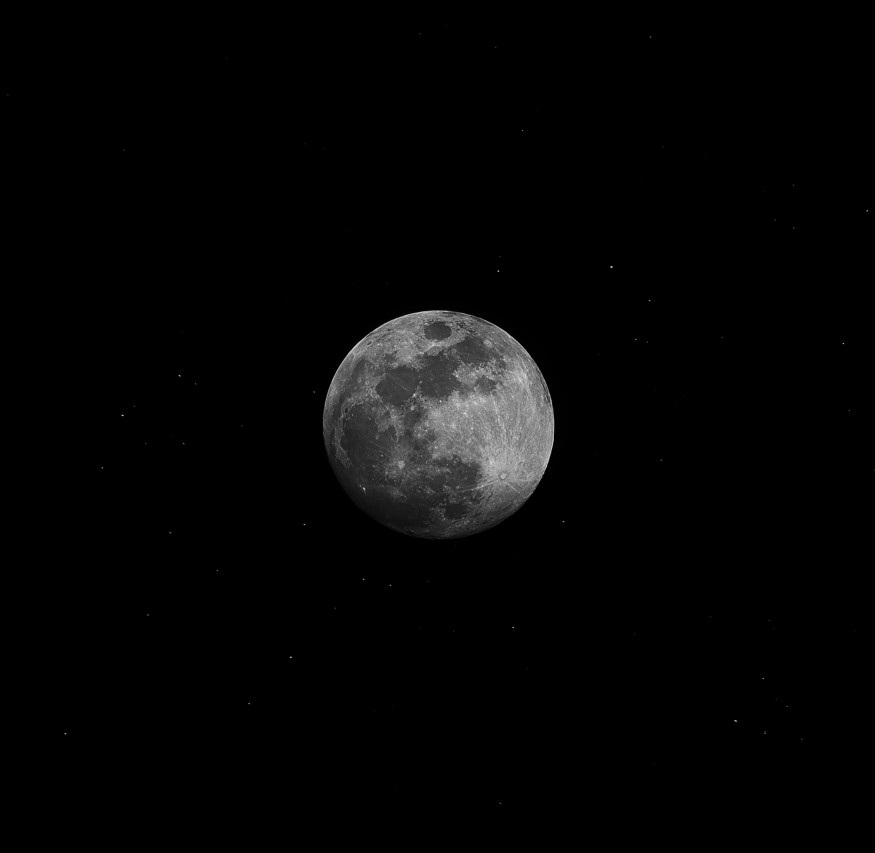
Does the moon look the same everywhere is a question that quickly leads to a surprising answer: no, it doesn't appear identical from all parts of Earth. While the Moon itself remains physically unchanged, what we see from the ground shifts depending on where we are standing, how the sky is oriented, and the angle at which we observe it. These differences can be subtle or dramatic, especially when comparing observers in opposite hemispheres.
Why the moon looks different becomes clearer when considering how Earth's curvature, latitude, and viewing angle reshape perception. A viewer in the Northern Hemisphere may see familiar patterns like the "Man in the Moon," while someone in the Southern Hemisphere sees the same features rotated or inverted. These variations in moon appearance, combined with atmospheric effects and orbital mechanics, create a constantly shifting visual experience that depends heavily on location and timing.
Why the Moon Looks Different: Hemispheric Orientation and Rotation
Does the moon look the same everywhere when viewed from different hemispheres? Not quite, because observers in the Northern and Southern Hemispheres see the Moon from opposite orientations in the sky. This creates a visual rotation effect where the same surface features appear flipped or tilted depending on whether you are looking north or south. As a result, familiar lunar markings can look upside down or sideways depending on your geographic position.
Why the moon looks different in this way is tied to how humans orient themselves relative to the horizon. In the Northern Hemisphere, people generally face south to view the Moon, while in the Southern Hemisphere, they face north. This reversed viewpoint causes a mirror-like shift in moon appearance even though the Moon itself remains unchanged. Despite this, synchronous rotation ensures that we always see the same lunar face, though its orientation varies by observer location.
Moon Appearance and Latitude Effects on Terminator Angle
Moon appearance also changes significantly with latitude due to how the terminator line—the boundary between light and shadow—is viewed from different points on Earth. Near the equator, the Moon often appears at a flatter angle, making crescents look more horizontal. As you move toward higher latitudes, the same lunar phase can appear tilted or even nearly vertical, creating a very different visual impression.
Does the moon look the same everywhere when considering latitude? The answer again is no, because Earth's curvature changes how we perceive angles in the sky. The terminator angle shifts depending on whether an observer is closer to the equator or the poles, altering the apparent direction of lunar illumination. This variation in moon appearance is not due to the Moon itself but to perspective differences caused by Earth's spherical shape and viewing geometry.
Lunar Viewing, Horizon Illusions, and Atmospheric Effects
Lunar viewing near the horizon creates some of the most noticeable differences in how the Moon appears. When the Moon is close to the horizon, it often looks larger and more distorted compared to when it is high in the sky. This is known as the moon illusion, where atmospheric conditions and surrounding visual cues trick the brain into perceiving a larger size.
Why the moon looks different in these moments is linked to light scattering and atmospheric refraction. Dust, moisture, and air density near the horizon bend light slightly, often giving the Moon a warmer or reddish tone during moonrise or moonset. As it rises higher, these effects fade, and the moon's appearance becomes clearer, smaller, and more neutral in color. Combined with libration—the Moon's subtle wobble—this creates an ever-changing visual experience.
Global Perspective Shifts in Lunar Viewing Perception
The Moon looks familiar, but its appearance can shift slightly depending on where you are on Earth. These changes come from viewing angle, orbital motion, and subtle optical effects that alter perception.
- Does the moon look the same everywhere across Earth in terms of detail and visibility: While we always see the same lunar hemisphere due to synchronous rotation, small variations in libration expose slightly different edges over time. This means certain features can appear more or less visible depending on the Moon's tilt and orbit. These subtle shifts create minor differences in perceived lunar detail.
- Why the moon looks different globally comes from viewing geometry, atmospheric conditions, and Earth's curvature: Differences in perspective, air clarity, and horizon angle all affect how the Moon is seen from different locations. Light scattering and refraction can also change brightness and sharpness. Combined, these factors make the Moon look slightly different across regions.
- Libration adds another layer of variation in lunar viewing: The Moon wobbles slightly as it orbits Earth, revealing up to about 59% of its surface over time. This slow oscillation changes which regions are visible from Earth. It contributes to small but continuous shifts in appearance.
- Earth's position and observer location influence perceived orientation: Depending on latitude, the Moon can appear rotated, tilted, or inverted in the sky. This is due to how observers align with the horizon and cardinal directions. As a result, the same Moon can look differently oriented from different parts of the world.
Lunar Perspective Science Behind Changing Moon Appearance
Moon appearance may seem inconsistent across the globe, but the underlying physics remains stable. Does the moon look the same everywhere physically? Yes, but the way we perceive it shifts due to rotational orientation, atmospheric effects, and viewing geometry. These combined factors explain why people in different regions report seeing the Moon at different angles or brightness levels.
Why the moon looks different ultimately highlights the relationship between observer and environment. Lunar viewing is shaped by Earth's curvature, atmospheric interference, and orbital mechanics working together. Even though the Moon itself is constant, human perception transforms it into a dynamic and location-dependent visual experience that changes every time we look up.
Frequently Asked Questions
1. Does the Moon look the same everywhere on Earth?
The Moon itself is the same object for everyone on Earth, but it does not appear identical from all locations. Differences in viewing angle, hemisphere orientation, and latitude change how it looks in the sky. These factors affect its apparent position and rotation. As a result, people see slightly different versions of the same Moon.
2. Why does the Moon look upside down in different countries?
The Moon appears upside down depending on whether you are in the Northern or Southern Hemisphere. This happens because observers are facing opposite directions relative to the Moon. The same surface features are visible but rotated from each perspective. It is purely a matter of orientation, not a change in the Moon itself.
3. Why does the Moon look bigger near the horizon?
This is caused by the moon illusion, a visual effect created by how the brain interprets distance and surrounding objects. When the Moon is near the horizon, buildings and landscapes create a comparison that makes it seem larger. Atmospheric refraction can also slightly distort its shape. In reality, its size does not change.
4. Does atmospheric condition affect moon appearance?
Yes, atmospheric conditions can significantly affect how the Moon looks. Dust, moisture, and air particles scatter light, changing its color and clarity. This is why the Moon often appears reddish near the horizon and brighter overhead. These effects influence perception but not the Moon's actual structure.
© 2026 ScienceTimes.com All rights reserved. Do not reproduce without permission. The window to the world of Science Times.


