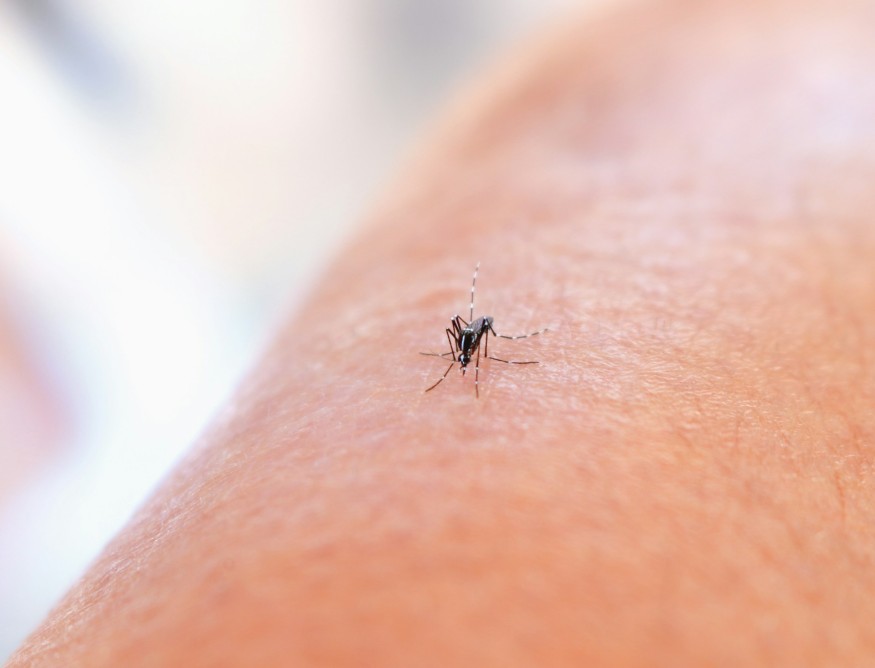
Texas is facing an early and ominous start to its 2026 West Nile virus season. The Texas Department of State Health Services (DSHS) confirmed last week that a resident of Harris County—home to Houston, the nation's fourth-largest city—has been diagnosed with West Nile neuroinvasive disease, the most severe and potentially fatal form of the infection. It is the first confirmed human West Nile case in Texas for 2026, and it has arrived earlier in the calendar year than many public health officials anticipated.
What makes this particular case especially alarming is not just the diagnosis itself, but what surrounds it. Six additional Texas counties have already reported mosquito pools that tested positive for the virus—a sign that West Nile is already circulating widely in the state's mosquito population before the summer heat fully takes hold. Those counties include Bexar (San Antonio), Dallas, Fort Bend, Montgomery, Tarrant (Fort Worth), and Brazoria—representing four of the state's five largest metro areas.
Full details from the official DSHS release: DSHS Confirms First West Nile Case in Texas in 2026. Local reporting available at Houston Public Media.
What Is West Nile Neuroinvasive Disease — And How Dangerous Is It?
West Nile virus spreads exclusively through the bite of an infected Culex mosquito. The virus is not contagious between people. There is no human-to-human transmission, and it cannot be contracted through casual contact, water, or food. It is carried by birds—primarily corvids and other avian species—and transmitted when mosquitoes feed on an infected bird and then bite a human or other mammal.
Roughly 80 percent of people infected with West Nile virus experience no symptoms at all. About 20 percent develop West Nile fever: a flu-like illness marked by fever, headache, nausea, muscle and joint aches, and fatigue, typically lasting days to two weeks. But fewer than 1 percent of infected individuals develop West Nile neuroinvasive disease—the category affecting the current Harris County patient.
West Nile neuroinvasive disease encompasses encephalitis (brain inflammation), meningitis (inflammation of the membranes surrounding the brain and spinal cord), and acute flaccid paralysis—a sudden loss of muscle control resembling polio. Symptoms can include tremors, convulsions, severe neck stiffness, disorientation, vision loss, numbness, and, in a meaningful fraction of cases, permanent neurological damage or death. There is no antiviral treatment. There is no approved human vaccine. Management is purely supportive.
Background on West Nile virus transmission and risk is available at the CDC West Nile Virus page.
Houston's Five-Year Record: 976 Cases, 106 Deaths
The scale of West Nile's impact in Texas demands context. According to DSHS, the state has recorded 976 total West Nile cases over the past five years, including 106 deaths. That five-year death toll—106 people—compares unfavorably with many infectious diseases that receive far more public attention and federal resources.
The most deadly recent year was 2024, which provisionally recorded 57 West Nile deaths in Texas alone. The lightest year was 2025, with 9 provisional deaths—a figure that likely reflects a genuine seasonal fluctuation rather than a structural improvement, as the virus's year-to-year intensity is heavily dependent on rainfall patterns, summer temperatures, and mosquito population dynamics.
Harris County—which encompasses Houston—has been a persistent hot spot. According to peer-reviewed data published in the CDC's journal Emerging Infectious Diseases, West Nile virus has been detected every single year in Houston and surrounding Harris County since 2002. The county's flat topography, subtropical climate, abundant standing water, and vast urban footprint create near-ideal conditions for Culex mosquito proliferation. In 2014, Harris County experienced its largest single-season outbreak on record, with 139 cases and 1,286 positive mosquito pools confirmed.
The 2014 Houston outbreak data and mosquito surveillance methodology were documented in a CDC Emerging Infectious Diseases study on Harris County West Nile.
The Multiregional Threat: Dallas, San Antonio, Fort Worth
The confirmation of positive mosquito pools in Dallas County and Tarrant County (Fort Worth)—two of the state's largest metro areas—signals that West Nile is not a Houston-specific concern this season. The North Texas corridor, encompassing Dallas-Fort Worth with a combined metro population exceeding 7.5 million people, has historically been one of the most consistently affected West Nile regions in the country.
In 2012, the Dallas metro area experienced one of the worst urban West Nile outbreaks in American history, triggering a controversial aerial insecticide spraying campaign that remains a defining case study in public health emergency response. Over 200 cases and 19 deaths were reported in Dallas County alone that year. The civic trauma of that outbreak left a lasting mark on North Texas public health infrastructure—and the early 2026 mosquito pool positives in both Dallas and Tarrant counties suggest local authorities are right to be on high alert now, before the July–August peak season arrives.
In San Antonio, Bexar County has reported positive mosquito pools with the season still young. The Alamo City, with a population of approximately 1.5 million, has dealt with recurrent West Nile seasons driven partly by its urban creek and greenway network—environments that provide extensive mosquito breeding habitat within dense residential neighborhoods.
The Science of the Warning: What Positive Mosquito Pools Mean
When health officials report a 'positive mosquito pool,' they are describing a batch of mosquitoes collected from a specific location and tested as a group for the presence of West Nile virus genetic material. A positive pool confirms that the virus is actively circulating in that geographic area's mosquito population—it is a direct precursor to human cases, typically appearing two to four weeks before the first human infections are confirmed. The positive pools in Dallas, Bexar, and the Houston metro area are not a precautionary projection. They are a real-time early warning system signal.
Mosquito season in Texas historically peaks between July and early September, when temperatures are highest and standing water from summer thunderstorms provides peak breeding conditions. The May confirmation of both a human neuroinvasive case and multiple positive mosquito pools across six counties means this year's season is front-loaded—and that the peak period weeks from now may be significantly more intense than the opening weeks suggest.
What Houston, Dallas, and San Antonio Residents Should Do Right Now
Because there is no human vaccine against West Nile virus and no treatment once infected, prevention is entirely behavioral and environmental. Public health authorities are urging residents across the Houston, Dallas–Fort Worth, and San Antonio metros to take the following actions: drain any standing water in flower pots, buckets, bird baths, tire swings, clogged rain gutters, or any container that holds even small amounts of water—these are prime Culex mosquito breeding sites. Use EPA-registered insect repellents containing DEET, picaridin, IR3535, or oil of lemon eucalyptus when outdoors, especially at dusk and dawn when Culex mosquitoes are most active.
People over 50 years of age, immunocompromised individuals, and those with chronic health conditions face a substantially elevated risk of progressing to neuroinvasive disease if infected. These groups should take extra precautions and should seek medical attention promptly if they develop sudden fever, severe headache, neck stiffness, confusion, or muscle weakness following any outdoor exposure in the coming months.
Report dead birds—a key early-warning indicator of West Nile activity—through the Texas DSHS reporting system. Additional prevention guidance is available at the Texas DSHS West Nile Prevention Resources and the CDC West Nile Virus Prevention page.
SCIENCETIMES.COM Analysis
The arrival of a neuroinvasive West Nile case in Harris County before Memorial Day weekend, combined with simultaneous positive mosquito pools across four of Texas's five largest metropolitan areas, represents a more aggressive early-season pattern than Texas has seen in recent years. The absence of any human vaccine or treatment makes this virus uniquely reliant on prevention—behavioral, environmental, and governmental. Any reduction in mosquito abatement program funding, any deterioration in public awareness campaigns, or any political reluctance to authorize aerial spraying in a crisis scenario translates directly into preventable deaths. Texas learned that lesson in 2012. With 2026 shaping up as an early and geographically broad season, city officials in Houston, Dallas, San Antonio, and Fort Worth should be treating those positive mosquito pools not as routine data points—but as a countdown.
© 2026 ScienceTimes.com All rights reserved. Do not reproduce without permission. The window to the world of Science Times.


