Norovirus—the most prolific cause of gastroenteritis in the world, responsible for roughly 20 million illnesses in the United States every year—is in the middle of one of its most aggressive seasons in recent memory. Driven by a newer variant called GII.17 that did not circulate widely until the 2024–2025 season, norovirus has posted decade-high case levels and is now striking cities well outside the traditional November-to-April seasonal window.
Los Angeles and San Francisco reported what public health officials described as 'massive climbs' in norovirus cases in late 2025, according to the Los Angeles Times. In Chicago and across the broader Midwest and Northeast, wastewater surveillance data from WastewaterSCAN and academic partners showed norovirus concentrations rising sharply through winter and into spring. Two schools in Massachusetts closed for multiple days after dozens of students fell ill simultaneously. And in Chicago-area and New York-area congregate facilities, outbreak clusters in care homes and long-term care settings have placed immunocompromised residents and elderly patients at particular risk.
The CDC's NoroSTAT surveillance system, which aggregates data from 14 participating states, reported 1,194 norovirus outbreaks from August 1, 2025, through May 7, 2026—a figure currently tracking within the middle 50 percent of historical seasonal ranges but substantially shaped by the earlier-than-usual season onset driven by the GII.17 variant.
WHAT Is GII.17 — And Why Can't Hand Sanitizer Kill It?
Norovirus belongs to the genus Norovirus and is classified into genogroups. For decades, the dominant strain circulating in the United States and most of the developed world was GII.4, which periodically spawns new subvariants that cause surge seasons every few years. The GII.17 variant—historically classified as a 'Kawasaki' strain common in East Asia—circulated at very low levels in the Americas for years before erupting to prominence during the 2024–2025 season and driving the current surge.
GII.17 appears to cause more clinically symptomatic illness in previously exposed individuals than GII.4, possibly because population immunity acquired against GII.4 does not fully cross-protect against GII.17. This means that adults who previously contracted norovirus and developed at least partial immunity may be more susceptible to GII.17 infection than they would be to a familiar GII.4 variant—expanding the at-risk population significantly.
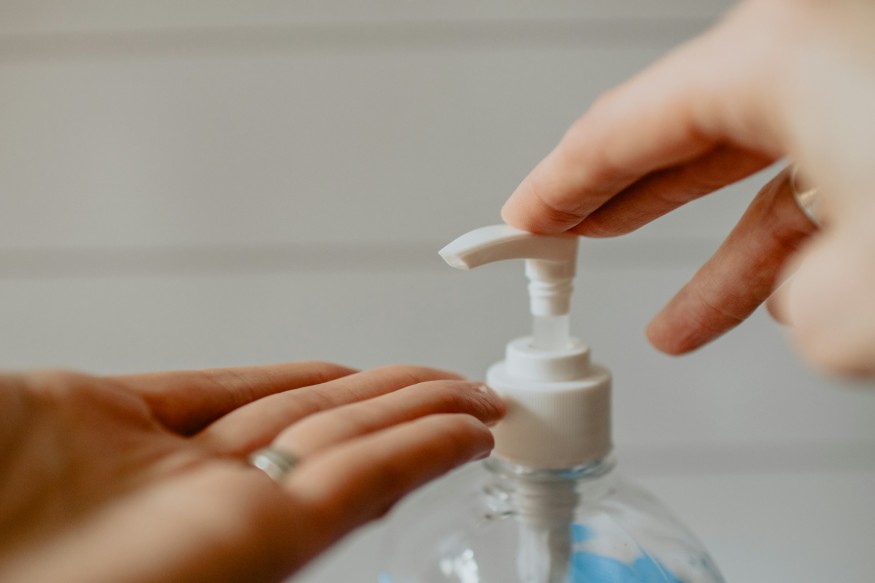
The hand sanitizer limitation is real and widely misunderstood. Alcohol-based hand sanitizers—the primary hygiene technology deployed in schools, hospitals, restaurants, and transit systems—are highly effective against bacteria and enveloped viruses like influenza. Norovirus is a non-enveloped virus, meaning it lacks the lipid outer membrane that alcohol disrupts. Standard hand sanitizer does not reliably inactivate norovirus. Proper handwashing with soap and warm water for at least 20 seconds is substantially more effective. This distinction is not a technicality—it has direct implications for outbreak control in any setting that relies primarily on sanitizer dispensers rather than sink access.
Dr. Marlene Wolfe of WastewaterSCAN at Emory University, quoted in TODAY.com coverage of the surge, noted that norovirus concentrations rose 45 percent between November 2025 and December 2025, with the highest levels recorded in the Midwest and Northeast.
Los Angeles: Wildfires, Shelters, and a Norovirus Outbreak Within an Outbreak
The January 2025 Los Angeles wildfires produced a public health emergency within a public health emergency. At the Pasadena Convention Center evacuation shelter—which housed hundreds of residents displaced by the Eaton and Palisades fires—at least 28 individuals were confirmed with norovirus infection, according to the Pasadena Department of Public Health. The outbreak was not surprising: norovirus thrives in exactly the conditions that emergency shelters create. Dense proximity, shared bathrooms, communal food preparation, high stress, and disrupted hygiene routines are all major transmission facilitators.
The Los Angeles incident is an important case study for what happens when norovirus intersects with a population already displaced, stressed, and medically vulnerable. The CDC notes that 'it only takes a few norovirus particles—as few as 18—to infect a person,' and that a single infected individual can shed billions of viral particles in a day. In a shelter environment, the virus can spread through contaminated surfaces, contaminated food handled by an infected volunteer, or fomites on shared objects faster than routine cleaning protocols can contain it.
Southern California's elevated norovirus activity through late 2025 and early 2026 has not been limited to shelter settings. The region's restaurant industry, care home sector, and school systems all reported elevated norovirus-related disruption consistent with the statewide surge that public health officials had attributed primarily to the GII.17 variant.
Chicago and the Midwest: Wastewater Tells the Story Before Clinics Do
In Chicago and across the Midwest, norovirus surveillance was revealing—quite literally—what clinical case reports were not fully capturing. WastewaterSCAN, the nationwide environmental surveillance network coordinated by Emory University and Stanford, detected high norovirus concentrations in Midwest wastewater systems throughout the late 2025 and early 2026 period. The network's norovirus signal in the Midwest and Northeast was among the highest measured in any region of the country during the season.
Wastewater epidemiology for norovirus is particularly valuable because the virus is notoriously underreported clinically. Most norovirus cases involve 24–72 hours of acute vomiting and diarrhea, followed by rapid recovery in healthy adults. The vast majority of infected individuals never seek medical care, never receive a laboratory test, and never appear in clinical surveillance data. Wastewater sampling captures the viral shedding of the entire community—including the silent majority of infected individuals who recovered at home—providing a far more complete picture of actual prevalence.
The CDC NoroSTAT data and CaliciNet genotype tracking: CDC NoroSTAT Data—August 2025 through May 2026. Additional clinical guidance for healthcare settings: Norovirus Surge: Critical Actions for the 2026 Season—Cepheid.
Who Is Most Vulnerable — And What the Data Says About Risk
For the majority of healthy adults, norovirus is a miserable but self-limiting illness. The standard course is 24 to 72 hours of severe nausea, vomiting, diarrhea, stomach cramps, and fatigue, followed by full recovery. Most people are functional again within three days. The virus is not typically dangerous in this population.
The high-risk groups are specific and important. Elderly individuals—particularly nursing home residents and those in assisted living facilities—face substantially elevated risk of serious dehydration, which can be life-threatening if not managed promptly. Immunocompromised individuals, including cancer patients undergoing chemotherapy, organ transplant recipients, and those with HIV/AIDS, can shed norovirus for months and develop chronic, debilitating infection. Very young children, particularly infants, can also dehydrate rapidly during acute norovirus illness. In the United States, norovirus is estimated to cause approximately 900 deaths annually, the majority among elderly nursing home residents.
The GII.17 variant's apparent ability to partially overcome prior GII.4 immunity means that Chicago, Los Angeles, and San Francisco—all cities with large elderly populations in congregate care settings—are facing a variant that is both novel enough to evade existing population immunity and clinically aggressive enough to generate significant healthcare burden in vulnerable demographics.
Practical Guidance for Residents of Major Cities
Wash hands vigorously with soap and water before preparing food, before eating, and after any contact with someone who is ill. Do not rely solely on hand sanitizer. Disinfect potentially contaminated surfaces—countertops, door handles, bathroom fixtures—with a bleach-based disinfectant; standard household cleaners and alcohol-based products are not reliably effective against norovirus. If you are ill, stay home. Do not prepare food for others. Do not visit elderly relatives or care facility residents for at least 48 hours after your symptoms resolve—the virus remains highly contagious for two days post-recovery.
Full CDC guidance on norovirus prevention and outbreak response: CDC Norovirus Outbreak Basics.
SCIENCETIMES.COM Analysis
The GII.17 norovirus surge is a reminder that not all outbreak threats arrive with the drama of Ebola or measles. Norovirus kills quietly and consistently—in nursing homes, in school cafeterias, in evacuation shelters, in cruise ship dining rooms, and in every city in America. The emergence of a variant that partially evades existing population immunity, combined with misplaced confidence in hand sanitizer and chronically underfunded environmental surveillance infrastructure, has created the conditions for an unusually prolonged and geographically broad norovirus season. Los Angeles, San Francisco, and Chicago are not experiencing something unusual. They are experiencing the predictable consequence of a pathogen that has evolved faster than our public awareness of it.
© 2026 ScienceTimes.com All rights reserved. Do not reproduce without permission. The window to the world of Science Times.


