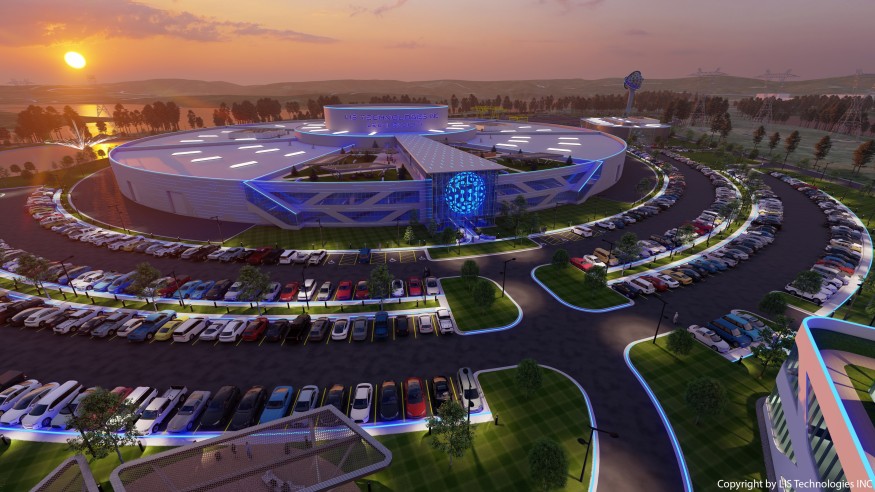
As the United States moves toward a nuclear-powered future, countless companies are scrambling to manufacture efficient modular reactors. But those reactors can't run without fuel. Fortunately, the U.S.-based company LIS Technologies has developed a revolutionary new laser-enrichment technology to produce that fuel at scale.
By using a specialized laser to increase the concentration of the uranium isotope U-235, the company can create low-enriched uranium (LEU) in one step and high-assay low-enriched uranium (HALEU) in two steps.
Many of today's nuclear power plants and older reactors run on LEU, which contains up to 5% U-235. However, newer reactor designs often require HALEU, which can be up to 20% U-235.
LIS Technologies has already devised a laser-enrichment process to quickly create LEU and HALEU. However, before the technology can be brought to commercialization, it must go through a rigorous vetting process with the Nuclear Regulatory Commission (NRC). LIS Technologies plans to submit their license application to the NRC by March 2027.
"Our roadmap to commercialization is a phased approach. Phase one is probably the most important phase. It's about repeating results, optimizing conditions, and showing we can do single-stage LEU and double-stage HALEU," says LIS Technologies co-founder and president, Christo Liebenberg. "That's two years. Then, for the next two years, we have to scale the equipment and repeat the enrichment results with the scaled equipment."
"In phase three, another two years, that's where we basically build a plant or commercial facility," he continues. "So that's the timeline. At least six years, maybe seven years, before we have (enriched uranium product (EUP) ready at scale."
LIS Technologies' innovative laser-enrichment process is much faster and more scalable than older methods, and it also has a much smaller footprint.
The company's headquarters in Oak Ridge, Tennessee, is just a short distance from the historic site of the Oak Ridge Gaseous Diffusion Plant (also called "K-25"). This massive enrichment facility was built during World War II, and it contains an astounding five million square feet of floor space.
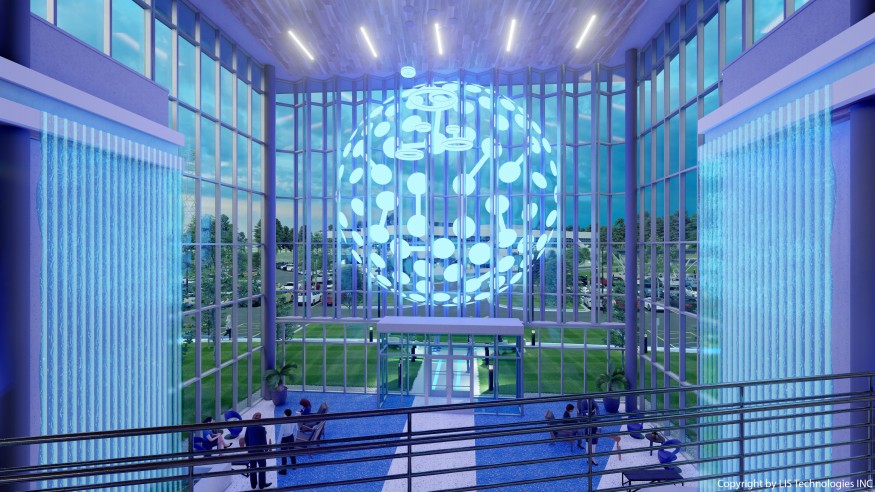
Gas centrifuge enrichment, a more modern technology, requires considerably less space, but most facilities have an area measuring hundreds of thousands of square feet. In these facilities, natural uranium must pass through hundreds or thousands of centrifuges before it has a usable concentration of U-235.
Many people don't realize that the U.S. produced its own enriched uranium before the end of the Cold War. LIS Technologies' laser-based method picks up where that effort left off.
Dr. Jeff Eerkens, the company's other cofounder, pioneered Condensation Repression Isotope Selective Laser Activation (CRISLA) shortly before the U.S. abandoned its domestic nuclear supply chain.
"During the Cold War, Russia was a huge producer of enriched uranium. In 1989, the Soviet Union came down, and the world markets opened up to Russia. They started flooding the world markets because they needed that money to boost their economy," Liebenberg explains.
"They sold enriched uranium for less than half price compared to what it was. That sunk many, many technologies, including CRISLA, which was well underway at that point."
Now that the United States is banning Russian uranium imports due to national security concerns, the domestic nuclear industry has experienced a revitalization. And as LIS Technologies gets closer to opening the first commercial laser-enrichment plant, Liebenberg is optimistic about the future of American nuclear energy.
"There's a huge resurrection, a huge resurgence of nuclear power. We are in the middle of a second nuclear age," he says. "It can be done!"
© 2026 ScienceTimes.com All rights reserved. Do not reproduce without permission. The window to the world of Science Times.


