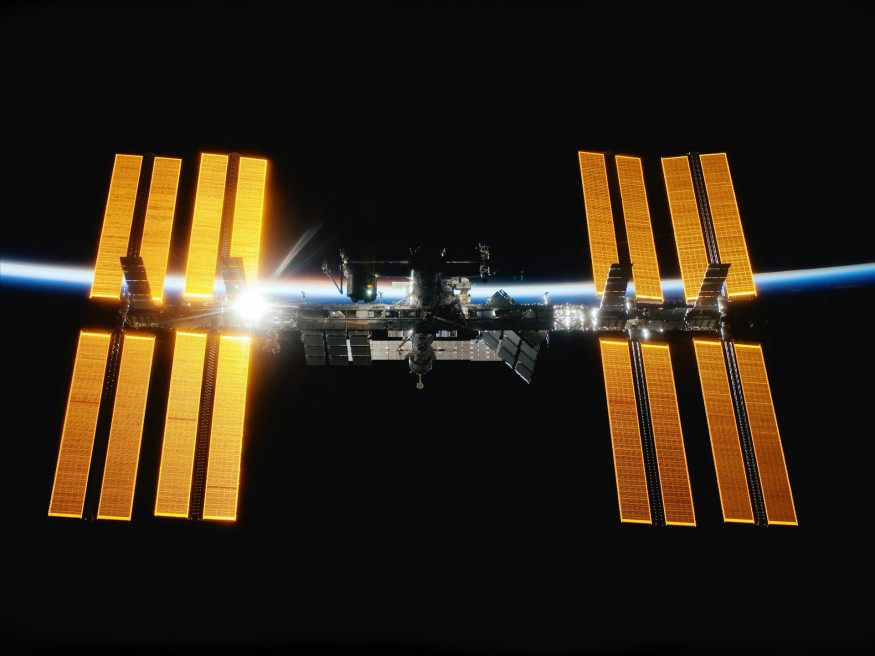
Five astronauts aboard the International Space Station were directed on June 5, 2026, to don spacesuits and shelter inside a docked SpaceX Crew Dragon spacecraft — prepared, if necessary, to evacuate the orbital laboratory entirely — as two Russian cosmonauts attempted a dramatic and high-risk repair on a worsening air leak inside the station's Zvezda service module. The evacuation alert was lifted roughly two hours later after Russian mission control paused the repair to assess new data. No one was evacuated. But the incident — the most serious escalation in the ISS's long-running leak crisis — has exposed just how precarious the station's final years may become.
The leak is not new. Hairline cracks were first detected in 2019 in the PrK transfer tunnel — a small vestibule attached to the aft docking port of the Zvezda module. Since then, Russian crews have applied sealants, hunted for crack sources using dust accumulation tests, and periodically isolated the affected area. For years, the leak was slow, manageable, and monitored. According to NASA's official June 5 blog update, the situation changed dramatically the week of June 1: during cargo operations aboard the Progress 95 spacecraft, Roscosmos detected the leak rate had jumped to approximately two pounds of air per day — and identified new suspected leak areas in the tunnel.
The June 5 Evacuation Alert: What Actually Happened
At 13:04 UTC on June 5, Mission Control Houston radioed the station and directed five crew members to enter SpaceX's Crew Dragon 'Freedom' and assume an elevated safety posture. The five who sheltered were the four members of the SpaceX Crew-12 mission: NASA astronauts Jessica Meir and Jack Hathaway, French astronaut Sophie Adenot of the European Space Agency, and Russian cosmonaut Andrey Fedyaev — along with NASA astronaut Chris Williams, who had arrived aboard a Russian Soyuz MS-28 spacecraft. Two Russian cosmonauts — Sergei Kud-Sverchkov and Sergei Mikayev — remained in the Russian segment to conduct the repair.
Why did NASA order the shelter? The answer lies in what Roscosmos had decided to do. According to CNN's reporting, Russian engineers had devised a plan to cut a metal bracket to better access a suspected leak area for inspection. NASA assessed this approach as carrying "elevated risk to the structure in the area" — meaning there was a non-negligible possibility the sawing operation could worsen the leak or cause unforeseen structural damage. Rather than have non-essential crew aboard during such a procedure, NASA moved them into the Crew Dragon, which functions as the Crew-12 team's lifeboat and is ready to undock within minutes.
Less than two hours after the shelter order, NASA spokesperson Bethany Stevens posted an update: Roscosmos had paused the structural repair effort inside the PrK to assess more measurements and data. With the repair on hold and no immediate structural threat, NASA gave the all-clear for the sheltering crew to return to normal station operations. Roscosmos stated that "the situation does not threaten the safety of the crew and onboard systems." As of Friday evening June 5, 2026, no further repair timeline had been announced.
Why Engineers Are Worried — The Science of What Is Cracking Zvezda
The Zvezda service module launched in July 2000 and has been continuously pressurised, heated, frozen, and vibrated through more than 150,000 orbits since then. It provides the Russian Orbital Segment with life support, sleeping quarters, and critical propulsion control — making it one of the most important single pieces of hardware on the station. The PrK tunnel attached to its aft end is constructed of aluminium alloy, a material well-suited to spacecraft manufacturing but not immune to the extraordinary stresses of long-term orbital operation.
What is causing the cracks? Here is where the science becomes contested and genuinely alarming. According to analysis by migflug.com citing Reuters and Ars Technica, NASA and Roscosmos do not fully agree on the root cause. Russian engineers point primarily to metal fatigue from years of micro-vibrations — the cumulative effect of thousands of small mechanical disturbances including docking operations, crew movement, and thruster firings. NASA believes the cause is multi-layered: a combination of pressure cycling, mechanical and residual stress from manufacturing, material property changes over time, and environmental exposure — including micrometeoroid impacts and the extreme thermal cycling between sunlit (+250°F) and shadowed (−250°F) orbital conditions that Zvezda experiences approximately 16 times per day.
NASA's own safety advisers have elevated the Zvezda crack problem to the agency's highest internal category of concern and have used the phrase "catastrophic failure" in public safety meetings when describing the theoretical worst-case scenario if the leak were to expand rapidly. That worst case — a rapid decompression of the Russian segment — is not considered imminent; protocols are already in place to isolate the Russian segment from the U.S.-built sections by closing hatches. But the phrase itself reflects the seriousness with which American engineers regard the underlying structural deterioration.
A Seven-Year Leak That Has Never Been Fully Fixed
Understanding the June 5 crisis requires appreciating how long this problem has been building — and how many times it has appeared to be resolved, only to return. A brief timeline of the PrK leak crisis:
- 2019: Hairline cracks first detected in the PrK transfer tunnel. Leak rate initially small and deemed manageable.
- 2020–2021: Russian crews perform multiple sealant applications using Germetall-1 compound. Two cracks sealed in March 2021, but pressure loss continues.
- 2024: NASA ISS Advisory Committee reports that Russian and American technical experts disagree on the underlying cause and seriousness of the cracks.
- Early 2026: Leak appears to stabilize near zero following additional repair work. Axiom Mission 4 (commercial spaceflight) is delayed pending pressure confirmation.
- May 2026: Leak returns and accelerates to approximately one pound of air per day — then climbs further during Progress 95 cargo operations.
- June 1–5, 2026: Leak rate jumps to two pounds per day. Two new suspected leak sites identified. Roscosmos opts for high-risk sawing repair. NASA orders evacuation shelter. Repair paused.
The pattern — patch, stabilize, return — may be inherent to the damage mechanism. The Register reported in August 2025 that Roscosmos executive Sergey Krikalev acknowledged during a pre-launch briefing that the leak "had reduced but was still ongoing"— even after what had appeared to be a successful repair. If the crack propagation is driven by the fundamental stresses of orbital operation, applying sealant addresses the symptom but not the underlying cause.
⚠ WHAT THE LEAK MEANS FOR THE STATION'S FUTURE
The ISS is formally approved to operate through the end of 2030, with a SpaceX-built deorbit vehicle already under contract to steer it into the Pacific Ocean.
Russia has committed to ISS support only through 2028 — two years earlier than the current planned retirement.
NASA's safety advisers have ranked the Zvezda cracks among the station's most serious risks.
If repair efforts fail and rapid decompression risk increases, the affected Russian segment could be permanently sealed off — losing a Russian docking port.
The Axiom Mission 4 commercial spaceflight — already delayed — will not launch until NASA confirms acceptable station pressure stability.
The Bigger Picture: What This Crisis Reveals About Human Spaceflight
The June 5 shelter order is, in isolation, a precautionary measure that worked as designed — the crew moved quickly, the repair was paused when risk was assessed, and no one was harmed. But the incident is also a vivid illustration of what the twilight years of the ISS's operational life may look like: a 26-year-old structure, built to last 15 years, continuing to creak and crack while the international community it represents races to build replacements that are not yet ready.
The station has been continuously occupied since November 2000 — more than 25 years of unbroken human presence in low Earth orbit. That achievement is without precedent in history. But the hardware sustaining it was designed in the 1990s, manufactured with the materials and tolerances of that era, and has now logged more than 150,000 orbits through the most hostile environment humans regularly inhabit. Technology.org's June 8 analysis noted the geopolitical subtext as well: the ISS leak "lands at an awkward moment for the program," as the agency is counting on privately built outposts from Axiom Space and Vast to keep American astronauts in low-Earth orbit — "partly because China's Tiangong waits to inherit the title" of the world's primary space station.
The repair situation also underscores a rarely acknowledged aspect of the ISS's structural reality: the station's most critical components are not modular in the way a car or aircraft can be serviced. You cannot remove the PrK tunnel and replace it. You cannot completely rebuild a pressurised tunnel 250 miles above Earth. The cosmonauts working inside it can apply sealants, reinforce areas with epoxy, and very carefully remove obstructing brackets — but they cannot undo 25 years of accumulated thermal and mechanical stress on a metal structure that has reached and likely exceeded its design life.
📋 KEY FACTS AT A GLANCE
Module affected: Zvezda service module PrK (transfer tunnel) — Russian segment
Module launch date: July 2000 (26 years in orbit as of 2026)
Leak first detected: 2019
Leak rate as of June 2026: Approximately 2 pounds of air per day (0.9 kg/day)
Crew sheltered: 5 astronauts in SpaceX Crew Dragon 'Freedom' for approximately 2 hours
Two cosmonauts conducting repairs: Sergei Kud-Sverchkov and Sergei Mikayev
Repair status (June 5 evening): Paused — no new timeline announced
One leak sealed: Using hermetic compound. Work on second leak paused for data review.
ISS planned retirement: End of 2030, deorbit via SpaceX-built vehicle
Highest-risk category: NASA safety advisers have elevated PrK cracks to their highest concern level
Limitations and What Remains Unknown
As with any ongoing engineering crisis, there are significant things that remain unknown or contested. NASA and Roscosmos have not publicly agreed on the root cause of the crack propagation — a meaningful scientific disagreement that has persisted for two years despite extensive joint analysis. The June 5 repair was paused before completion, meaning the second identified leak site has not yet been addressed. No repair timeline has been announced.
The long-term structural stability of the PrK tunnel under continued operation through 2030 is not publicly modeled in open literature. Roscosmos has consistently maintained that "the situation does not threaten crew safety" — a statement that is accurate within the current operating parameters (isolated hatches, managed air reserves) but may not account for further crack propagation. Whether the June 5 event represents a one-time escalation that can be stabilized, or the beginning of a progressive structural decline in the final four years of the station's life, is genuinely not yet known.
The Crew Dragon Freedom that sheltered five astronauts on June 5 is scheduled to return to Earth in September 2026, carrying the Crew-12 team. By then, Roscosmos and NASA will have had three months to analyze the June 5 data and devise a more permanent approach to the PrK. Whether that approach will work — or whether it will produce another entry in the long, unresolved timeline of a leaking tunnel that has been patched, monitored, re-patched, and re-monitored for seven years — may ultimately determine whether the ISS reaches its planned 2030 retirement intact, or whether the timeline has another author: a 26-year-old aluminium tunnel, leaking slowly into the vacuum of space.
SOURCES
- NASA — Official June 5 Update on Space Station Leak
- CNN — NASA Directs Its ISS Crew Members to Board Spacecraft Amid Leak Repair Attempt
- Scientific American — Astronauts Take Shelter on the ISS Because of Air Leaks
- EarthSky — ISS Leak: Astronauts Briefly Shelter as Leak Worsens
- Technology.org — Space Station Crew Shelters in Dragon as Air Leak Worsens
- Al Jazeera — NASA Tells ISS Astronauts to Ready for Possible Evacuation Amid Leak Repair
- Migflug — ISS Air Leak: Crew Shelters in Crew Dragon, Ready to Evacuate
- The Register — ISS Is Still Leaking Air After Latest Repair Efforts Fail (August 2025)
- Space Policy Online — NASA Confirming Success of ISS Leak Repairs Before Finalizing Ax-4 Launch Date
© 2026 ScienceTimes.com All rights reserved. Do not reproduce without permission. The window to the world of Science Times.


