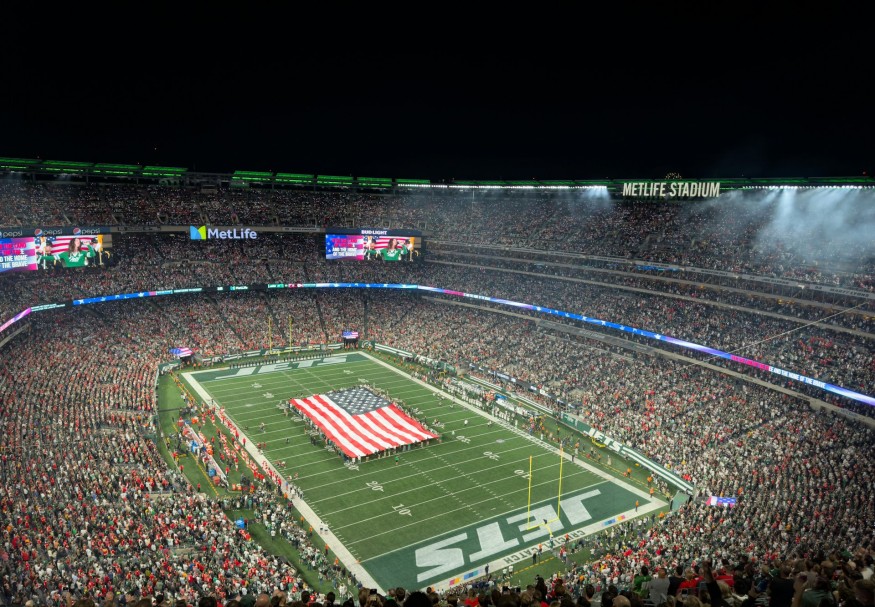
In November 2000, the Pan American Health Organization declared that the United States had eliminated measles — meaning that the disease was no longer spreading continuously within American borders. It was celebrated as one of the signature achievements of modern public health, the product of decades of vaccine development, public investment, and parental trust in childhood immunization. Twenty-five years later, that achievement is on the verge of being formally revoked, and the timing could not be worse: the 2026 FIFA World Cup kicks off June 11 across 16 American cities, including Philadelphia and the New York metropolitan area, bringing tens of millions of international visitors from countries where measles is endemic.
As of May 15, 2026, the Centers for Disease Control and Prevention has confirmed 1,952 measles cases and 29 new outbreaks in the United States this year. That figure follows 2025, when the U.S. recorded 2,242 measles cases — its highest annual total since 1992, a 33-year high — along with three deaths and 245 hospitalizations. Ninety-two percent of cases in 2026 have been in unvaccinated individuals or those with unknown vaccination status. Researchers analyzing the epidemiological data have concluded that the United States is now "highly likely" to lose its measles elimination status when the Pan American Health Organization's Measles and Rubella Elimination Regional Monitoring and Re-Verification Commission meets in November 2026.
The Scientific Definition of Loss of Elimination — and Why It Matters
Measles elimination, in WHO and PAHO terminology, means fewer than one case per 10 million people per year, with the majority of cases linked to international importation rather than domestic transmission. By early 2026, the United States was reporting more than 90 cases per 10 million people. On 285 out of 376 days analyzed by CIDRAP researchers, the estimated transmission rate (the R value) remained above 1 — meaning the virus was actively spreading from person to person within American communities. These are the epidemiological hallmarks of endemic transmission, not a country maintaining elimination.
The epidemic's geographic footprint is vast. The 2026 outbreak has reached 33 U.S. jurisdictions, including New York City and New York State, Pennsylvania, Arizona, Colorado, Utah, Texas, Florida, Illinois, and 23 others. The largest single-state outbreak has centered on Spartanburg County, South Carolina, which by mid-April confirmed 997 cases — the highest county-level measles count since elimination was declared. New York City's health department has confirmed at least one case in Manhattan and is conducting contact tracing to identify and notify people potentially exposed at a restaurant.
Philadelphia's Dual Exposure Risk: Airports, Trains, and the World Cup
Philadelphia is at the epicenter of the measles exposure risk for a specific set of reasons. On January 7, 2026, a measles-infected individual traveled through Philadelphia International Airport's Terminal A East and through William H. Gray III 30th Street Station — one of the busiest transit hubs on the East Coast — prompting public health alerts to all passengers who passed through those locations during the exposure windows. A second airport exposure alert was issued on February 15. The Philadelphia Department of Public Health's February 2026 health advisory explicitly linked heightened vigilance to the upcoming FIFA World Cup, noting that "given the large number of travelers expected in Philadelphia during the 2026 FIFA World Cup, it is important that providers remain vigilant in their efforts to rapidly identify measles cases."
The science of why mass gathering events accelerate measles transmission is well established. Measles is among the most contagious pathogens ever documented — a single infectious person can infect as many as 18 unvaccinated people, according to WHO data. The virus can remain infectious in the air of an enclosed space for up to two hours after an infected person has left. An event like the FIFA World Cup, which draws spectators from 48 nations — many of which have lost measles elimination status or never achieved it — into stadiums, transit systems, hotels, and restaurants represents exactly the kind of mass mixing event that can trigger chains of transmission in communities with even modest gaps in vaccination coverage.
All three World Cup host nations face measles crises of their own. Mexico is experiencing the worst measles outbreak in its modern history, with over 13,855 confirmed cases and 32 deaths across all 32 states as of mid-March 2026. Canada lost its measles elimination status in November 2025 after more than 5,400 domestic cases. At the same time, the four largest international ticket-buying countries — England, Spain, France, and Germany — have either recently lost their own measles elimination status or are considered endemic. The WHO European Region recorded over 127,000 measles cases in 2024.
The Vaccine Science Is Not in Dispute — But Public Confidence Is Eroding
The scientific data on MMR vaccine efficacy and safety is among the most thoroughly validated in the history of medicine. Two doses of MMR vaccine are 97% effective against measles. The vaccine's safety record, scrutinized in studies involving hundreds of millions of doses over decades, is unimpeachable. Yet vaccine confidence among certain communities in the United States has been measurably damaged by a sustained campaign of misinformation, compounded in recent years by conflicting messaging from federal officials — a factor that epidemiologists have specifically cited as contributing to the 2025-2026 surge.
The statistical consequences of declining vaccination coverage are not speculative. A report from the Common Health Coalition calculated that just a 1% decrease in childhood MMR vaccination rates could generate 17,000 additional measles cases, 4,000 hospitalizations, and 36 preventable deaths per year in the United States. Pennsylvania's 2026 data illustrates the mechanism in miniature: of the 23 confirmed state measles cases as of early May, 22 were unvaccinated and one had unverifiable vaccination status. Zero vaccinated individuals with full MMR coverage were among the confirmed cases.
What Public Health Officials Are Doing — and What Is Still Missing
Philadelphia's public health apparatus is preparing with unusual seriousness for World Cup-related health threats. Lincoln Financial Field — one of the Philadelphia World Cup venues — is being equipped with a special mobile laboratory that will allow on-the-ground testing and analysis of pathogen specimens during match days. The Big Cities Health Coalition has called for consistent, dedicated federal funding for urban public health infrastructure to support both routine disease prevention and emergency response. Contact tracing capacity and rapid laboratory confirmation are being bolstered in anticipation of the summer surge in both domestic and international travelers.
What remains conspicuously absent is a coordinated, nationally unified communication strategy to address vaccine hesitancy at the community level — particularly among the religious and ideological communities in which measles outbreaks have been most concentrated. Restoring measles elimination status, once lost, requires sustained transmission suppression below elimination thresholds for at least 12 uninterrupted months. That means the United States may not regain its PAHO measles-free designation until 2028 at the earliest — a public health regression without precedent in modern American history.
Conclusion: A Preventable Loss With Generational Consequences
The United States' loss of measles elimination status is not a natural disaster. It is a predictable consequence of declining vaccination coverage, inconsistent public health messaging, and the structural weakening of immunization infrastructure. The science has never changed: MMR vaccines are safe, measles is dangerous, and herd immunity requires coverage above 95%. American cities hosting the World Cup — Philadelphia, New York, Boston, Dallas, Los Angeles, and others — are running an unnecessary risk that more complete and consistent vaccination coverage would largely eliminate. The November 2026 PAHO review is not a deadline to fear. It is a scientific reckoning that was rendered inevitable the moment vaccination rates began to fall.
References
▪ U.S. News – Tracking U.S. Measles 2026: 1,952 Cases, Elimination Status at Risk
▪ CIDRAP – US 'Highly Likely' to Lose Measles Elimination Status This Fall, May 2026
▪ Philadelphia Department of Public Health – Measles Exposure Alert at PHL Airport, Jan & Feb 2026
▪ PDPH Health Alert Network – Increase in Domestic Measles Cases, Feb 6, 2026
▪ Healthline – Measles Outbreak 2026: Rising Cases Threaten U.S. Elimination Status
▪ PAHO – Epidemiological Alert on Measles in the Americas, Feb 4, 2026
▪ BlueDot – World Cup 2026 and the Travel Health Landscape, April 2026
▪ CNN – 'Complicated' Circumstances Test Public Health for World Cup, May 28, 2026
Related Articles on ScienceTimes.com
▶ How Measles Elimination Is Defined — and What It Will Take for the US to Earn It Back
▶ MMR Vaccine Safety: The Most Studied Drug in History and What the Science Actually Shows
▶ Mass Gatherings and Infectious Disease: The Science Behind Super-Spreader Events
▶ Vaccine Hesitancy in 2026: How Misinformation Erased 25 Years of Public Health Progress
© 2026 ScienceTimes.com All rights reserved. Do not reproduce without permission. The window to the world of Science Times.


