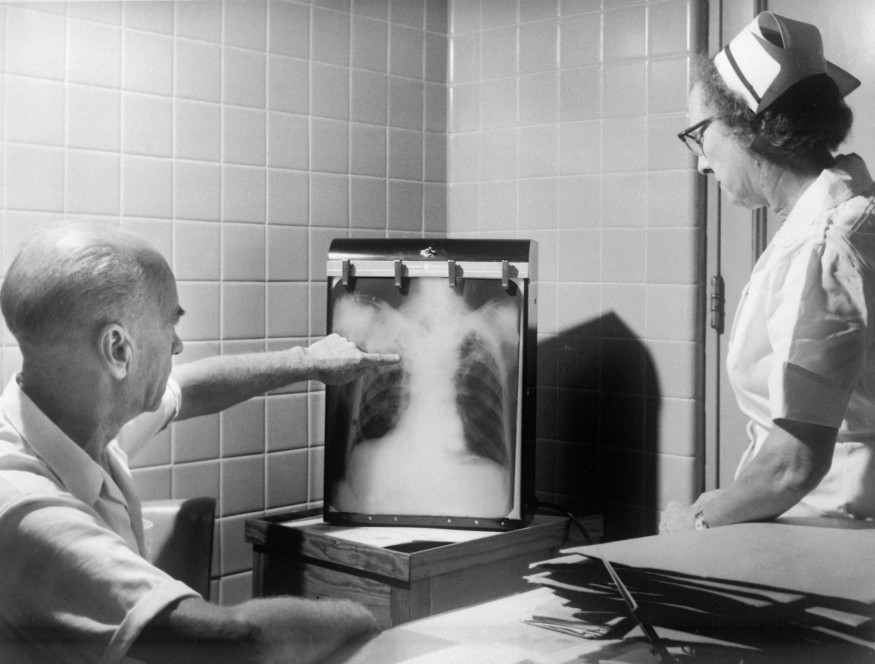
Tuberculosis is supposed to be a disease of the past in wealthy, developed nations. The United States fought a long and costly battle against it in the twentieth century — particularly in New York City, where in the early 1990s, TB rates in Central Harlem exceeded those of many developing countries before a sweeping public health overhaul reversed the trend. That effort was hailed internationally as a model of urban disease control. Three decades later, the disease refuses to stay defeated. On March 24, 2026 — World Tuberculosis Day — the New York City Health Department released data confirming 743 TB cases in New York City in 2025. While the figure represents an 11% decrease from 2024, health officials were careful not to characterize it as a victory. The overall caseload remains elevated compared to recent historical norms, and the city's own data contains warning signs that demand a rigorous scientific and policy response.
A granular look at the New York City annual tuberculosis data from 2024 — the most recently completed analytical year — provides the fuller picture. There were 836 confirmed TB cases in 2024. Ten people were diagnosed with multidrug-resistant tuberculosis (MDR-TB), defined as resistance to at least both isoniazid and rifampin, the two most critical first-line drugs. Eighty-one percent of U.S.-born patients were either Hispanic or non-Hispanic Black. Ninety percent of all TB cases in New York City — across both years — occurred in people born outside the United States, with patients representing 67 different countries of origin. The largest source countries included China, Ecuador, Bangladesh, the Philippines, and India. Twelve years was the average time spent in the United States among non-U.S.-born patients at the time of diagnosis — a figure that fundamentally challenges simplistic narratives linking TB to recent immigration.
What the Data Actually Tells Scientists About Transmission
The 12-year average residency figure is critical to understanding the biology and epidemiology of tuberculosis in a city like New York. The vast majority of U.S. TB cases do not result from recent infection. They result from reactivation of latent tuberculosis infection (LTBI) — a state in which Mycobacterium tuberculosis bacteria have been dormant in the body for years or even decades without causing active disease. LTBI has no symptoms and cannot be transmitted to others. It becomes dangerous when the immune system weakens — due to aging, HIV infection, malnutrition, diabetes, immunosuppressive medication, or the physiological stress of poverty and overcrowding — allowing the dormant bacteria to reactivate into active, contagious pulmonary disease.
This means that a TB case diagnosed in a Chinese immigrant who has lived in Queens for 14 years is not a sign that someone recently arrived infected. It is a sign that someone who was exposed to TB before emigrating — possibly as a child — has experienced immune suppression or other health stressors sufficient to reactivate latent infection acquired long before they ever set foot in the United States. The science is unambiguous on this point, and conflating TB cases in immigrant communities with recent entry into the country is not just scientifically inaccurate — it discourages the affected communities from seeking testing and treatment.
The Multidrug-Resistant Threat: A Scientific Escalation
The 10 MDR-TB cases confirmed in New York City in 2025 may appear to be a small number in isolation, but they represent a disproportionate public health threat. Each MDR-TB case requires 18 to 24 months of treatment with second-line drugs that are significantly more toxic, more expensive, and less effective than the standard six-month regimen used for drug-susceptible TB. The CDC estimates the cost of treating a single MDR-TB case can exceed $500,000 when factoring in hospitalization, directly observed therapy, and long-term monitoring. The 2024 annual report noted that among MDR-TB patients, the median number of drug resistances was 5.5 — meaning each patient's bacterial strain was resistant to more than five separate medications.
Globally, the emergence of extensively drug-resistant TB (XDR-TB) — in which resistance extends to second-line drugs as well — represents one of the most serious antimicrobial resistance threats facing public health systems in the 21st century. New York City, with its dense immigrant population drawn from countries where TB is endemic and where antibiotic misuse is common, sits at elevated risk of XDR-TB introduction compared to most other American cities.
Who Is Bearing the Burden — and Why Infrastructure Matters
The 2024 NYC data reveals that 18 of the city's 42 defined neighborhoods reported TB rates higher than the citywide average. Over a quarter of TB cases were in patients aged 65 and older — a demographic particularly susceptible to reactivation of latent infection due to age-related immune decline. Fifty-four percent of all patients were between 18 and 44 years of age. Eighty-eight percent of cases involved pulmonary disease, meaning most patients were potentially infectious — capable of transmitting the bacteria through coughed respiratory droplets — before diagnosis.
Significantly, the 2025 data showed a 56% drop in TB cases among people experiencing homelessness compared to 2024 — a hopeful data point that the city's expanded supportive housing efforts may be having a measurable protective effect on one of the highest-risk populations. Yet TB continues to affect every neighborhood in New York City; not a single of the city's 42 defined neighborhoods was free from TB cases in 2022, the last year for which granular neighborhood-level data is available.
The City's Response: Innovations That Work — and Gaps That Remain
The NYC Health Department has rolled out a new shorter-course treatment regimen — a six-month protocol for certain drug-susceptible cases that was previously conducted over nine months — and expanded mobile TB screening services to reach individuals who cannot or do not access fixed clinic sites. All TB services are provided free of charge regardless of immigration status or insurance, a policy with clear public health logic: an untreated TB patient is an ongoing transmission risk to everyone around them, regardless of citizenship status.
Governor Hochul announced in 2026 that New York State will join the World Health Organization's Global Outbreak Alert and Response Network — a development that, if properly resourced, could improve the speed and quality of New York's response to emerging drug-resistant TB strains. The city is also constructing a new $1.7 billion public health laboratory that, when complete, will significantly expand diagnostic and genomic sequencing capacity for pathogens including Mycobacterium tuberculosis.
Conclusion: Elevated Cases Demand Honest Scientific Discourse
New York City's TB rate remains elevated — and the reasons are rooted in science, not politics. Latent TB in immigrant populations, immune suppression in aging and economically stressed communities, inadequate LTBI screening in high-risk groups, and the persistent threat of drug-resistant strains are all well-characterized scientific challenges with well-characterized solutions. Directly observed therapy works. Shorter treatment regimens improve completion rates. Free and accessible testing removes barriers. The data shows progress on some fronts — and ongoing vulnerability on others. The scientific conclusion is that New York City's battle against tuberculosis is a long-term infrastructure problem, not a temporary emergency. Treating it as the former is the only path toward the sustained suppression the city achieved between 1995 and 2019 — and is now working to recover.
References
▪ NYC Health Department – World Tuberculosis Day Press Release, March 24, 2026
▪ NYC Health Department – Tuberculosis in New York City 2024 Annual Report
▪ NYC Health Department – Tuberculosis in New York City 2025 Annual Report
▪ Biomedical Research – TB Crisis in New York, 2023-2024 Review Article
▪ WHO Global Tuberculosis Report 2025 – Drug-Resistant TB Data
▪ CDC – Tuberculosis: National Data and Trends
Related Articles on ScienceTimes.com
▶ The Science of Latent Tuberculosis: Why a Disease Can Sleep for Decades and Then Kill
▶ Antimicrobial Resistance and MDR-TB: The Slow-Moving Pandemic No One Is Talking About
▶ New Shorter TB Treatment Regimens: How Scientists Are Winning the Race Against Resistance
▶ Directly Observed Therapy: The Public Health Strategy That Saved New York City from a TB Catastrophe
© 2026 ScienceTimes.com All rights reserved. Do not reproduce without permission. The window to the world of Science Times.


