On June 12, 2026, SpaceX is expected to begin trading on the Nasdaq Stock Market under the ticker SPCX — in what analysts and investment banks describe as the largest initial public offering in the history of capital markets. The company is seeking a valuation of approximately $1.75 trillion, a raise of up to $75 billion, and a retail investor allocation three times the standard practice for a listing of this size. Elon Musk — who owns approximately 42% of SpaceX's equity and 85% of its voting rights — may already be the world's first trillionaire based on how shares have traded in private markets. The wealth event that is about to unfold is, by any measure, without precedent.
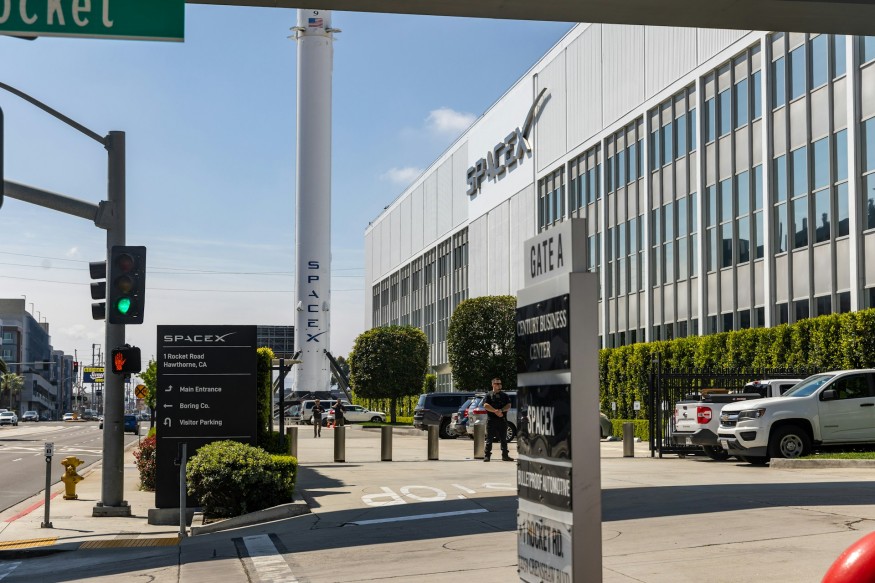
But there is a state that will not share in it — at least not at the scale it would have, had a different set of decisions been made. SpaceX built its core engineering and manufacturing workforce in Hawthorne, California, a small city in Los Angeles County where the company has operated a massive rocket-building campus since 2002. California was, for two decades, the birthplace and primary production site of the Falcon 9 — the workhorse rocket that has made SpaceX the world's dominant commercial launch provider. In July 2024, Elon Musk announced that SpaceX's corporate headquarters would move to Starbase, Texas. When the company goes public on Thursday, the tax revenue generated by the resulting wealth event will largely follow the residency of those who hold the equity — and a significant portion of that equity is now held by people who no longer pay California income tax.
The Science of a Corporate Exodus: Why Residency Matters at IPO
To understand the fiscal mechanics of what California is facing, you need to understand how capital gains taxation at an initial public offering actually works. When a private company goes public, its employees — who have typically accumulated company stock through restricted stock units (RSUs), incentive stock options (ISOs), and non-qualified stock options (NSOs) over years of service — are suddenly holding publicly tradeable shares. The moment those shares vest or are exercised and sold, the gain is taxable income. Who taxes it depends entirely on where the employee or investor legally resides at the time of the taxable event.
California has the highest state income tax rate in the nation: a top marginal rate of 13.3% on income above $1 million. Combined with federal taxes, high-earning California residents can face marginal tax rates exceeding 50% on stock sale proceeds when they stack on top of other income in the same tax year. Texas has no state income tax — none whatsoever. The difference on a $10 million stock gain is approximately $1.3 million in state taxes paid (California) versus zero (Texas). On the scale of wealth that SpaceX's IPO is about to generate across thousands of employees, that differential is not a rounding error. It is a potentially billions-of-dollar swing in state revenue.
The structural issue is that SpaceX still operates its Hawthorne manufacturing campus, which builds Falcon 9 rockets, Dragon capsules, and Starshield satellites and employs thousands of California workers. Those workers are California residents and will pay California income tax on their IPO gains. But the company's senior leadership, key equity holders, and the organizational headquarters that determine where the richest employees live — those have moved. According to Forbes' June 9 analysis of the situation, the headline of the entire SpaceX IPO story for California is precisely what the title of that piece says: SpaceX left California. Its IPO payday, at the highest levels, did not follow.
The Scale of the IPO: Numbers That Have No Historical Precedent
The figures surrounding SpaceX's June 12 public debut are genuinely extraordinary and worth stating plainly, because the abstract language of "historic IPO" can obscure just how different this offering is from anything the financial markets have previously processed:
- Target valuation: $1.75 trillion — larger than Microsoft, behind only Apple and Nvidia among all public companies
- Capital raise: Up to $75 billion — the largest single capital raise in IPO history; Saudi Aramco's 2019 listing previously held the record
- IPO price: $135 per share, per Reuters and Bloomberg reporting from June 3, 2026
- Shares offered: 555.6 million shares across 21 underwriting banks led by Goldman Sachs
- Retail allocation: 30% of the float — approximately three times the standard practice for a mega-cap IPO
- Nasdaq listing: Expected to qualify for automatic entry into the Nasdaq-100 after just 15 days, triggering mandatory buying from index-tracking ETFs and funds
- Elon Musk's stake: 42% equity, 85% voting rights; his shares may be worth $830 billion at IPO valuation
Against these extraordinary numbers sits an equally extraordinary financial disclosure: in the first quarter of 2026 alone, SpaceX posted a net loss of $4.28 billion on $4.70 billion in revenue. The company's accumulated deficit has reached $41.3 billion. The primary driver of the losses is artificial intelligence — SpaceX disclosed that its xAI/AI operations burned approximately $2.5 billion per quarter. This juxtaposition — the largest IPO in history, from a company posting multi-billion-dollar quarterly losses — reflects a bet by investors that SpaceX's growth trajectory and structural advantages in the space economy will eventually produce financial returns that justify the valuation.
The Employee Wealth Event — and the Unprecedented Collective Action
The human story of the SpaceX IPO, alongside the fiscal story, is the more than 1,000 current and former SpaceX employees who have banded together to negotiate collectively with wealth management firms for better pricing and access to sophisticated tax-saving financial products ahead of the listing. According to a Bloomberg report citing a May 2026 internal document, the group — which has evaluated more than 20 financial advisers and private banks — is "leveraging collective power" to achieve fees below 0.5% on assets under management, roughly half the industry standard of 1%.
The financial planning challenges these employees face are genuinely complex, and the decisions many of them make over the next several months will have consequences measured in hundreds of thousands or millions of dollars. Financial planning resources for SpaceX employees document the specific issues: RSU withholding gaps (standard 22% withholding leaves most high-earning employees short by 20–30 percentage points of their actual tax liability); incentive stock option (ISO) exercises that could trigger Alternative Minimum Tax exposure reaching six or seven figures; and the critical timing question of whether the post-IPO lock-up period — typically 90 to 180 days — expires in the same tax year as the IPO itself (2026) or crosses into 2027, which determines whether IPO-year gains stack against each other or spread across tax years. On a $10 million gain, the difference between those scenarios can exceed $500,000 in taxes.
For the California-resident SpaceX employees who are still working at the Hawthorne facility, the calculus is particularly acute: they face the state's 13.3% top marginal rate on top of federal obligations, meaning their after-tax IPO proceeds are materially lower than those of colleagues who moved to Texas. This disparity — built into the state tax code and unavoidable without a change of legal residency — is part of a broader pattern of wealth and corporate mobility that California's fiscal analysts have been tracking with concern since Elon Musk announced the SpaceX headquarters move in July 2024.
Starlink, Starship, and the Business Model Behind the Valuation
Investors bidding $1.75 trillion for SpaceX are primarily making a bet on two businesses within the company. The first is Starlink — the satellite internet constellation that now serves more than 8 million subscribers worldwide and is estimated to account for approximately 58% of SpaceX's total revenue. Starlink's expansion to direct-to-cell service — eliminating the need for a dedicated ground terminal — represents a potentially enormous addressable market: every mobile phone on the planet within satellite coverage range. The second is Starship, the fully reusable megarocket that SpaceX has been developing at its Starbase Texas facility and which Musk has described as central to lunar, Martian, and orbital infrastructure ambitions including space-based artificial intelligence data centers.
It is worth noting that both of these businesses are based primarily in Texas, not California. Starlink's satellite operations hub and Starship's development and launch site are at Starbase. SpaceX's Hawthorne facility — the California operation — is primarily a manufacturing and production site for the existing Falcon 9 and Dragon vehicles: critical infrastructure for SpaceX's present revenue, but not the primary driver of the growth story that the IPO valuation reflects. The center of gravity of SpaceX's future has moved south and east. California retains the engineering muscle that builds today's rockets. Texas is building tomorrow's.
📊 KEY IPO NUMBERS AT A GLANCE
Target valuation: $1.75 trillion (as of June 2026 S-1 filing)
Capital raise: Up to $75 billion — potential largest IPO capital raise in history
IPO price: $135 per share (Reuters/Bloomberg, June 3, 2026)
Nasdaq ticker: SPCX — trading debut expected June 12, 2026
Retail allocation: 30% of float — ~3× the standard practice
Lead underwriter: Goldman Sachs; 21 total underwriting banks
Q1 2026 revenue: $4.70 billion; Q1 2026 net loss: $4.28 billion
Accumulated deficit: $41.3 billion
Starlink share of revenue (2024): Approximately 58%
Starlink subscribers: Over 8 million worldwide
SpaceX employees: Over 25,000 across nine global facilities
California top state income tax rate: 13.3%; Texas state income tax: 0%
What This Story Does Not Prove — and the Important Caveats
The Forbes reporting by Alan Ohnsman that prompted this article, and the broader narrative of California losing SpaceX's IPO tax windfall, requires several important caveats that honest science and business journalism must acknowledge.
First: SpaceX's Hawthorne manufacturing campus remains in California and employs thousands of residents who will pay California income and capital gains taxes on their IPO proceeds. The state does not lose all revenue from this IPO — it loses the highest-value marginal revenue that would have flowed from the senior-most employees and executives who relocated to Texas.
Second: Calculating exactly how much revenue California loses from the headquarters relocation requires data that is not publicly available — including the residential status, equity holdings, and tax situations of individual SpaceX employees and early investors. Estimates of California's "loss" are necessarily approximations based on assumptions about what fraction of high-earning employees moved versus stayed.
Third: The SpaceX IPO's financial disclosures reveal a company investing aggressively in future capabilities at the cost of current profitability. The $4.28 billion Q1 2026 net loss and $41.3 billion accumulated deficit are real numbers that carry real risk for investors. A $1.75 trillion valuation of a company posting multi-billion-dollar quarterly losses reflects forward-looking expectations that may or may not be realized. The IPO's success as a financial instrument and its consequences for California's tax base both remain, as of June 9, 2026, matters of informed estimation rather than settled fact.
What the SpaceX IPO moment does prove — with clarity and in numbers too large to dismiss — is that the geography of technology wealth creation in America is shifting. Tesla moved its headquarters to Texas in 2021. Oracle left California for Austin in 2020. SpaceX followed in 2024. Each departure carries an immediate operational disruption (the Hawthorne campus keeps running) but a long-term fiscal consequence: the highest-value equity events increasingly occur under Texas's zero-income-tax regime rather than California's 13.3% top rate. When the largest IPO in human history prices at $135 a share on June 12, 2026, the state where SpaceX was built and where its rockets are still manufactured will watch a historic wealth event whose tax proceeds flow, disproportionately, to a state without an income tax — because that is where the company chose to be headquartered when the moment arrived.
SOURCES
- Forbes — SpaceX Left California. Its IPO Payday Did Not. (June 9, 2026)
- Fortune — SpaceX Has Filed Confidentially for IPO Ahead of AI Rivals (April 1, 2026)
- Fortune — Musk May Already Be a Trillionaire; SpaceX IPO Employee Windfalls (May 22, 2026)
- Morningstar — SpaceX's IPO Filing: Big Spending, Big Losses
- Bloomberg — SpaceX IPO: Employees Negotiate Together for Lower Fees, Tax-Saving Tools (June 2, 2026)
- BitMEX — SpaceX IPO Guide: S-1 Breakdown, Valuation & Trading Strategy
- Augustus Wealth — SpaceX IPO Tax Bill: ISO, RSU & AMT Planning for Employees
- TechCrunch — Elon Musk Vows to Move X, SpaceX Headquarters From California to Texas (July 2024)
- Reuters / AOL — SpaceX to Raise Over $25 Billion in Blockbuster 2026 IPO
- Capital.com — SpaceX IPO Targets June 12, 2026 After SEC Filing
© 2026 ScienceTimes.com All rights reserved. Do not reproduce without permission. The window to the world of Science Times.


