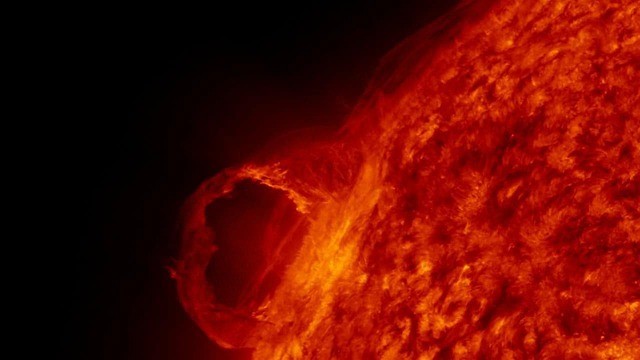
A recent wave of strong solar storms, including a rare "severe" radiation event in January 2026, is raising fresh concerns about satellite safety and radiation exposure for astronauts as the Sun nears the peak of its activity cycle.
The Sun is now in the most active phase of its 11‑year cycle, with more dark sunspots and frequent bursts of energy erupting from its surface. These eruptions can launch powerful solar flares and coronal mass ejections, sending clouds of charged particles toward Earth and into near‑Earth space.
Experts say this upswing means more frequent "space weather" alerts in the coming months, with a higher chance of disruptions to satellites, GPS services, and radio communications, according to Earth.
On January 19, 2026, forecasters recorded an S4 "severe" solar radiation storm, one of the highest levels on the NOAA space weather scale and stronger than the famous 2003 "Halloween" storms.
Measurements from the GOES‑19 satellite showed the radiation levels were still rising at the time, prompting warnings to aviation agencies, NASA, and emergency managers. At this intensity, satellites in high orbits and spacecraft in deep space face a greater risk of charged particles damaging electronics and solar panels.
During the current active cycle, several storms have already pushed satellites into safe modes to protect their systems. Between May 3 and May 9, 2024, a major storm produced 82 notable solar flares that brightened auroras and caused some satellites to temporarily suspend normal operations, Space Weather reported.
Space weather experts note that high‑energy particle bursts can flip bits in memory chips, interfere with navigation signals, and slowly degrade sensors over time.
For astronauts, the same energetic particles increase radiation doses during and after major solar events. Agencies such as NASA and ESA rely on forecasts to adjust plans for spacewalks, often postponing activities outside the International Space Station when storms are expected.
When radiation rises, crews can move to better‑shielded parts of the station to lower exposure, following the principle of keeping doses "as low as reasonably achievable."
While Earth's magnetic field and atmosphere shield people on the ground, the stakes are higher for future missions that will travel beyond this natural protection. Space agencies are studying new shielding materials and operational strategies to prepare for lunar and deep‑space flights during the current and future solar maximum periods.
Forecasters say they will continue to track sunspot trends and storm activity closely as they expect more intense events before the cycle slowly calms later in the decade, as per Atom Fair.
© 2026 ScienceTimes.com All rights reserved. Do not reproduce without permission. The window to the world of Science Times.


